A Short and Tumultuous Tour

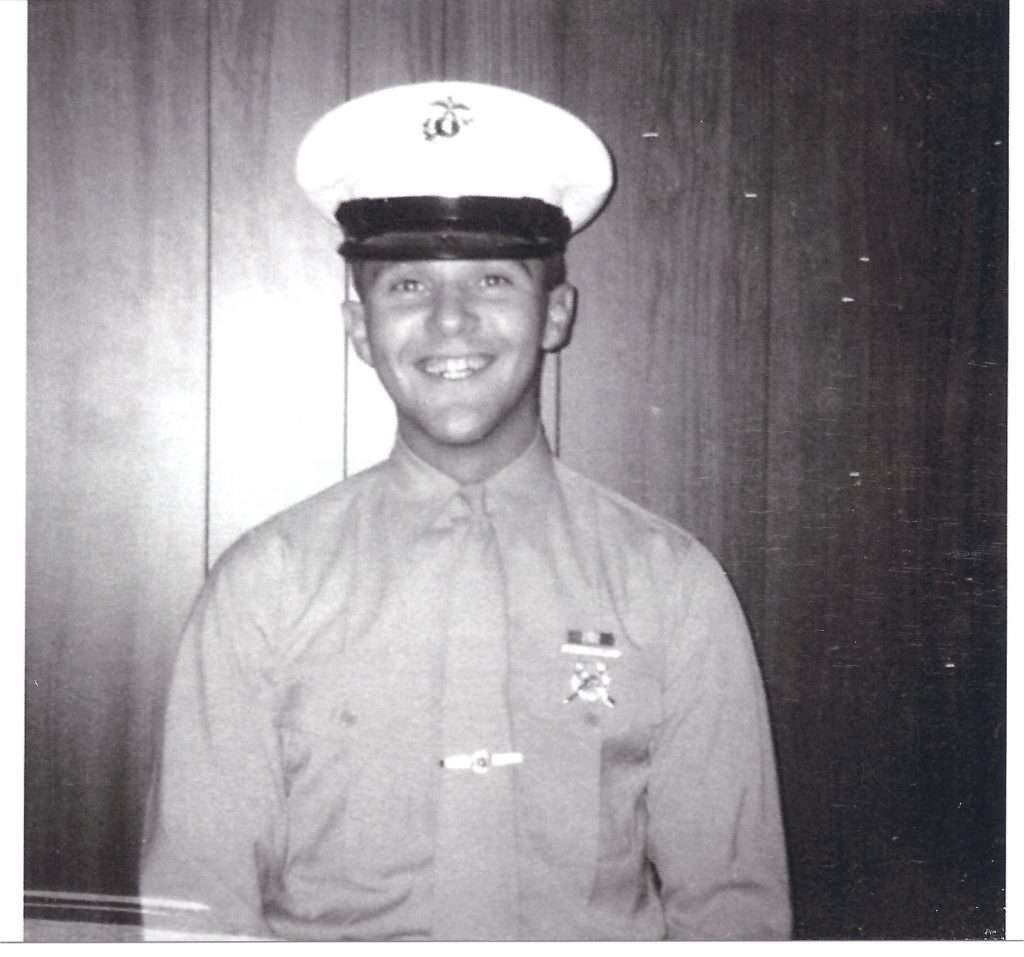
Photo by Betty Rodgers
In our last blog we wrote about incoming rounds of mortar, rocket and artillery fire from the NVA surrounding Khe Sanh.
One of the worst nights I remember happened when, on March 22, 1968, the NVA fired salvo after salvo after salvo into our lines. It wasn’t the worst night we had by far, but—and maybe this is my memory or related to a particular mood I was in at the time—it seemed like the enemy gunners were shooting directly at us, Bravo Company 1/26.
The day before, the Marines of 2nd Platoon Bravo went outside the wire and assaulted the ridgeline out front of the Gray Sector at the base. They crested the ridge, got in the enemy trench and swept from south to north, then went west, back to the base.
The wounded were a result of friendly fire from support troops to the rear and when one Marine tripped a booby-trapped grenade.
Back in our lines, the elated men of 2nd Platoon high-fived and slapped hands, hooted and hollered. For two months they’d been trapped inside the base. For once, they got out and although they didn’t engage in any meaningful getting-even with the NVA, they got out, in the enemy lines, in the NVA’s trenches.
The next night all hell broke loose. Incoming incoming incoming. I felt like I’d be face down in the bottom of our trench for the rest of my life.
One of the new Marines to Bravo, Ron Rees, was seriously wounded that night of the 22nd. Lots of Marines were wounded but Ron got his third Purple Heart that night and he’d only been in-country for three weeks. Worked out to one wound per week.
When we interviewed Ron for the film, BRAVO! COMMON MEN, UNCOMMON VALOR, we, the filmmakers, witnessed an amazing rendition of one man’s memory of that terrible time.
I asked Ron one question, and he began to talk, to tell his story.
Think of it, so much violence and fright, being a new guy and never knowing the names of most of the Marines you served with, and all of the chaos jammed into a three-week tour of duty.
An excerpt from Ron’s expanded interview:
“Sniper rounds were like a mosquito. They were buzzing your head constantly.
“It isn’t a matter of if you’re going to get hit, it’s going to be a matter of when you get hit…how many times you get hit. But you’re going to probably get hit.
“You’ve seen people get hit. The artillery rounds go off and they are so close in proximity to you and you’ve got blood running out of your ears, your nose, pretty much every orifice in your body from the concussions.
“Those things go off and the shock waves come off of them, the concussion bounces and comes up and your body just bounces off the ground.
“So every time you would hear a round leave the tube, be it a mortar, which was just silent death, or a big artillery round or a rocket, it’s terrifying, deafening, terrifying; it is intimidating.
“You see the results of it all around you, and if it’s not next to you, you can hear them screaming and calling for the Corpsman, but the incoming doesn’t stop. When there’s hundreds and in some cases thousands of rounds coming in into that base, you hear it leave the tube, and just the seconds that it takes—and you know how long it is—I couldn’t tell you as we sit here but I certainly knew then—what it was from impact, whether it was an artillery or a mortar, when you heard it leave, you knew how long you had—and from the time you heard that round leave that tube until its impact, you imagined death. You’re thinking all along, is it you?
“We were down towards the middle of the base, standing there talking. All of a sudden there was a rocket. I didn’t even hear this rocket coming in and it came so fast that we just barely had time to hit the dirt and find a bunker, but when it was all said and done and the dust settled—and I definitely had the blood coming out of me then from its impact—the one guy that was with us that we were talking to—he was from another unit—was a Corpsman—he absolutely took a direct hit. And there was just blood splattered, you know, and it just tells you, and me, how fast life really happens and goes away from you. Not minutes and seconds and moments, but it’s just a hundredth of a second, a breath and it’s gone.
“I really learned to live—because of the incoming and counting and everything else—to live by the second. You hear people say they live like that, I mean they literally live like that. My whole life I’ve never stopped living like that.
“Just thank God that you are alive and you are breathing and you didn’t take the hit.
“I was first wounded on the 6th of March realizing I got to Khe Sanh on the first or second of March as a replacement for the Ghost Patrol.
“My last wounds came later.
“This round came in. I don’t know where it hit but it blew…I was out of the trench. The trench was probably about six feet deep. And the guy that I went over with, his name was Ron, he told me I was probably about fifty feet behind that trench line.
“Weird, because everything was slow motion; everything is in slow motion. I can see shrapnel falling, I can hear voices plain as day and I hear people calling, ‘Corpsman, anybody need a corpsman?’
“People ran by me, somebody said, ‘Do you need a Corpsman?’ and I answered, ‘No.’
“Another Marine came to me and he’s looking at me and he’s talking to me and everything is just in slow motion, it’s like you’re not even hearing, they’re in a different space. I’ll never forget that.
“He’s looking at me and in the conversation I’m looking at him and in a minute, I see sweat, but it wasn’t sweat. I was covered in blood. My face—eventually I got to see it—was like I had been shot point blank with a shotgun. Ah…my boot was gone, my pants from my knee down were gone, and ah…the blood, well, from my knee…thank God when I got hit it didn’t go across or it would have taken my leg off. It went in and it blew a hole from my knee all the way up to my hip.
“Next thing I know this guy’s calling for a Corpsman for me and somebody puts me on a stretcher and they put me on a litter and take me to Charlie Med, where I was given morphine and got operated on.”
These kinds of memories are a reason so many combat vets have the long stare in their eyes. And if and when they come back, are different people from the folks who first went to war.
We would like to publicly thank you, Ron, for sharing your life-changing personal experiences with us and our viewers. You have helped so many others understand more about war and its impact on those who serve. Semper Fi.
~ By Ken Rodgers

_______________________________
Thank you for reading, and for honoring all Vietnam War veterans by sharing this blog, our films, and stories with friends and other veterans.
BRAVO! Common Men, Uncommon Valor can be viewed on Amazon Prime. We also have DVDs available, which can be ordered on our website at https://bravotheproject.com.
You can find information about our companion film featuring eleven courageous spouses of combat veterans from various eras at https://imarriedthewar.com. I Married the War can be viewed on Amazon. DVDs are also available via the website.