Service
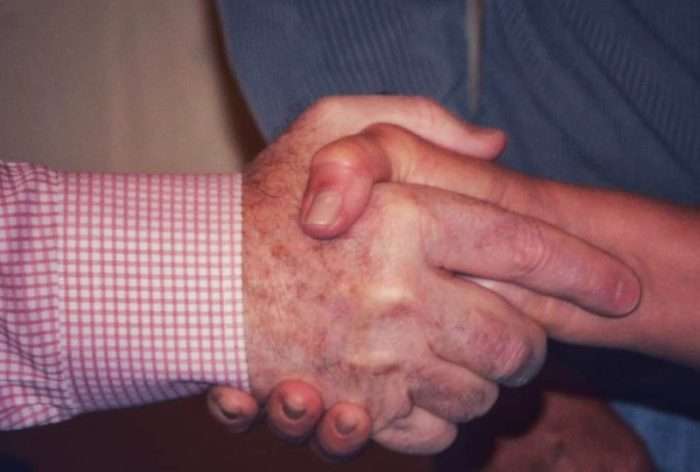
Since Veterans Day, I’ve been thinking a lot about service: the kinds of service, who served, and the term, “Thank you for your service.”
When a man my age sits across from me and notices my USMC hat and looks away, and looks back, looks away, and then says, “Thank you for your service,” I am always flummoxed, and sometimes unable to do much but utter, “Thanks.”
And sometimes I want to ask him where and when he served—but I don’t—and hypothetically, if he answers that he didn’t serve, I want to say, “Why not?” But then that’s really none of my business, so I never ask.
Today, in my thoughts, the bigger notion is me wondering if those folks know what that word actually means—service—and I suspect they do on some level, their level, probably because experience is the only level about which we can speak with any authority.
They may have served their church, or at the school, or at the food bank, all worthy efforts, for the most part, but when they speak those words, “Thank you for your service,” to a military person, do they have any idea about what service actually means?
Maybe I am thinking specifically from the point of view of a combat vet, and maybe a Marine, because, hell, that’s what I am.
I am not talking just in terms of the actual physical damage of combat, death, wounds, etc., but about the psychological damage to the killer, too. The PTSD thing, the thing that never leaves you once you get down to it: the ghost, the haunt, the monster who reminds you of the monster you can become if provoked, if necessary.
I wonder if the “Thank you for your service” folks—a lot of them anyway—understand the ugly truth that the job of so many military people is to engage, or support engagement, in the act of killing.
Yeah, we kill. We killed. We will kill. We might be killed.
Ten years ago, Betty and I journeyed to Quantico to receive an award from the Marine Corps Heritage Foundation and while at the ceremony, the Commandant of the Marine Corps gave a speech that focused on the mission of the Marine Corps.
In the talk, he spoke about the job that Marines do quite often and quite well. He talked about having to go somewhere to kill some people.
He literally said, “Our job is to kill people.”
To kill. Kill.
Granted, the crowd was Marines or Marine Corps Heritage Foundation supporters, but there it was, on the table, the word “kill,” like a three-day-old trout. You can’t avoid it, or what it means.
Most of our leaders—even though they understand the goals of a mission might include killing some people—muffle and sidestep so the good folks who want no part of the dirty business of death don’t have to confront the ugliness of what being an American often means.
We kill to attain the goals of our mission. Not always, because sometimes just the threat of killing does the job; but still, it’s often about fear and life and killing.
When I served in Vietnam in the sixties, we spent our days dealing with the specter of death that hung in the air day and night. Friends died. Enemies died. And sometimes we wanted to kill.
I tried like hell to kill people when the opportunity afforded itself and when necessity demanded, “Kill!”
In February, 1968, at the height of the Siege of Khe Sanh, when the North Vietnamese Army kicked the hell out of us pretty damned well, an event happened that really sticks in my mind.
It was night. I wasn’t due to go on watch for a while. I was wide awake. I went down the trench, bent low to hide my head. I don’t remember where I might have been headed, but on the way, I ran into Stein who’d served with me for the entire eleven months I’d been with the battalion in Nam.
He was on top of the platoon command post with an M-14 rifle with a starlight scope which enabled the shooter to see figures moving around in the dark.
I climbed up and Stein told me he was shooting at men over in the enemy trench which was quite a way out from where we lay on the roof.
It was damp and misty and black as hell, the only light coming from explosions of incoming enemy ordnance or the quick, bright muzzle flashes of our outgoing replies.
I wanted to get a look at the enemy out there and I wanted to shoot one, or two, or two hundred; to get even, to stop them, to match man for man the comrades they had stolen from us.
We bickered and argued, and eventually he let me take a look. The enemy troops were not clear, but I could see them moving and breathed deep and squeezed the trigger. Yep, I tried. Maybe someone’s mother mourned when she found out I’d killed her son. I don’t know. Maybe I missed. But I tried.
Stein and I handed the rifle back and forth for a while until we stopped shooting at people, not knowing if we’d really done any damage. But there was a certain satisfaction in knowing that we’d done something: our part. At least I felt that way. That my small contribution, my small “service,” would make a difference in the big and horrible killing we were part of. That we were expected to do. That we were asked to do by the American public. This is what we are now thanked for.
Today, it doesn’t feel so great, knowing they are thanking me for something they probably have no knowledge of. Killing.
~ By Ken Rodgers
_________
Thank you for reading, and for honoring all Vietnam War veterans by sharing our films and stories with friends and other veterans.
BRAVO! Common Men, Uncommon Valor can be viewed on Amazon Prime. We also have DVDs available, which can be ordered on our website at https://bravotheproject.com.
You can find information about our companion film featuring eleven amazing spouses of combat veterans from various eras at https://imarriedthewar.com. I Married the War can be viewed on Amazon. DVDs are also available via the website.