Bravo! The Project - A Documentary Film

Posts Tagged ‘Ghost Patrol’

Other Musings

February 25, 2026

I Think It Broke All of Our Hearts
Tags: , , , , , , , , , , , , , , , , , , , , , , , , , , , , , ,

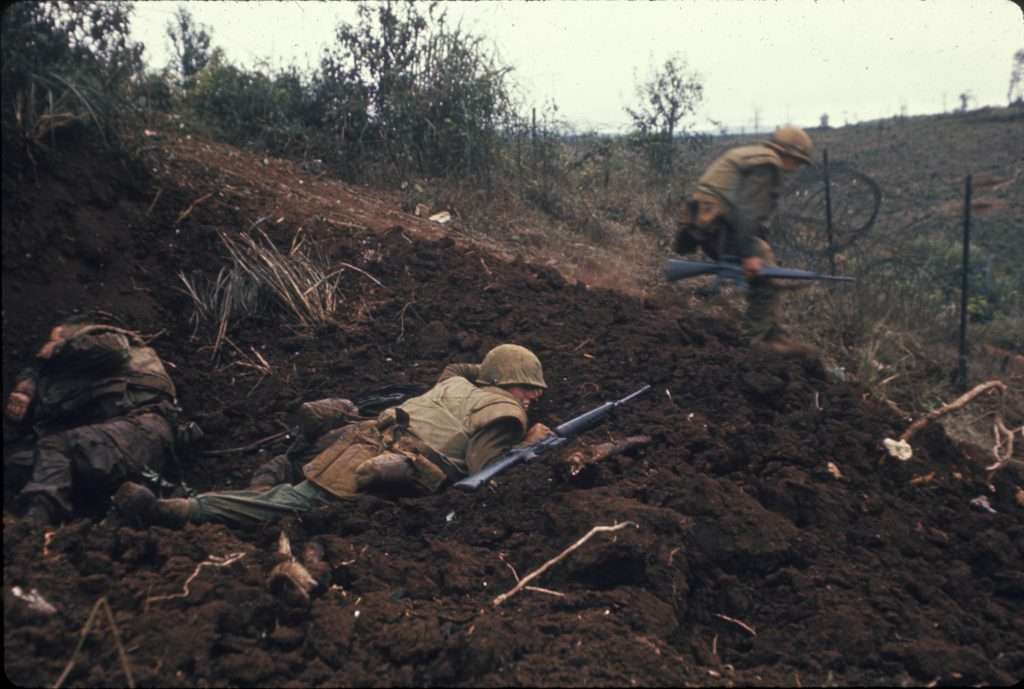
Khe Sanh, Vietnam (1968)
Vietnam War.
Credit: 1968 Robert Ellison/Black Star

This morning, and frankly, many mornings every week, month, and year over the past fifty-eight years, I think of what happened to my mates on this date in 1968.

I was there, in the close vicinity, I heard, I should have been out there, we weren’t allowed out there, we watched them return, we heard the stories, we listened, we whispered, we resented our leaders, we hated our enemy, we wanted revenge, we lived with it, we were guilty, we are guilty, we will always be guilty.

But whatever my recollections are of this anniversary of what has come to be called the Ghost Patrol, they are nothing compared to those who went outside the wire and walked—or were led by a young officer—into an ambush. A slaughter.

When we made the film, BRAVO! COMMON MEN, UNCOMMON VALOR, we talked during each individual interview about the date, the horror, the aftermath.

Here are some things the survivors had to say about that date. I have added some of their additional remarks that are not included in the film and have never before been heard.

Cal Bright

“I was on a patrol on February 25th. We were leaving at, I think it was like 0800, 0900, something like that. And I ended up being point for a while, and my team member, a Clayton Therrell, who was from Racine, Wisconsin, was directly behind me and we got out so far and he motioned for me to stop. He says, ‘I’m going to take your place,’ he says, ‘This is your first patrol and consequently we just want to be safe.’ I said, ‘Okay, fine,’ and probably within five minutes, all hell broke loose from the back portion of our patrol, and I find out afterwards two or three NVA jumped and suckered part of our platoon into following…chasing them, which they definitely did and that’s when the ambush was really sprung.

“And when I finally hit the ground, I could tell that Therrell was killed. My team leader who was Lance Corporal Thrasher from Oklahoma City, asked me to go up and retrieve the body, or bring him back, he might still be alive. I kind of knew differently, but, okay I would. So I stripped down and went up and grabbed ahold of his flak jacket by the collar and as I was dragging him back, the body was bouncing, jumping back and forth and I could feel bullets whizzing past my head, to my sides, and so in a sense, his body protected mine and I look back and for a long time, in fact I still do it every once in a while, that it should be me instead of him, but I guess the good Lord upstairs had something more in mind for me. “

John “Doc” Cicala

“That’s a tough one. I relive that thing quite a bit. I remember us saddling up and going out the gate. We had a Chu Hoi scout with us and we were supposed to follow a designated route, bracketed on all sides by artillery within an instant. Well, we got about five hundred meters, I guess, outside the gate, crossing the road, and Lieutenant Jacques spotted a couple of North Vietnamese standing over in a field, and he made a decision, we’re going to take ’em prisoner. And I do remember the Chu Hoi telling him no, and a lot of us saying maybe we shouldn’t do this, but he gave the order, so we went to get ’em. And, I guess probably a few hundred yards further out, we crossed the road, we crossed a set of trench lines and then they opened up on us and it was just pure chaos from there on.”

Ben Long

“I helped plan that patrol. We had made the checkpoints. I knew how far they were going out, and from my perspective I thought this patrol should have no problems; there should be nothing to be concerned about. So, I remember watching them go out the wire. You couldn’t see them for very long because it was very foggy. And they soon disappeared and I went back in the bunker. I remember listening on the radio—they were checking in and what they were doin—and then I got busy because the next thing I realized was that they had contact, and I didn’t realize—wow, they’re in contact. How did this happen?  Because I thought, no way they’re going to be in contact when they follow the route that we had prepared for them. So I thought, either in the fog they got lost, or didn’t know where they were, or they were well beyond the checkpoints…it shouldn’t have happened that way.

Company Commander Ken Pipes

“There’s been a lot of things written about that, some of it not good, some of it an attempt to be factual. But it was something that was not uncommon in Vietnam at the fire team, squad, platoon level, and in some instances entire battalions, entire companies.”

Peter Weiss

“I was the backup for Don Jacques, and so when he went out, my platoon—two of the squads—we were the backup. So we were on the radio listening to what happened and when he was ambushed, Captain Pipes came on the radio. ‘Okay, Lieutenant, it’s your time to go out.’ And two squads—we  actually split up—one squad and I went straight out towards where they were. The other squad went to the right, which was up toward the road, because the sergeant I was with had been out there before…had been there for a while, and he knew the terrain. I didn’t know what was out there. I’d never been outside the perimeter other than being on the hill. And unfortunately, he got trapped in the same kind of ambush, and so of that squad—maybe of ten men, I think—four were killed in that ambush.”

Steve Wiese

“It took me thirty-five years before I could get into my mind that we went out there at nine or nine-thirty, whatever it was, ten in the morning, and I didn’t make it back into the base until the sun was going down, and used darkness as a cover to work my way back.

“But the initial ambush, once they opened up, I mean it was bad. I mean they opened up and you know most of the guys went down in the first minute. I mean, it was not a good thing. The actual battle itself at that point went on for hours. The only reason I survived was I just happened to be standing in a bomb crater where it was like 2-1/2 feet deep where it blew the ground out, and I just happened to be walking through that at the time that the ambush opened up. And when the first round went off, I dropped and just…my luck was that I just dropped in that hole. So I was below ground level when all the—you know—all the bullets and everything were going over. And I just laid low.”

Cal Bright

“I come across a radio operator who had been killed—to this day I have no clue who, what his name was. And all I could hear on the radio was, ‘Hello, hello, anybody there, anybody hear us?’ And I never had any training whatsoever as far as talking on the radio. I had none whatsoever.  But I knew, press the mic. So I keyed the mic and said, ‘Hello.’ And somebody come back and said, ‘Who’s this?’ and I said, ‘Well, this is Cal.’

“‘Cal who?’ And I told him. He said, ‘Who else is there with you?’ I called back and I said, ‘Nobody.’ He said, “What do you mean? I said, ‘There ain’t nobody here alive; they’re all dead.’ And he said, ‘Where are you at?’ and I says, ‘I’m laying next to a road and I’m overlooking another road that goes down over a hill.’’ And he said, ‘How did you get there?’ I said, ‘This is where we ended up.’ He said, ‘What can you see, from where you are…laying down?’ I could see little helmets in the background.

“Unbeknownst to me at the time, I was just a few meters away from the NVA trench line. I had no clue I was even there, that close to them, and somebody else come on the radio and says, ‘I want to shoot a round.’ He says, ‘I want you to let me know where they land.’  I say, ‘Okay.’

“Next thing, out comes a round—afterwards I found out that it was a Willie Pete round. It was a spotter round, and I went back to him and I said, ‘You need to drop the range down,’ and he says, ‘How much?’ I said, ‘50 yards, 75 yards,’ something, and he dropped it. Shot another round. I says, ‘You need to drop it another 40 yards,’ he said, ‘Okay.’ He says, ‘Bury your head, because we’re going to fire for effect.’ And that was the last I heard, because all of a sudden, bah bah bah boom boom boom, rounds were going off left and right.”

John “Doc” Cicala

“I just watched a guy drop and I took care of a couple of guys and then I was crossing back over the road because another guy got hit, then the next thing I know I seen a guy pop out of a fighting hole. He hit me a couple of times in the chest. I was laying there and the other Corpsman, Frank Calzia, seen me go down and he come running over yelling at me, ‘JC, are you okay, are you okay?’

“And then a grenade landed between my legs and I looked down and I seen it and I yelled ‘Grenade,’ and he hit the dirt and I curled up into a ball and it went off and I couldn’t hear or see anything for a minute with all the dirt and everything and then when I could see, my foot over there and I’m thinking to myself, this isn’t good. My foot moved and I said, ‘Well, at least it’s still attached,’ and by that time Frank came over and he said, ‘You know, we got to get out of here,’ and I told him, ‘Git, you know, go take care of that guy, I’m okay, I’ll take care of myself.’

“And then Lieutenant Jacques came running by and he looked down at me and he said, ‘Doc,’ he said, ‘Get out of here.’ He said, ‘We’re all getting killed.’ And he made it from about here to the wall and I seen him go down and I crawled over to him and he’d caught it right across the legs, both his femoral arteries, and by the time I got to him he’d already bled to death and there was nothing I could do for him.

 Ben Long

“In all the confusion that’s going on, men were getting shot and you could hear that happening and I moved from my bunker. I moved up on top because I not only wanted to listen, but I wanted to see if I could see them, and it was too foggy and I still couldn’t see, but I still stayed outside because I thought maybe I’ll be able to see something. Maybe the fog will float by and I’ll be able to get a glimpse, but really, it was very foggy that day and you couldn’t see hardly anything.

“First Platoon was called up and they were the ones who were supposed to go if it got into trouble and I thought, they’re not going to get in trouble, no problem. I was Platoon Commander for that platoon for 8 or 9 months, for a long time. Those were my buddies. They were my friends. I knew them. And I thought, if they’re going to go out, I want to be their leader. I want to take them out. I know how they work together.

“And so it was hard for me to not be with them. I knew that some of my friends were being shot, some I knew were dying. I heard it on the radio. But it would just tear your heart out. These were guys that I had been working with for a long time. I felt helpless. I felt so powerless. There was just nothing I could do. I mean, I wanted to do something. I think everyone in the company wanted to go out. We wanted to do something, but we got orders: no, no more people, we can’t do that, can’t go out.”

Peter Weiss

“Then we got the word, come back, retreat, and I remember very well, because we were laying out in the open because we got stopped at some point; rockets started coming in.

“I was right next to someone who I believe was killed because I checked his pulse. My weapon had stopped firing. Couldn’t use it. Just me and the body and I wasn’t sure if I should drag him back. And bullets started coming…being walked toward the two of us. And the last one stopped right at the fellow, right in his chest—must have been a fifty caliber hit him, and I said, ‘He’s got to be dead.’”

Steve Wiese

“You know, the initial blast started quieting down, and then you could tell they were just firing pretty randomly and if anybody moved, they just drew fire. So I just laid there and threw grenades. Shot a clip of ammo out of my rifle which basically I figured out pretty quickly, that was not a smart thing to do. Because as soon as I fired a round there were hundreds of guys shooting back. So, it was like okay, don’t draw attention to yourself.”

Cal Bright

“I was able to get out of there after some time. How long? I have no clue. It was still daylight but I could tell that the sun was—what there was of it—was going down so I figured it had to be late afternoon, early evening.

“I knew where our lines were at, and I was able to evade some enemy soldiers, and I was able to get back, and then, as I was coming back, all of a sudden, here’s these—I didn’t recognize as to who they were until I got closer—South Vietnamese ARVN Rangers. And they were waving at me to stop. And then I could see some American advisors telling me to stop, halt, don’t move. Don’t move, whatever, but I kept coming. And that was when I tripped over barb wire that also had a red triangle-shaped sign on it. Come to find out afterwards, I went through the entire mine field in front of Khe Sanh and never touched a round off. Now I know why they kept telling me to stop  and not to move.

“Again, I’ve never been real religious, or anything whatsoever, but I have to think that the Man Upstairs had something in his…on his agenda. Says, ‘I want to talk to you, young man.’

“I know there has been conflicting reports as far as how many of us went out. I was led to believe there was like anywhere from 60 to 70 of us that went out and there was only just a small handful of us that come back.”

John “Doc” Cicala

“They said I made it back to the base, maybe six, eight hours later. But I did see a lot of guys go down. I seen Clay go down, I seen Jerry Lee Dotson. I took care of them. There’s nothing you could do, it was just chaos for that five or six…probably five minutes or whatever it was. I mean I heard all the stories afterwards. We ran into a battalion-sized force and everything, but it didn’t last long and it wasn’t pretty. That’s for sure.

“I crawled back to the base. I was kind of passing in and out, you know. I don’t remember all the details and I was pretty well messed up myself, but I do remember setting off a trip flare and when that went off I was thinking, ‘Oh, shit,’ but one of the weapons platoon guys—a guy named Eddie Pendergast—had a set of binoculars and he looked out and seen my uniform and he said, ‘Stop, cease fire, that’s a Marine coming in,’ and he physically ran out, him and a couple other guys, and they threw a poncho over the wire, grabbed me and yanked me back over the wire. Took me to Charlie Med.”

Ben Long

“I just started seeing people coming back, not in groups, but straggling back and some were wounded. Some were very severely wounded, and it was just very hard to take, but from my perspective, also what I saw was just a sense of confusion, a sense of ‘what’s going on…what’s happening?’ And it’s like how come we’re not doing anything? How come we’re just standing there? How come we’re not going out?

“We always want to rescue our people and we don’t want to leave our dead and wounded. Nobody was doing anything, and it was hard. Hard to watch that. We wanted to do something, but at the same time, we just couldn’t. So we had to be patient and wait and that was hard, that was really hard.”

Company Commander Ken Pipes

“But that one, that one was the hardest, I think. I think it broke all of our hearts.”

Peter Weiss

“We came back, maybe about three or four of us left, and we then came back into the perimeter. And a couple hours later, we were shelling that area. Planes were coming over dropping bombs, and all of a sudden, out on the outskirts of the wire, a lone Marine came. He was not in my platoon. And then I went out to get him. Walked through that minefield, not, you know, around the side, but through the minefield. And I was scared. Walked through the minefield, walked through the concertina, and he was in absolute shock. Grabbed him by the arm and we walked back through the minefield, back into the perimeter. I was happy that I got him out of there and that we both got back. That was a sad day.”

Steve Wiese

“I ended up leaving my rifle and just trying to work my way through. I had a pistol and I was using that for personal protection because the rifle was useless at that point, and it was just something to carry. I would dive from one bomb hole to another. Work behind anything I could find that was any kind of cover.

“I would lay there for fifteen, twenty, thirty minutes. So, in between the firing, when it started to settle down a little bit, I would try to, you know, peek above and see, try to see where I could get to. And it took several hours, you know, of working my way across and moving out of the kill zone.

“Sometimes I’d have to lay there for two hours and wait for the firing to slow down. Towards sundown, in the shadows, I could move better and I worked my way out and moved down around the back and came back to the base.

“Several people came in through the gate, you know, and it was just like, where is everybody? I just remember the guys saying, ‘You’re pretty much it.’ When I got back to my squad area, Author Smith was in the bunker, and he said he was it.”

To reiterate what Skipper Ken Pipes said: It broke all of our hearts.

They are still broken.

~ By Ken Rodgers

To learn more about each of the men in this blog, click here.

_______________________________

Thank you for reading, and for honoring all Vietnam War veterans by sharing this blog, our films, and stories with friends and other veterans. 

BRAVO! Common Men, Uncommon Valor can be viewed on Amazon Prime. We also have DVDs available, which can be ordered on our website at https://bravotheproject.com.

You can find information about our companion film featuring eleven courageous spouses of combat veterans from various eras at https://imarriedthewar.com. I Married the War can be viewed on Amazon. DVDs are also available via the website.

Other Musings

February 25, 2025

A Ghostly Memory

Tags: , , , , , , , , , , , , , , , , , , ,

Stark image from the Ghost Patrol. Photo courtesy of Robert Ellison/Blackstar

By Ken Rodgers

February 25, 1968, now known as the Ghost Patrol, is like a festered boil on the back where you can’t scratch, dig, burst the skin and let the pus flow.

How remembrance haunts these days of February, the last days at Khe Sanh, the faces like ghosts in a movie, now here, there, a different man, the ones I loved, the ones I didn’t. Dead, mauled, wounded, still living.

Twenty-seven fellow Marines from my company died that day. Another we thought had been killed in action showed up years later when he got off the plane bringing American POWs home from the Hanoi Hilton.

For me, what happened is still blistered on the parts of my brain where trauma, fear, despair and memory meet.

Third Platoon Bravo, First Battalion, 26th Marines, went outside the wire on the Gray Sector of Khe Sanh Combat Base the morning of February 25th on what we, at the time, thought of as a routine patrol over a route that all of us in the company—if we’d been there any length of time—had made. Routine, I thought when I heard they were going out. Routine.

They encountered a couple of NVA soldiers off in the distance and went to “get ‘em” as Doc Cicala, one of the platoon’s corpsmen, told me forty-two years later.

In hindsight, what happened was an example of the “draw play” metaphor in combat utilizing a term that came from football.

Th Marines walked into an ambush and what followed was devastation and chaos. Marines from First Platoon, Bravo Company, went out to help and were also ambushed.

From our positions along the line, we heard the firefight. We heard, if we had access to radios on the company frequency, the distress and fear and alarm in the voices coming through our headsets. We heard the rumors sweeping down the trench. Second Platoon saddled up, mostly on our own initiative, and some Marines even went down to the gate in anticipation of being ordered to relieve the besieged Marines.

That word never came.

Shame. Shame on us, we thought. Shame on colonels and generals and politicians and anyone who had a hand in making the decision to let those men stay our there and either die or crawl back to our lines, which a number did, some seriously wounded, some with no memory of how they made it, some with memories so distinct the evasion necessary to escape death haunted them, and haunts them still.

A photographer, the late Robert Ellison, not in the military, but who was documenting the savage hell for the defenders of the base, went out the wire and took a lot of photos of the men in various stages of returning to the base.

Those photos were plastered all over the world, it seemed, and for those of us who failed to relieve our battered brother Marines, every look at the photos over the ensuing years brought the shame back down like a bat intent on sucking your blood.

Still sitting here, thinking of this, that day, those men, some of whom I knew, some whom I befriended later, brings a shroud of sadness that I cannot get rid of.

People tell you, “Man, that was so long ago. Let it ride.”

But I can’t and neither can the others who were comrades with me, with those Marines and Corpsmen on February 25, 1968.

_________________

Thank you for reading and sharing our story with friends and other veterans.

You can find information about our companion film featuring eleven spouses of combat veterans at https://imarriedthewar.com.

Documentary Film,Marines,Other Musings,Siege of Khe Sanh,Vietnam War,War

February 25, 2022

February 25, 2022

Tags: , , , , , , , , , ,

February 25, 2022

In Their Own Words

Fifty-four years ago today, one of the most despairing events of the entire battle known as the Siege of Khe Sanh occurred.

Third Platoon, Bravo Company, 26th Marines went out on a patrol and were ambushed.

Two squads from Bravo Company’s 1st Platoon went out to relieve them. They were also ambushed.

A lot of the survivors stumbled back into the perimeter over the balance of the day.

The memories still gnaw the guts of the men involved, as well as the men who watched.

What was it like?

Let some of the Marines and Navy Corpsmen who made it home tell you. These comments are from the original interviews done for the film BRAVO! COMMON MEN, UNCOMMON VALOR. You may recognize some of these remarks from the film and some of them you have never heard. Even though the interviews were conducted on an individual basis, the men often recollected the same events without anyone prompting. That was one of the amazing things about interviewing the men of BRAVO!.

The ambush and ensuing slaughter took on a name:

THE GHOST PATROL

The Ambush:

Cal Bright:

I ended up being point for a while and my team member, Clayton Theyerl, who was from Racine, Wisconsin, was directly behind me and motioned for me to stop. He says, “I’m going to take your place. This is your first patrol.”

Probably within five minutes all hell broke loose.

Theyerl was killed. My team leader, a Lance Corporal Thrasher from Oklahoma City, asked me to go up and retrieve the body. As I was dragging him back, the body was bouncing , was jumping back and forth and I could feel bullets whizzing past my head, and in a sense, his body protected mine.

Marines on The Ghost Patrol. Photo Courtesy of Robert Ellison/Blackstar

John “Doc” Cicala:

We crossed a set of trench lines and then they opened up on us and it was just pure chaos from then on.

I watched a guy drop and I took care of a couple of guys and then as I was crossing back over the road because another guy got hit, then the next thing I know I seen a guy pop out of a fighting hole. He hit me a couple of times in the chest.

And then a grenade landed between my legs, and I looked down and I seen it and I yelled, “Grenade.”

I curled up into a ball and it went off. I couldn’t hear or see anything for a minute with all the dirt and everything, and then when I could see my foot over there and I was thinking to myself, This ain’t good. My foot moved and I said, “Well at least it’s still attached.”

Steve Wiese:

You know, most of the guys went down in the first minute. The only reason I survived was I just happened to be standing in a bomb crater where it was like two, two and one-half feet deep where it blew the ground out and I just happened to be walking through that when the ambush opened up.

Ben Long:

Men were getting shot and you could hear that happening.

John “Doc” Cicala:

Lieutenant Jacques came running by and he looked down at me and he said, “Doc,” he said, “get out of here,” he said, “we’re all getting killed.”

1st Platoon tried to relieve the beleaguered Marines:

Peter Weiss:

Two squads, we actually split up, one squad went straight out towards where they were. The other squad went out to the right. And unfortunately he got trapped in the same kind of ambush and so of that squad, maybe ten men, I think, four were killed in that ambush.

They were ordered to retreat while the fight went on:

Mike McCauley:

You could hear it in the distance. We could hear it on the radio. The screams and stuff that was going on.

Steve Wiese:

As soon as I fired a round there were hundreds of guys shooting back.

Cal Bright:

I come across a radio operator who had been killed. To this day I have no idea what his name was.

All I could hear on the radio was, “Hello, hello, is anybody there? Anybody hear us?”

So I keyed the mike and said, “Hello.”

Somebody came back on and said, “Who’s this?”

“Well this is Cal.”

“Cal who?” And I told him and he said, “Who else is there with you?”

I called back and said, “Nobody.”

I could see little helmets in the background. Unbeknownst to me at the time, I was just a few meters from the NVA

trench line.

Marines on The Ghost Patrol. Cal Bright on the left. Photo courtesy of Robert Ellison/Blackstar

Escape:

Ben Long:

I just started seeing people coming back, not in groups but straggling back and some were wounded.

Cal Bright:

I was able to get out of there after some time. How long? I have no clue.

John ”Doc” Cicala:

They say I made it back to the base maybe six, eight hours.

Peter Weiss:

I went out to get him. Walked through the mine field, not you know, around the side, but through the mine field. And I was scared. Walked through the mine field, walked through the concertina, grabbed…and he was in absolute shock. Grabbed him by the arm and we walked back through the mine field into the perimeter.

Steve Wiese:

I worked my way out and moved down around the back and came back to the base. And it was just like, “Where is everybody?” and I just remember the guys saying, “You’re pretty much it.”

For those who watched and listened, who weren’t in the fight:

Dan Horton:

We knew they were getting hit. We…we wanted to go out. They wouldn’t let us go out. It was just…it all happened so fast and you know it was wild. And we wanted to go out and help them out and bring them in but Headquarters said no.

Ken Korkow:

A number of us went up to Battalion and we begged to go out and get those guys and bring them back. We had to watch while those guys were getting chewed up in front of us. The Marine Corps has this saying, “We always recover our dead.” Nobody said it was going to be over a month before we recovered them. Attitudes turned really bad inside the perimeter.

Lloyd Scudder:

When I finally get back to Khe Sanh, my platoon is wiped out. I don’t know anybody. I feel like I abandoned them, I’ve been trying to prove myself ever since that deal with the Ghost Patrol…I just feel guilty.

The enduring emotional pain was palpable:

Ken Rodgers:

That’s kind of the notorious event at Khe Sanh, was the Ghost Patrol, because all those guys got killed and they got left…the bodies got left out there.

Ken Pipes:

I think it broke all of our hearts.

As I wrote this blog, sadness got in my bones and showed me a bit of the agony that we all felt that day. You’d think one could get over this stuff. You hope you get over it.

But you don’t.

DVDs of BRAVO! are available @ https://bravotheproject.com/store/.

A digital version of BRAVO! is available in the US on Amazon Prime Video @ https://amzn.to/2Hzf6In.

BRAVO! has a page on Facebook. Please “like” us and “share” the page at https://www.facebook.com/Bravotheproject?ref=hl.

The new documentary film from Betty and Ken Rodgers, I MARRIED THE WAR, is now available to watch. Check it out at https://imarriedthewar.com/.

Eulogies,Khe Sanh,Marines,Veterans,Vietnam War

March 25, 2020

Requiem

Tags: , , , , , , , , , ,

Steve Wiese was an American Hero. I think he would dispute that statement and would have said something like, “The real heroes are the dead, the ones who didn’t come home.”

But he was a hero.

Unlike so many of us who fought with Bravo Company, 1/26 at Khe Sanh, who did 12-month-and-twenty-day tours, Steve extended his time in country and served 18 Months. He joined up with his Bravo Marines when 1/26 was headquartered at Hill 55 southwest of Danang, and could have rotated home in late autumn of 1967, but chose to come back from his leave just in time to endure the Siege of Khe Sanh.

Marines of Bravo Company, 1/26, in Vietnam. Steve Wiese is the second man on the left, and in the front row. Photo courtesy of Steve Wiese.

In many regards, I think, he was the Marine’s Marine, a leader and a warrior who loved his Bravo Company mates.

A lot of Khe Sanh vets knew Steve better than I did, but what we shared was special: intense and intimate in the ways combat veterans share. We’d been to war and we’d made it home and after decades of keeping our traps shut about our experiences, we opened up and told our stories, separately and together.

And boy, did Steve’s stories impact the message that, after thirty-plus years, went out to America and the world.

Steve Wiese at a reunion of the Khe Sanh Veterans. Photo courtesy of Ken Rodgers

The things Steve said in BRAVO! COMMON MEN, UNCOMMON VALOR illuminated the service of all Vietnam Veterans. He said it like it needed to be said, blunt and bold and no-holds-barred. He bared his soul and revealed his vulnerabilities while edifying the men with whom he served.

There were a lot of tragedies in Steve’s life. In Vietnam, with Bravo, he was involved in every battle or firefight of any consequence that happened during his tour.

While I managed to not be in a number of the fights that Steve was in, I lived through enough to get an inkling what it was like for him.

On June 7, 1967, in what has lately been termed by historians to be the last clash in the Hill Fights segment of the Battle of Khe Sanh, Bravo went on a two-platoon patrol off the north end of Hill 881-S. Back then, we patrolled in soft covers and no flak jackets, and we generally ran patrols on the same routes every few days.

Photo of Steve Wiese, second from left along with, on the left, Marcia Franklin of Idaho Public Television’s Dialogue, Betty Rodgers, second from the right, and Ken Rodgers. Photo courtesy of Idaho Public Television.

So, when the NVA ambushed Bravo out there that day, the casualties were devastating. I wasn’t out there. Our squad stayed on the lines but I heard it and I saw it, and how it felt to me then, sticks with me now: emptiness, like some part of me hightailed it and can’t come back. So with that in mind I can only imagine how those men who fought that day—like Steve Wiese—felt.

He gained some notoriety that day when, upon coming in the gate after the patrol returned to the combat base, he barked at a colonel, maybe, or a lieutenant colonel, or a major who tried to soothe the returning warriors with platitiudes. (A load of officers came up on the hill at the end of that fight.)

After returning to his squad area, he expected to be standing tall in front of The Man because of what he said, but instead he was approached by a general, whose name I don’t think he ever enlightened me with, who told Steve to not pay attention to anything that officer had said.

On July 21, 1967, First Platoon of Bravo went out on a patrol on Route 9, east of Khe Sanh, which was ambushed. Steve was out there that day, too, and men with whom he served and bonded, died.

And then there was the Siege and all that came with it.

Including the Ghost Patrol. Steve was a squad leader on that debacle and even though he survived, a lot of the men in his squad didn’t. He carried a ton of grief and guilt over that. His narrative about how he managed to escape and evade the NVA to return to the base is one hell of a story.

Steve Wiese during his interview for BRAVO! COMMON MEN, UNCOMMON VALOR. Photo courtesy of Betty Rodgers.

And then there was the savage Payback Patrol where he was a squad leader in First Platoon and again, lost a lot of good Marines.

After he came home, he put up with all the guff and lack of respect that came with being a Vietnam Vet, and he suffered tragedies that would break folks with less steel in their spine.

He loved his Marines and he cherished and honored them whether dead or alive.

IF you were one of his Marine Brothers, he supported you. He showed up when the manure hit the fan.

One of the strongest moments in BRAVO! Is when Steve says this, “I’ve had people say, ‘Well, that was 30, 40 years ago. Why don’t you get over it?’ You know, I wish I could. I wish I could get over it. But on the other hand, it’s like I don’t ever want to forget these guys. I don’t want to forget what I’ve seen, what I was witness to. And I don’t want to forget them and their memories.” And he never did.

Steve wouldn’t have called himself a hero, but I will.

_______________

Steve Wiese left this world on March 20, 2020. He was an exemplary Marine who spoke eloquently and from the heart during both interviews and eulogies. To quote Steve’s own words, “Be sad that he is gone, but happy that he was here.” Semper Fidelis, Steve.

***

Documentary Film,Khe Sanh,Marines,Veterans,Vietnam War

March 21, 2020

Elation

Tags: , , , , , , ,

After the Ghost Patrol of 25Feb1968, no larger units sortied outside Khe Sanh combat base for almost a month. We sent out some listening posts but those were small and they went out after dark and came in before sunrise while the mist still hung low to the ground.

But on today’s date fifty-two years ago, as the sun threw up the first hint of daylight, we Marines of Second Platoon, Bravo, 1/26 stood in the trench and smoked our Camels and Winstons and Salems, flinched at the incoming rounds, heard the scrape of scuffed jungle boots in the red mud at the bottom of the trench. Noted some mumbles.

And if fear had sounds, they would have ricocheted in the deep trench, off the walls, against the sandbags. Being Marines, we needed to keep the fright quarantined to a slow boil at the bottom of our guts. We must not entertain the notion of fear because its insidious gnawing weakened us.

And then out the gate we went, crossed over the minefield, got on line and charged across the vale and up the ridge towards the NVA position in the vicinity of where the Ghost Patrol had traveled.

After the Siege. Photo courtesy of Mac McNeely

Our big guns on base boxed us in with ordnance, geysers of red mud, black smoke and the din of combat suddenly crammed in our ears and brains, sucking the breath out of our lungs. And as we headed towards our objective, our allies to the rear, on the base, fired machine-guns over our heads.

As the Marines of my old squad, Third Squad, reached the top of the ridge, explosions erupted among them and then .50 caliber rounds fired by our guys, our allies, our mates, ripped into the men of Third Squad. I saw the rounds hit; flashes and bodies pirouetting, falling.

The explosions I suspect were from NVA mortar rounds and RPG rounds, but the machine-gun fire was what we call friendly fire. Friendly fire.

Up top, while the wounded were medevacked, we got in the NVA trench and headed east. At one point elements of First Squad, who were on point, veered off to the north, away from the trench.

We’d been briefed to stay in the NVA trench because it was believed that the surrounding terrain was infested with booby traps.

When this went down, I had about fifteen days left in the field. I’d survived my twelve month-plus tour by being good at surviving, being lucky, not being heroic, just doing my job and keeping it as low profile as possible.

So I was shocked as I took off, out of the trench, sprinting behind the Marines of First Squad, yelling, “No, no,” and when several turned at my words—and as I think of it now, how they heard me in the furious din that boomed around us—how they weren’t blown up by some of that ordnance and how we all didn’t get blown to smithereens by the mines and booby traps out there where we had wrongly ventured, is a wonder to me to this day.

But, nobody lost legs or died or anything. We just got back in the NVA trench and drove on towards our goal.

Not far from our destination, a gate we could enter through the maze of our own mines and wire and booby traps, the man on point triggered an NVA booby-trapped grenade that went off. He went down, but then got up and a Corpsman went to succor him and after that, we went in, missing some of the men with whom I’d served previously in Third Squad. The squad leader, Corporal Jacobs’ back had been rent by one of those .50 caliber rounds that had been delivered by the friendly fire. He stood there among us like nothing had happened to him.

Author Ken Rodgers at Khe Sanh. Photo courtesy of Michael O’Hara.

After we all retired to our area, we shouted and jumped up and down and the Marines sent historians to record our thoughts. I remember relief. I remember a sense of satisfaction, and I also remember feeling extremely elated. How I imagined exaltation. I was bad, I was indestructible. I was alive.

And we’d gotten in their trench. Their trench.

We were…were…were unbreakable, we were shatterproof, we were everlasting.

The thing that sticks in my mind after all these years was that high, that feeling that I stood atop a throne at the apex of the world was at that moment so different from the almost two months of despair that permeated everything that I had lived through. Thousands upon thousands of incoming rounds that shook the ground—some that roared like railroad engines and some that hissed like sneaky spirits—and dismembered men I knew and didn’t know, who at that time and in that place were like twin brothers to me.

I realized that for two months I’d lived on huge doses of luck and that sometime, if the siege did not stop, I’d be hit by a whooshing chunk of shrapnel that would sever an arm or a leg, or I’d be sitting in my bunker and a rocket round would crash through the roof and my fellow Marines would be gathering my parts that were pasted on the sandbag walls, or a sniper would put a round through my brain.

So, having been in their trench, and having survived, and for at least a few hours, having been on top, the aggressor, the winner so to speak. Yeah, I was elated. I was bad.

***

DVDs of BRAVO! are available @https://bravotheproject.com/store/

A digital version of BRAVO! is available in the US on Amazon Prime Video @ https://amzn.to/2Hzf6In.

In the United Kingdom, BRAVO! is available on Amazon Prime Video UK @ https://www.amazon.co.uk/dp/B07BZKJXBM.

BRAVO! has a page on Facebook. Please “like” us and “share” the page at https://www.facebook.com/Bravotheproject?ref=hl.

Documentary Film,Khe Sanh,Marines,Veterans,Vietnam War

February 25, 2020

Grief

Tags: , , , , , , , , , , , , , , , , ,

52 years ago today, one of the most significant events in my memory of Khe Sanh’s siege occurred in what has now become known as the Ghost Patrol. When Marines and Corpsmen from Third Platoon of Bravo Company 1/26 were ambushed by a battalion of NVA, a squad from First Platoon went out to relieve them, and they were ambushed, too. A lot of good Marines, young men with futures that would never be discovered and fulfilled, died that day.

I have written about this a lot over the years I suppose in hopes of finding resolution, and yet I still return to the memories almost daily.

I recall our skipper, Ken Pipes, talking about the event one evening, sadness drooped on his shoulders like a too-heavy mantle. He talked about a patrol on Guadalcanal—the Goettge Patrol, led by Lieutenant Colonel Frank Goettge—that was ambushed by Japanese forces and which lost almost its entire 25-man contingent.

Ken Pipes at Khe Sanh.

Skipper Pipes talked about how bad things happen in war and how the Ghost Patrol was another of the long list of actions where Marines were attacked and nearly obliterated. But his and my recognition of this fact of war had no effect, as far as I could tell, in lessening his profound sense of loss, and responsibility, related to the ambush of 25Feb68.

The Ghost Patrol has been the subject of a number of news articles, battle studies, and for a while was used as a case study in the Scouting and Patrolling class at the Marine Corps Basic School at Quantico, Virginia where all new Marine Corps officers and warrant officers are trained. One of the things they taught in that course was how it feels to lose your troops/mates in the chaotic heat of battle, and in retrospect, the ensuing grief.

One of the online dictionaries defines grief as “deep sorrow, especially the sorrow caused by someone’s death.”

Grief comes in a variety of types. According to the website WHAT’S YOUR GRIEF (https://whatsyourgrief.com/ ), grief can be prolonged, anticipatory, masked, disenfranchised, secondary, cumulative, inhibited, ambiguous, complicated, normal, traumatic, abbreviated, exaggerated, absent, prolonged, chronic, and collective, to name a few.

Blogger Ken Rodgers while at Khe Sanh. Photo courtesy of Michael E. O’Hara.

As far as I can discern from my short appraisal of the types of grief, I suffer—or have suffered, related to the events surrounding the Ghost Patrol: normal, prolonged, complicated, traumatic, chronic and collective grief.

Collective grief, in my case, means that besides my problems with the malady, I am joined by a relatively large number of my fellow Khe Sanh survivors in our grief that is also prolonged and chronic and traumatic.

The French playwright Moliere said, “If you suppress grief too much, it can well redouble.”

For years, for decades, I tried like hell to stuff the grief I felt from my mates having been massacred on today’s date fifty-two years ago. And from my experience, I can say it probably didn’t help to do that. In the Marines back then, and maybe now, too, you were just supposed to tough it out. War’s hell and all that kind of sentiment, or lack of sentiment thereof. But all my grief demanded to be let out.

I think again of Bravo Skipper Pipes and it seems to me that so much of the life he lived in the too-short time I knew him was dedicated to the memories of the men he led who died at Khe Sanh and especially to all those casualties on 25February1968. His grief was palpable. It was long term. It directed him to constantly search for ways to honor those who didn’t come home.

Steve Wiese. Photo courtesy of Betty Rodgers.

Over the years, people have asked me why I don’t just get over it.

When we made BRAVO!, Steve Wiese said it best:

“I’ve had people say, ‘Well, that was 30, 40 years ago. Why don’t you get over it?’ You know, I wish I could. I wish I could get over it. But on the other hand, it’s like I don’t ever want to forget these guys. I don’t want to forget what I’ve seen, what I was witness to. And I don’t want to forget them and their memories.”

***

DVDs of BRAVO! are available @https://bravotheproject.com/store/

A digital version of BRAVO! is available in the US on Amazon Prime Video @ https://amzn.to/2Hzf6In.

In the United Kingdom, BRAVO! is available on Amazon Prime Video UK @ https://www.amazon.co.uk/dp/B07BZKJXBM.

BRAVO! has a page on Facebook. Please “like” us and “share” the page at https://www.facebook.com/Bravotheproject?ref=hl.

Documentary Film,Film Screenings,Khe Sanh,Marines,Other Musings,Veterans,Vietnam War

February 25, 2019

Ruminations

Tags: , , , , , , , , , , , , , , , , , , , , , , ,

Fifty-one years ago today at Khe Sanh, Marines from 1st and 3rd Platoons of Bravo/1/26 went out on patrol from the combat base and walked into an ambush that killed 27 Marines and Corpsmen and wrecked the psyches and memories of a hell of a bunch of young warriors.

This event, now known as the Ghost Patrol, has been written about a lot by both me and other folks, and it was the subject of a field problem in the Scouting and Patrolling Course at the United States Marine Corps Basic School where all new Marine Corps officers and warrant officers receive training. So what I say here isn’t any revelation of new events.

What strikes me now, after all these years, is how raw the memories can be when someone recalls the names, the weather, the terrain, the terror of that day.

For those who survived, the memories are indelibly scratched into the psyche and cannot be kicked out of the mind. For those of us there who witnessed that massacre in one way or another—what happened—the memories are also pretty much inescapable.

Marines on The Ghost Patrol. Photo Courtesy of Robert Ellison/Blackstar

But it’s not just the combatants who live with images of those men. There are also the families who haven’t been able to forget, either.
Since Betty and I made BRAVO!, we have had a lot of communications with folks who lost family members at Khe Sanh.

I recall one day picking up my cell phone and seeing I had a voicemail message from the brother of a Marine killed on the Ghost Patrol. He had found me by chance when he discovered a DVD of BRAVO! in a museum. He hadn’t known about the film until then, and was stunned to see his brother’s name listed in the litany of the dead from that terrible day, February 25. We talked a number of times and I told him I did not know his brother, but if I could help him with any info, I’d be happy to do so.

Then I remembered that a friend of ours had sent a donation to memorialize this Marine in the film credits. In fact, he had recovered the Marine’s remains when a patrol from Bravo and Delta Companies, 1/26, went out and retrieved them.

Here’s what really sticks with Betty and me. My Marine buddy and the brother were able to meet up and talk about memories, about what happened, and hopefully the get-together helped the deceased Marine’s brother process the recollections and questions that had flooded his mind for over fifty years.

Stark image from the Ghost Patrol. Photo courtesy of Robert Ellison/Blackstar

Not long after, I received a call from another man whose brother was also KIA on the Ghost Patrol. I knew that Marine, not well, but still, we’d arrived at Bravo Company about the same time and although he went to a different platoon, my recollections of his renown as a joker, a gung-ho Marine, an ebullient young man who entertained his comrades, matched the brother’s memories.

We discussed that Marine and the film and I could tell from the telephone conversation that what I said had helped him settle something in his thoughts—what it was I have no idea, but it was palpable over the phone.

When we set out to make BRAVO! it was an endeavor to tell the story, preserve the history if for no one else, at least for me. But the creation of the film has turned into so much more for not just Betty and me, but also for lots of other folks who have those memories and ties that they don’t want to chuck out like a set of dirty dungarees. After all the years, the intimate pain still grates.

BRAVO! lives on and as proof, we have more screenings coming up in March.

Blogger Ken Rodgers while at Khe Sanh. Photo courtesy of Michael E. O’Hara.

On March 9, 2019 at 5 PM the film will be screened at the Paramount Theatre in Casa Grande, Arizona—my hometown—in association with the Arizona Marine Corps League’s spring convention. The screening is open to the general public. The event will begin with a panel discussion followed by the film, then a Q&A will end the evening. Proceeds from the event—a $10 advance donation per attendee or $15 at the door or VIP seating at $15.00—will go towards funding the Marine For Life program that helps Marine Corps veterans and their families transition from active duty to civilian life, including education opportunities, employment and other veteran and community resources. More details about the event can be found here: https://m901.org/category/event/.

On March 29, 2019, BRAVO! will be shown in La Grande, Oregon (our Oregon premiere!), as part of the local Welcome Home Vietnam Veterans celebrations. More details soon.

We look forward to seeing you at these events, and greatly appreciate your help in spreading the word. Semper Fi.

***

BRAVO! is now available in digital form on Amazon Prime.

This link will take you directly to BRAVO!’s Amazon Prime site where you can take a look at the options for streaming: In the US you can stream at https://amzn.to/2Hzf6In.

In the United Kingdom, you can stream at https://www.amazon.co.uk/dp/B07BZKJXBM.

***

If you or your organization would like to host a screening of BRAVO! in your town, please contact us immediately.

***

BRAVO! has a page on Facebook. Please “like” us and “share” the page at https://www.facebook.com/Bravotheproject?ref=hl.

Documentary Film,Khe Sanh,Marines,Veterans,Vietnam War

February 25, 2018

The Ghost Patrol—Fifty Years Gone

Tags: , , , , , , , , , , , , , ,

3rd and 1st Platoons of Bravo Company, 1/26 walked into two ambushes that decimated 3rd Platoon and a little later, part of 1st Platoon while it moved to reinforce 3rd Platoon. The event remains one of the most horrifying of my memories of that long and terrible siege.

Prior to this date, back in 1968, Bravo Company ran patrols out on the south and east sides of Khe Sanh without much action, and it was a surprise when 3rd Platoon marched into the initial ambush that morning.

The patrol is well documented in books and films, and the action’s memories haunt the Marines and Navy Corpsmen who managed to work their way back to the combat base. For some of the men, it took hours to get back. Some don’t really recall coming back. It is a horror story. The few Marines I recall seeing and talking with that day looked at me with eyes haunted by the terrors of that fire fight.

For us, back in the base, the news about the debacle out in the field came through radio communications. If one stood radio watch, he heard the sad and frightening blow-by-blow account through the frantic calls of radio operators on site. We also got the news from the sounds of warfare out to our front.

Photo of Marines on the Ghost Patrol. Photo courtesy of Robert Ellison/Blackstar

It was misty that day, as it was on many days at Khe Sanh, but that didn’t deter the report of explosions and small arms fire that flew at us from out of the field.

We sat and waited and wondered if we would go out to relieve them. Several squads from our platoon, 2nd Platoon, mustered and saddled up and made way to the gate near the trash dump, and awaited orders to go out and help the Marines trapped in those ambushes.

Not picked to go out, I received orders to man a portion of the trench where our platoon was billeted. Instead of Marines in fighting holes all over the place, large gaps appeared between our manned positions. I recall thinking that if the NVA came at us right then and breached the concertina barrier, we were all, as the saying goes, “toast.”

That scared me. I recall Corporal A, who arrived at Bravo Company about the same time I did, being in charge of those of us manning the lines, and it was a great comfort to me when I heard the scuff of his boots in the red mud. I wasn’t alone.

Later, the Marines of 2nd Platoon who had been ordered to stand by to go out in the field began filtering back into our positions with wild tales of incoming pinning them down as they tried to move out the gate. They also cussed the higher-ups who put out the incomprehensible word that any relief for those wounded and dying Marines out there would not come to pass. Orders came down—some opinions I’ve heard and read attribute the orders to Lyndon B. Johnson, president at the time—for us to remain inside the combat base. We abandoned those men.

The stories that followed ate the inside of my guts, and that sensation remains with me today.

It took almost two months for the remains of those brave and forsaken men to be retrieved.

I recall, late on this date, fifty years ago, sitting in the trench with a Marine, Lance Corporal W, whom I knew from 3rd Platoon. A Native-American, he’d participated and lived through most of the combat action that Bravo Company had seen. He told me about what happened out there. About the death of 2nd Lieutenant Don Jacques, platoon commander of 3rd Platoon, about the ambush, and how he and others had carried the body of Lt. Jacques back. When he talked about bodies and wounds, the gunfire and death, I shivered.

Forty years later, when I first heard the fire fight of February 25th termed Ghost Patrol, I thought of cheesy movies and found the glib nature of the name offensive. But over the years, I’ve gotten used to it. I think it very appropriate, because the ghosts of those men keep appearing in my memory.

The ghosts show up in the families of the fallen, too. Last year I came in contact with a brother of one of the men who died on that patrol. He is haunted by the recollections of his brother back when they were young, and when his brother joined the Marines and went off for adventure and to do what generations of 20th Century America did: Joined up and fought. And what remains for him and for all of us, is the ghost, the ghosts.

Ken Rodgers at Khe Sanh. Photo courtesy of the late Dan Horton.

The men of the Ghost Patrol are now just names to most people but the images of them lying in bomb craters with red water in the bottom, waiting for us to save them inhabit my being.

The ghosts often show up in my dreams. Together we man a trench in a night so dark it is almost impossible to see. I hear them breathing, the sound of dungarees swishing with motion, the clink and clack of weapons. And occasionally, I see some light, maybe the moon, the stars, or a flare, reflecting off the whites of their eyes.

And it haunts me.

****

If you or your organization would like to host a screening of BRAVO! in your town, please contact us immediately.

DVDs of BRAVO! are available. Please consider gifting copies to a veteran, a teacher, a history buff, a library, a friend or family member. For more information, go to https://bravotheproject.com/store/.

BRAVO! has a page on Facebook. Please “like” us and “share” the page at https://www.facebook.com/Bravotheproject?ref=hl.

Documentary Film,Khe Sanh,Marines,Veterans,Vietnam War

February 21, 2018

February 21, 1968—Fifty Years Gone

Tags: , , , , , , , , , , , , , ,

A lot of the great followers of BRAVO! have become personal friends, too. Back when we first dreamed of making a film, Lance and Pam Thompson became some of our initial mentors and have been supporters for years. Recently they gifted me a beautiful book of narrative and photographs titled REQUIEM centered on the work of all the photographers who were killed or went missing in the Indo-China, Vietnam and Cambodian wars of the mid-twentieth century.

One of the first photos I found as I thumbed through the striking pictures was a portrait of Robert Ellison who snapped a lot of photos of Bravo Company during the siege before his untimely death on a flight into Khe Sanh on the 6th of March, 1968.

Jarheads like me often sat around the trench aware that Ellison might sneak up and photograph one of us and if you were lucky enough for that to happen, you wanted to appear most vigilant, squared away, warlike, masculine. I doubt he was interested in capturing any image except what was to him, the emotional truth of a moment, the ragged determination, the fright, the courage the defenders of Khe Sanh exhibited.

Marines of Bravo Company, 1/26, on February 25, 1968. Photo by Robert Ellison. Used with permission.

We saw him often, in the trench with his camera, trying to be insignificant. But he knew his job was to portray the reality of war and so he willingly appeared at moments the grunts in the trenches tried to avoid such as the ammo dump going up in red and orange flame on 21 January, a trench full of very frightened men trying not to be pulverized by incoming 152 MM artillery rounds, the ambushed Marines of the Ghost Patrol. It was his job to show the world the ugliness of war in a stark and beautiful way.

My most memorable experience with him was on a day about a month into the siege when the base was taking an awful pounding from the NVA. When that happened—round after round after round of small stuff and big stuff and everything in-between shaking our world—I looked for a place to hide and so did most of the other Marines with whom I served.

We tried to get small. We tried to get away, but there was none of that—getting away. On the day in question, I sat in a bunker, back against a wall. On my left, the trenchline to the north, on my right, the trenchline to the south, and to my front, the trench itself passing right through the bunker where I sat.

I had my knees up against my chest and my head down on my knees, and I flinched with every explosion, and I bounced from the impact of the big ones that landed close and I…I don’t know if I can explain how it feels to be overwhelmed with the fear that all that artillery delivers along with the concussion and shrapnel and roar.

I do know that on that day, I sank deeper and deeper into an abyss. In reality, there was no escaping the physical aspects, the screams and the chaos, the men you knew were probably dying. No escape unless you could hide somewhere inside the mind.

Enduring the barrages allowed agony to creep into the small parts of your body, liver and lungs, vessels and veins, cells, molecules. It was physical input, what was happening outside, feeding what you were on the inside—the great and the ignominious.

Author Ken Rodgers at Khe Sanh. Photo courtesy of Michael O’Hara.

I recall it well, after fifty years. My mind hightailed it away from my body. I could see myself not just sitting on my butt in the damp red mud, but also walking on a tightrope, or maybe a roof peak. On my left was insanity. On my right, sanity but with a caveat that outside, the end of the world as I knew it stalked. I was confused and didn’t know whether to jump to the left, to the side that whispered to me of safety (and some sort of insanity), or to the right, into the outside, the known, the specter of death, or maybe a leg gone, or an arm. No eyes, no jaw.

Lucky for me, I heard the snap of a camera shutter which drew me out of my mind, my fear. I looked to my right and there knelt Robert Ellison, taking photos of me.

I think I had mixed emotions. He had found me in a battle inside my mind, maybe at one of my worst moments at Khe Sanh, maybe the worst moment of my life. I was vulnerable, exposed, caught in the act of battling cowardice. (You couldn’t afford to be a coward there. Peer pressure would gobble you up, not to mention the guilt that would ride your back, spurring you like a devilish master for the rest of your life.) But I also understood that his intervention in my moment of doubt probably saved me from going crazy. And that has earned him my undying thanks.

***

If you or your organization would like to host a screening of BRAVO! in your town, please contact us immediately.

DVDs of BRAVO! are available. Please consider gifting copies to a veteran, a teacher, a history buff, a library, a friend or family member. For more information, go to https://bravotheproject.com/store/.

BRAVO! has a page on Facebook. Please “like” us and “share” the page at https://www.facebook.com/Bravotheproject?ref=hl.

Documentary Film,Film Screenings,Khe Sanh,Marines,Veterans,Vietnam War

August 29, 2017

A Bridge In Pocahontas

Tags: , , , , , , , , , , , , , , , , , , , , , , , , , , , ,

On September 15 of this year the folks who live in Pocahontas, Virginia, are going to rename and dedicate the Center Street Bridge, Route 1103, as the “Donald R. Rash Bridge.”

Donald Rash was a Marine in Bravo Company, 1/26 who was killed in action on March 30, 1968 in what has become known as the Payback Patrol where the Marines of Bravo Company went outside the wire at Khe Sanh to kick some butt, get even and find their fallen comrades still out on the battlefield since the Ghost Patrol of February 25, 1968.

Photo of Donald Ray Rash in Marine Corps blues. Photo credit: Virtual Wall

I didn’t know Don Rash, or if I did it was by sight and not by name. He was in the third platoon and I was a radio operator with the CP for Second Platoon. I didn’t know a lot of the men I served with outside of those whose lives were tangled up with my routine—standing radio watch, mail call, patrolling, noshing on C rations, sitting around “shooting the moose.”

Don Rash was posthumously awarded a Navy Cross for his action on the Payback Patrol. A Navy Cross isn’t a medal handed out for anything less than life threatening actions performed without regard for one’s own safety to help save fellow warriors, and/or for extraordinary combat action.

Navy Cross Medal

An excerpt from his Navy Cross citation gives an idea of what Don Rash did to deserve his award:

“Company B suddenly came under a heavy volume of small-arms fire from a numerically superior North Vietnamese Army force occupying fortified positions. Although the majority of the hostile fire was directed at his squad, pinning down his companions, Private Rash disregarded his own safety as he unhesitatingly left a covered position and launched a determined assault against the enemy emplacements. Ignoring the hostile rounds impacting near him, he fearlessly advanced across the fire-swept terrain, boldly throwing hand grenades and delivering a heavy volume of rifle fire upon the enemy force. Although continuously exposed to the intense hostile fire, he resolutely continued his vicious attack until he had destroyed five enemy positions and killed numerous North Vietnamese soldiers. When his company was subsequently ordered to withdraw while under accurate enemy mortar fire, he steadfastly remained behind, and as he delivered suppressive fire to cover the evacuation of casualties he was mortally wounded.”

You can read Don’s entire Navy Cross citation here.

Pocahontas, Virginia

Sometimes it seems to me that these citations for actions above and beyond the call of duty read a little like a stiff collar. On page 274 of Ray Stubbe’s book about Khe Sanh titled Battalion of Kings the entry about Don’s actions reads more like someone telling us a story about Don’s heroism on March 30, 1968:

“PFC Donald Ray Rash, a Marine with the point squad of B-3, overcame 3 NVA positions with grenades and small arms fire. When the company was ordered to break contact, PFC Rash remained behind to provide effective suppressive fire for the evacuation of KIA and WIA, and was killed when he was struck with shrapnel from one of the NVA mortars.”

But I think the most gut-wrenching words that move me more than anything when I think about Donald Rash’s award come from his fellow warrior, Michael E. O’Hara, who states in the documentary film Bravo! Common Men, Uncommon Valor:

“You just don’t know what it’s like to see a nineteen year old kid—I believe it was Rash, but I’m not sure, I think it was Rash—laid out on his belly in the mud, sticking his rifle in that direction and give you the thumbs up and tell you to go that (O’Hara points the opposite way) direction and he knows damned well he’s never going to get up out of that mud. He knows he’s dying for you.”

Pocahontas, Virginia, is an old coalmining town hard by the Virginia/West Virginia border in Tazewell County, and according to Wikipedia had a population of 389 folks in 2010.

So many of the men I served with in Vietnam were from towns the approximate size of Pocahontas. Maybe it was the Selective Service draft that was in place nationally back then that hastened young men to join the Marine Corps and/or maybe it was their patriotism that threw them in the trenches with me. Maybe it was something else.

Whatever the reason, we spent some intensely intimate moments together and not the romantic kind, but moments of fear and rage and revenge and redemption; moments of dark humor. I only met one or two Marines who set out to earn medals. Most of my comrades were just trying to survive, to do their jobs and to take care of their buddies.

I suspect that’s what Donald Rash was doing out there on March 30, 1968, just trying to survive, just trying to do his job, just trying to take care of his Marines. I bet he didn’t have any notion of being selfless when we first went outside the wire on that foggy morning.

Michael O’Hara. Photo credit: Betty Rodgers.

And thanks to men like Don Rash, I get to sit here and think about those days at Khe Sanh nearly fifty years ago when the Marines of Bravo Company, 1/26 stood knee deep in killing and misery.

So, here’s a salute to the memory of Donald R. Rash and what he did for us—all of us—on March 30, 1968. Semper Fidelis.

And may Don Rash’s bridge in Pocahontas be a suitable memorial to the price he paid in 1968.

If you are anywhere near Pocahontas on September 15, 2017, consider attending the dedication.

You can take a look at Don Rash’s Virtual Wall page here:

******

On the screening front, BRAVO! will be screened on Idaho Public Television at 9:30 PM, September 21, 2017 in conjunction with Ken Burn’s documentary PBS series on the Vietnam War.

On November 1, 2017, BRAVO! will be screened at the Nampa Public Library, Nampa, Idaho. Doors open at 6:30 PM and the screening will begin at 7:00 PM.

On November 17 and 18th, 2017, BRAVO! will be screened in Santa Fe, NM. On the 17th, there will be an afternoon screening and an evening screening. On the 18th, there will be an afternoon screening. More details to follow.

***********

If you or your organization would like to host a screening of BRAVO! in your town, please contact us immediately.

DVDs of BRAVO! are available. Please consider gifting copies to a veteran, a teacher, a history buff, a library, a friend or family member. For more information, go to https://bravotheproject.com/store/.

BRAVO! has a page on Facebook. Please “like” us and “share” the page at https://www.facebook.com/Bravotheproject?ref=hl.