Boocoo
In my most recent entry to this blog, I talked about my inability, even after the horror of January 21, 1968’s attack on Khe Sanh, to believe that it was more than a one-off attempt by the NVA to catch us weak or asleep.
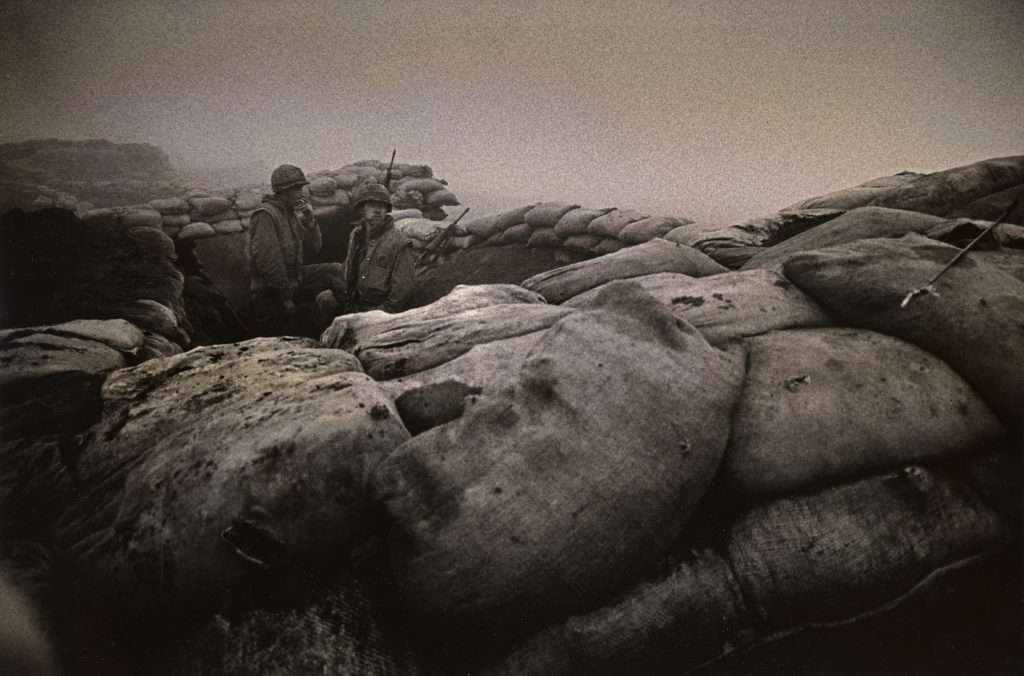
By mid-February, I’d been disabused of that notion and as the month rolled forward, my acceptance that things would not get better but would only get worse drummed me like a dead rat stomped into the red mud at the bottom of the trench.
On February 5, 1968, NVA troops briefly overran much of Hill 861-A just west of the combat base which was occupied by Echo Company, Second Battalion, 26th Marines. Echo engaged in up-close-and-personal combat before they drove the enemy off the hill.
On February 7, the NVA overran the Special Forces compound at Lang Vei and used tanks in their assault. PT-76 tanks. Not something we’d worried about in our daily trench digging. We imagined that night and into the early morning, enemy attacks with armored vehicles crashing through the wire and wondered how we could possibly fight that. We thought we heard them out there. All night long.
The next day, a platoon from Alpha Company, First Battalion, 9th Marines, was attacked on Hill 64 not far outside the perimeter of the combat base. A nasty, vicious firefight ensued with heavy casualties on both sides. In our trench, we waited, biting fingernails, writing letters home to moms and girlfriends and wives. Gloomy letters, angry letters, defiant letters. Maybe, as we wrote on our stained sheets of paper, wings of hope tried to lift us up so when the moment came that we needed to fight for our lives, we would own the spirit to become ferocious.
On February 10, 1968, the men of 3rd Squad, 2nd Platoon, Bravo Company, First Battalion 26th Marines, were filling sandbags when a C-130 designated BASKETBALL 813, flew in from the east and was hit by enemy anti-aircraft fire. The plane circled around the base and came in from the west. We watched, nobody talking, as the obviously wounded flight managed to get onto the runway before it skidded off. The plane burned and smoke and flames erupted from the fuselage. We were not more than one-hundred yards from the event. We watched as men jumped out of the cockpit. By then, the horrors of war were old hat. We were numb, and this and subsequent events would numb us more.
Later in the month, Bravo, 1/26 suffered a blow on the 25th in which the NVA first ambushed a patrol and then a relief patrol that went out as reinforcement. The losses were devastating for the men of the company. I will have more to say about this at a later date.
The amount of incoming artillery—rocket and mortar rounds—also increased, often pinning us in the trench for what seemed like hours as the ordnance rocked the ground. We heard a lot of the NVA artillery leave the tube and the big ones, the 152-millimeter rounds, sounded like trains as they approached. Men died, men were wounded, men almost broke. We discovered one of our staff sergeants whining like a beaten dog as he dug into the bottom of the trench.
But maybe what saved us from going completely nuts were a few events that led to chuckles. Sometimes it was morbid stuff, but those who have been through hell often understand the warped humor humans can dig into when circumstances necessitate.
I don’t remember exactly when these following three things happened, specifically, but I’m pretty sure they all occurred before the 20th of February.
Early into the siege, the 37th RVN Ranger Battalion, our allies, arrived at Khe Sanh and dug in on a line in front of some of 1/26’s entrenchments.
One evening, just before sundown, I was ordered to report to the platoon commander’s bunker. It was our squad’s turn to conduct an LP (listening post) for the platoon, and it was my fire team’s turn to stand that particularly distasteful duty.
We all hated LPs. Four Marines out in the dark, trying to stay alert, trying to stay alive, knowing that if the enemy approaches, it’s the LP’s duty to alert the base and in doing so has an almost 100 percent chance of being discovered and killed.
We hated everything about it. Leeches, and rain and mud, and dark, dark, nothing to see beyond the reach of your arm. Trying like hell to stay awake.
But it was our turn, so when the platoon commander told me we would be running the LP with a team of RVN Rangers, I wasn’t happy; but who cared besides me? I was ordered to lead the other seven members of the listening post out to the end of the air strip where two slit trenches awaited our stay for the night.
The Rangers didn’t speak English, or if they did, none of them volunteered to talk to us and none of the Marines knew Vietnamese beyond Dien Cai Dao which we bastardized to Dinky Dao, and the French word Beaucoup to Boocoo.
But just before dusk died, we arrived and set up in the two trenches. The whole scene seemed menacing to me: two teams, can’t talk, different cultures, dark coming, North Vietnamese out there creeping around, maybe just beyond our position. A wall of tall jungle grass stood close to our front. I remember thinking that if the enemy came at us, we wouldn’t see any of them before they burst out within a few feet of where we sat.
I assumed my Vietnamese colleagues were whispering the same thing that I told my team, to keep an eye on that wall, to keep ears open, keep eyes moving, because when one stares at things directly in the dark, the immovable moves.
I felt lucky because all the men in the team, my American team anyway, had been in-country for at least three months and had been on a lot of night patrols, ambushes, and LPs.
One of the things about being a low-ranking grunt is that you never get enough sleep, so when we went out on LPs, even though the upper echelon expected us all to stay awake all night, we took turns watching and operating the radio which we employed on a regular basis to report that the situation was all secure.
Dark slammed down and we watched. I noticed all the Rangers sat ramrod straight, wide awake. I imagine now, their eyes big as half dollars.
When dawn broke and a weak morning light hinted at rising, I woke the team and looked at the Rangers. They glared at us Jarheads, and one of them took his right index finger and made a sign as if cutting a throat. I remember thinking that no one was dead, so no harm done, no worries. And we got some sleep, even if it was fitful and edgy with the lurking threats.
I called into the platoon radio operator and told him we were coming in. We made sure the four Marines were in front. The Vietnamese Rangers came in the rear so that no Marine mistook them for NVA sneaking in.
Sometime later, I am not sure how long, a few days, a week—sometimes I wish I’d kept a diary—the Rangers and the NVA got into a firefight out beyond the perimeter of the base. I think it was an attempt to stop the NVA from shooting a recoilless rifle into our lines. The Ranger unit’s officer was killed.
They sent our platoon, or part of it, out as security or backup or relief for the ARVN Rangers. We went out and into a bamboo thicket so dense you had trouble seeing the men on either side. We were ordered to dig in but I do not think any of us dug in. We sat down on the ground and in anticipation of battle, we looked at bamboo. Bamboo to the front of us, to the side of us, to the back of us. Thick and stifling and dreary.
Gunfire and screaming rose from the unseeable front and we waited, the moments like hours. Then on a trail nearby, we heard chatter and laughter and soon a group of men appeared that we could see as they got close to our positions. They giggled and I wondered if it was from the relief of still being alive after tons of fear released itself and they retreated. When they passed, I saw they were our allies. They carried a body, and then more men appeared toting a recoilless rifle, either a 57mm or 81mm.
After they passed us, we returned to our positions.
Later, when the sun went down, another Marine and I were called up to the platoon command post. When we arrived, two ARVN Rangers waited in the trench with a covered body on a stretcher. It was the ARVN Ranger officer killed earlier that day.
The lieutenant told me to escort them up to Graves Registration—the morgue—so that some Marine on watch back at rear echelon units didn’t kill them because they looked like the NVA.
It was an overcast night which I think was a boon to us; no light to expose us to the enemy.
I led the other Marine along with the two Vietnamese carrying the stretcher and reported to Graves Registration. Either a corporal or sergeant began to write out paperwork. Right then, the sound of footsteps running came from a hall. I looked around, nervous, wondering why someone would be running. Another Marine burst out of that hall and ran across the room, his arms up like a wide receiver in a football game, and right behind, a foot, all by itself, came flying out. He caught it like he was on his way to a touchdown. Something dropped. I looked. The two Rangers were gone. The stretcher lay on the ground, the body as unaware as any dead man. I laughed at the situation. Maybe I was sick, but I laughed as did my mate and the Marines working there, some of them morbidly dulled after dealing with a deluge of body parts, blood, and dead men.
Outside, I found the two Rangers squatting in the trench. The light leaking from the mouth of the hatch lit their eyes, which were glazed in fear. Maybe they were worried that whoever used to own that foot would be haunting the place and the men who worked there, forever. We, the Americans, thought the Vietnamese feared the spirits of the dead. Most of my comrades and I did not believe spirits of our dead hung around after the end, or that the spirits even cared.
The month ticked on. One catastrophe to another, one day to night, to day. Death and fear lurking in the shadows. Maybe those were the spirits we needed to fear.
One of the irritating things about the Siege was the lack of chow. C-rations were our mainstay and over time we adopted our favorites. Pound cake, canned peaches, chicken noodle soup, and beans with franks are some I remember as being palatable.
During the month of February, chow, like mail from home, got scarce, we went down to two meals a day, and on certain days, even less.
So, when the platoon commander ordered me to take a procurement patrol up to the supply dump, I was more than ready. During combat, in the Marine Corps, you don’t steal what you need, you procure.
The dark night hung on us like a cape. We worked our way between our behind-the-line units so as not to draw attention.
We came at the dump from the back. There was a wire fence. We defeated that obstacle. Inside, large pallets of stacked goods covered with tarps were arranged in neat and tidy rows. We had to search beneath the tarps for food.
Finally, we located a pile of stacked cases of C-rations and started gathering a couple of cases per man. There were seven or eight of us. We got canned fruit, and grapefruit juice, too.
We eased back to the fence and just before exiting the supply dump, someone demanded, “Who’s there?”
Everyone froze. A Marine came out of the dark with the business end of an M-16 pointed at us.
None of my people wanted a confrontation. We certainly didn’t want to get shot in our own supply dump after surviving the hellacious incoming we’d been experiencing.
I gave him the password.
He looked at the cases of food and told us to drop them.
I asked him his plans.
He said, “Turn your asses in.”
I said, “Man, we need chow and we were ordered to come down here and procure some food.”
“Who gave that order?”
I didn’t want to incriminate the platoon commander, the platoon sergeant, or anyone else.
One of the other Marines got into a conversation with the guard about his home, his accent; maybe they were from the same locale. I do not recall.
The conversation veered to how long he’d been in-country. He said, “Outta here tomorrow.”
I said, “Man, you are so short. Why don’t you just let us go?”
He shook his head and frowned.
Someone managed to dig up some MPC (military payment certificates) and flashed them in the guy’s face. He looked at the money, he looked at us, he looked at the rations.
He took the money.
We delivered our bounty to the command post and the lieutenant told us to return to our squad area.
We went back, disappointed because we had nothing.
Later, the platoon right guide came around and dropped off a couple of cases of C-rations. No fruit, no juice.
The rations were so old, from the time of the Korean War in the ‘50s, it was hard for us to eat them. But we did.
And we survived, most of us, to live a few more minutes, a few more days, maybe all the way until we again stood inside the good old USA.
~ By Ken Rodgers
_______________________________
Thank you for reading, and for honoring all Vietnam War veterans by sharing our films and stories with friends and other veterans.
BRAVO! Common Men, Uncommon Valor can be viewed on Amazon Prime. We also have DVDs available, which can be ordered on our website at https://bravotheproject.com.
You can find information about our companion film featuring eleven courageous spouses of combat veterans from various eras at https://imarriedthewar.com. I Married the War can be viewed on Amazon. DVDs are also available via the website.