Bravo! The Project - A Documentary Film

Posts Tagged ‘John Cicala’

Other Musings

February 25, 2026

I Think It Broke All of Our Hearts
Tags: , , , , , , , , , , , , , , , , , , , , , , , , , , , , , ,

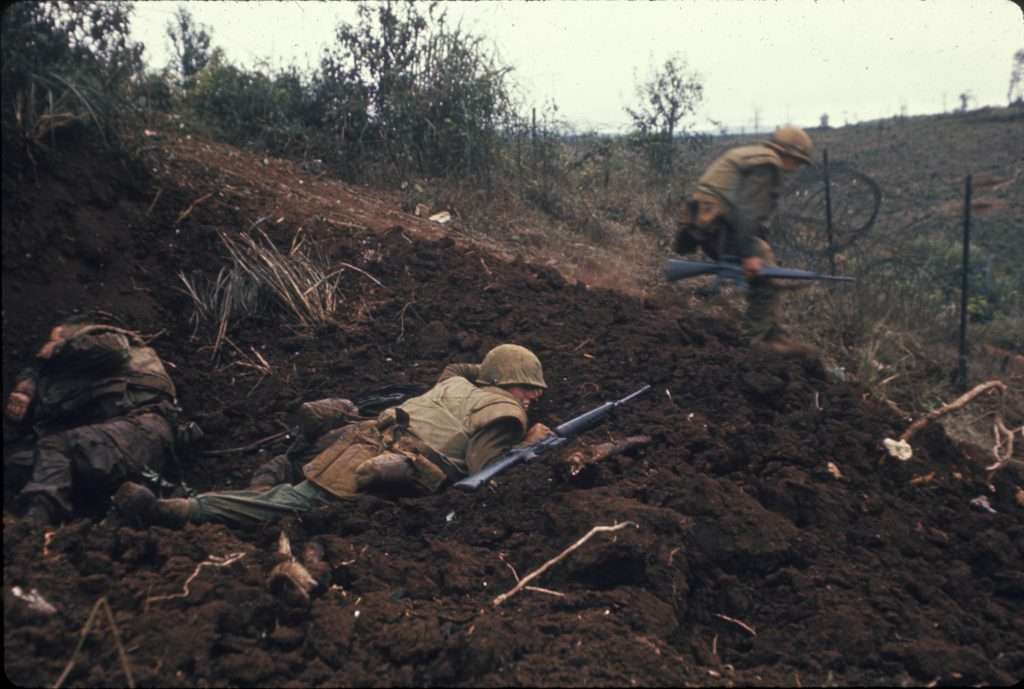
Khe Sanh, Vietnam (1968)
Vietnam War.
Credit: 1968 Robert Ellison/Black Star

This morning, and frankly, many mornings every week, month, and year over the past fifty-eight years, I think of what happened to my mates on this date in 1968.

I was there, in the close vicinity, I heard, I should have been out there, we weren’t allowed out there, we watched them return, we heard the stories, we listened, we whispered, we resented our leaders, we hated our enemy, we wanted revenge, we lived with it, we were guilty, we are guilty, we will always be guilty.

But whatever my recollections are of this anniversary of what has come to be called the Ghost Patrol, they are nothing compared to those who went outside the wire and walked—or were led by a young officer—into an ambush. A slaughter.

When we made the film, BRAVO! COMMON MEN, UNCOMMON VALOR, we talked during each individual interview about the date, the horror, the aftermath.

Here are some things the survivors had to say about that date. I have added some of their additional remarks that are not included in the film and have never before been heard.

Cal Bright

“I was on a patrol on February 25th. We were leaving at, I think it was like 0800, 0900, something like that. And I ended up being point for a while, and my team member, a Clayton Therrell, who was from Racine, Wisconsin, was directly behind me and we got out so far and he motioned for me to stop. He says, ‘I’m going to take your place,’ he says, ‘This is your first patrol and consequently we just want to be safe.’ I said, ‘Okay, fine,’ and probably within five minutes, all hell broke loose from the back portion of our patrol, and I find out afterwards two or three NVA jumped and suckered part of our platoon into following…chasing them, which they definitely did and that’s when the ambush was really sprung.

“And when I finally hit the ground, I could tell that Therrell was killed. My team leader who was Lance Corporal Thrasher from Oklahoma City, asked me to go up and retrieve the body, or bring him back, he might still be alive. I kind of knew differently, but, okay I would. So I stripped down and went up and grabbed ahold of his flak jacket by the collar and as I was dragging him back, the body was bouncing, jumping back and forth and I could feel bullets whizzing past my head, to my sides, and so in a sense, his body protected mine and I look back and for a long time, in fact I still do it every once in a while, that it should be me instead of him, but I guess the good Lord upstairs had something more in mind for me. “

John “Doc” Cicala

“That’s a tough one. I relive that thing quite a bit. I remember us saddling up and going out the gate. We had a Chu Hoi scout with us and we were supposed to follow a designated route, bracketed on all sides by artillery within an instant. Well, we got about five hundred meters, I guess, outside the gate, crossing the road, and Lieutenant Jacques spotted a couple of North Vietnamese standing over in a field, and he made a decision, we’re going to take ’em prisoner. And I do remember the Chu Hoi telling him no, and a lot of us saying maybe we shouldn’t do this, but he gave the order, so we went to get ’em. And, I guess probably a few hundred yards further out, we crossed the road, we crossed a set of trench lines and then they opened up on us and it was just pure chaos from there on.”

Ben Long

“I helped plan that patrol. We had made the checkpoints. I knew how far they were going out, and from my perspective I thought this patrol should have no problems; there should be nothing to be concerned about. So, I remember watching them go out the wire. You couldn’t see them for very long because it was very foggy. And they soon disappeared and I went back in the bunker. I remember listening on the radio—they were checking in and what they were doin—and then I got busy because the next thing I realized was that they had contact, and I didn’t realize—wow, they’re in contact. How did this happen?  Because I thought, no way they’re going to be in contact when they follow the route that we had prepared for them. So I thought, either in the fog they got lost, or didn’t know where they were, or they were well beyond the checkpoints…it shouldn’t have happened that way.

Company Commander Ken Pipes

“There’s been a lot of things written about that, some of it not good, some of it an attempt to be factual. But it was something that was not uncommon in Vietnam at the fire team, squad, platoon level, and in some instances entire battalions, entire companies.”

Peter Weiss

“I was the backup for Don Jacques, and so when he went out, my platoon—two of the squads—we were the backup. So we were on the radio listening to what happened and when he was ambushed, Captain Pipes came on the radio. ‘Okay, Lieutenant, it’s your time to go out.’ And two squads—we  actually split up—one squad and I went straight out towards where they were. The other squad went to the right, which was up toward the road, because the sergeant I was with had been out there before…had been there for a while, and he knew the terrain. I didn’t know what was out there. I’d never been outside the perimeter other than being on the hill. And unfortunately, he got trapped in the same kind of ambush, and so of that squad—maybe of ten men, I think—four were killed in that ambush.”

Steve Wiese

“It took me thirty-five years before I could get into my mind that we went out there at nine or nine-thirty, whatever it was, ten in the morning, and I didn’t make it back into the base until the sun was going down, and used darkness as a cover to work my way back.

“But the initial ambush, once they opened up, I mean it was bad. I mean they opened up and you know most of the guys went down in the first minute. I mean, it was not a good thing. The actual battle itself at that point went on for hours. The only reason I survived was I just happened to be standing in a bomb crater where it was like 2-1/2 feet deep where it blew the ground out, and I just happened to be walking through that at the time that the ambush opened up. And when the first round went off, I dropped and just…my luck was that I just dropped in that hole. So I was below ground level when all the—you know—all the bullets and everything were going over. And I just laid low.”

Cal Bright

“I come across a radio operator who had been killed—to this day I have no clue who, what his name was. And all I could hear on the radio was, ‘Hello, hello, anybody there, anybody hear us?’ And I never had any training whatsoever as far as talking on the radio. I had none whatsoever.  But I knew, press the mic. So I keyed the mic and said, ‘Hello.’ And somebody come back and said, ‘Who’s this?’ and I said, ‘Well, this is Cal.’

“‘Cal who?’ And I told him. He said, ‘Who else is there with you?’ I called back and I said, ‘Nobody.’ He said, “What do you mean? I said, ‘There ain’t nobody here alive; they’re all dead.’ And he said, ‘Where are you at?’ and I says, ‘I’m laying next to a road and I’m overlooking another road that goes down over a hill.’’ And he said, ‘How did you get there?’ I said, ‘This is where we ended up.’ He said, ‘What can you see, from where you are…laying down?’ I could see little helmets in the background.

“Unbeknownst to me at the time, I was just a few meters away from the NVA trench line. I had no clue I was even there, that close to them, and somebody else come on the radio and says, ‘I want to shoot a round.’ He says, ‘I want you to let me know where they land.’  I say, ‘Okay.’

“Next thing, out comes a round—afterwards I found out that it was a Willie Pete round. It was a spotter round, and I went back to him and I said, ‘You need to drop the range down,’ and he says, ‘How much?’ I said, ‘50 yards, 75 yards,’ something, and he dropped it. Shot another round. I says, ‘You need to drop it another 40 yards,’ he said, ‘Okay.’ He says, ‘Bury your head, because we’re going to fire for effect.’ And that was the last I heard, because all of a sudden, bah bah bah boom boom boom, rounds were going off left and right.”

John “Doc” Cicala

“I just watched a guy drop and I took care of a couple of guys and then I was crossing back over the road because another guy got hit, then the next thing I know I seen a guy pop out of a fighting hole. He hit me a couple of times in the chest. I was laying there and the other Corpsman, Frank Calzia, seen me go down and he come running over yelling at me, ‘JC, are you okay, are you okay?’

“And then a grenade landed between my legs and I looked down and I seen it and I yelled ‘Grenade,’ and he hit the dirt and I curled up into a ball and it went off and I couldn’t hear or see anything for a minute with all the dirt and everything and then when I could see, my foot over there and I’m thinking to myself, this isn’t good. My foot moved and I said, ‘Well, at least it’s still attached,’ and by that time Frank came over and he said, ‘You know, we got to get out of here,’ and I told him, ‘Git, you know, go take care of that guy, I’m okay, I’ll take care of myself.’

“And then Lieutenant Jacques came running by and he looked down at me and he said, ‘Doc,’ he said, ‘Get out of here.’ He said, ‘We’re all getting killed.’ And he made it from about here to the wall and I seen him go down and I crawled over to him and he’d caught it right across the legs, both his femoral arteries, and by the time I got to him he’d already bled to death and there was nothing I could do for him.

 Ben Long

“In all the confusion that’s going on, men were getting shot and you could hear that happening and I moved from my bunker. I moved up on top because I not only wanted to listen, but I wanted to see if I could see them, and it was too foggy and I still couldn’t see, but I still stayed outside because I thought maybe I’ll be able to see something. Maybe the fog will float by and I’ll be able to get a glimpse, but really, it was very foggy that day and you couldn’t see hardly anything.

“First Platoon was called up and they were the ones who were supposed to go if it got into trouble and I thought, they’re not going to get in trouble, no problem. I was Platoon Commander for that platoon for 8 or 9 months, for a long time. Those were my buddies. They were my friends. I knew them. And I thought, if they’re going to go out, I want to be their leader. I want to take them out. I know how they work together.

“And so it was hard for me to not be with them. I knew that some of my friends were being shot, some I knew were dying. I heard it on the radio. But it would just tear your heart out. These were guys that I had been working with for a long time. I felt helpless. I felt so powerless. There was just nothing I could do. I mean, I wanted to do something. I think everyone in the company wanted to go out. We wanted to do something, but we got orders: no, no more people, we can’t do that, can’t go out.”

Peter Weiss

“Then we got the word, come back, retreat, and I remember very well, because we were laying out in the open because we got stopped at some point; rockets started coming in.

“I was right next to someone who I believe was killed because I checked his pulse. My weapon had stopped firing. Couldn’t use it. Just me and the body and I wasn’t sure if I should drag him back. And bullets started coming…being walked toward the two of us. And the last one stopped right at the fellow, right in his chest—must have been a fifty caliber hit him, and I said, ‘He’s got to be dead.’”

Steve Wiese

“You know, the initial blast started quieting down, and then you could tell they were just firing pretty randomly and if anybody moved, they just drew fire. So I just laid there and threw grenades. Shot a clip of ammo out of my rifle which basically I figured out pretty quickly, that was not a smart thing to do. Because as soon as I fired a round there were hundreds of guys shooting back. So, it was like okay, don’t draw attention to yourself.”

Cal Bright

“I was able to get out of there after some time. How long? I have no clue. It was still daylight but I could tell that the sun was—what there was of it—was going down so I figured it had to be late afternoon, early evening.

“I knew where our lines were at, and I was able to evade some enemy soldiers, and I was able to get back, and then, as I was coming back, all of a sudden, here’s these—I didn’t recognize as to who they were until I got closer—South Vietnamese ARVN Rangers. And they were waving at me to stop. And then I could see some American advisors telling me to stop, halt, don’t move. Don’t move, whatever, but I kept coming. And that was when I tripped over barb wire that also had a red triangle-shaped sign on it. Come to find out afterwards, I went through the entire mine field in front of Khe Sanh and never touched a round off. Now I know why they kept telling me to stop  and not to move.

“Again, I’ve never been real religious, or anything whatsoever, but I have to think that the Man Upstairs had something in his…on his agenda. Says, ‘I want to talk to you, young man.’

“I know there has been conflicting reports as far as how many of us went out. I was led to believe there was like anywhere from 60 to 70 of us that went out and there was only just a small handful of us that come back.”

John “Doc” Cicala

“They said I made it back to the base, maybe six, eight hours later. But I did see a lot of guys go down. I seen Clay go down, I seen Jerry Lee Dotson. I took care of them. There’s nothing you could do, it was just chaos for that five or six…probably five minutes or whatever it was. I mean I heard all the stories afterwards. We ran into a battalion-sized force and everything, but it didn’t last long and it wasn’t pretty. That’s for sure.

“I crawled back to the base. I was kind of passing in and out, you know. I don’t remember all the details and I was pretty well messed up myself, but I do remember setting off a trip flare and when that went off I was thinking, ‘Oh, shit,’ but one of the weapons platoon guys—a guy named Eddie Pendergast—had a set of binoculars and he looked out and seen my uniform and he said, ‘Stop, cease fire, that’s a Marine coming in,’ and he physically ran out, him and a couple other guys, and they threw a poncho over the wire, grabbed me and yanked me back over the wire. Took me to Charlie Med.”

Ben Long

“I just started seeing people coming back, not in groups, but straggling back and some were wounded. Some were very severely wounded, and it was just very hard to take, but from my perspective, also what I saw was just a sense of confusion, a sense of ‘what’s going on…what’s happening?’ And it’s like how come we’re not doing anything? How come we’re just standing there? How come we’re not going out?

“We always want to rescue our people and we don’t want to leave our dead and wounded. Nobody was doing anything, and it was hard. Hard to watch that. We wanted to do something, but at the same time, we just couldn’t. So we had to be patient and wait and that was hard, that was really hard.”

Company Commander Ken Pipes

“But that one, that one was the hardest, I think. I think it broke all of our hearts.”

Peter Weiss

“We came back, maybe about three or four of us left, and we then came back into the perimeter. And a couple hours later, we were shelling that area. Planes were coming over dropping bombs, and all of a sudden, out on the outskirts of the wire, a lone Marine came. He was not in my platoon. And then I went out to get him. Walked through that minefield, not, you know, around the side, but through the minefield. And I was scared. Walked through the minefield, walked through the concertina, and he was in absolute shock. Grabbed him by the arm and we walked back through the minefield, back into the perimeter. I was happy that I got him out of there and that we both got back. That was a sad day.”

Steve Wiese

“I ended up leaving my rifle and just trying to work my way through. I had a pistol and I was using that for personal protection because the rifle was useless at that point, and it was just something to carry. I would dive from one bomb hole to another. Work behind anything I could find that was any kind of cover.

“I would lay there for fifteen, twenty, thirty minutes. So, in between the firing, when it started to settle down a little bit, I would try to, you know, peek above and see, try to see where I could get to. And it took several hours, you know, of working my way across and moving out of the kill zone.

“Sometimes I’d have to lay there for two hours and wait for the firing to slow down. Towards sundown, in the shadows, I could move better and I worked my way out and moved down around the back and came back to the base.

“Several people came in through the gate, you know, and it was just like, where is everybody? I just remember the guys saying, ‘You’re pretty much it.’ When I got back to my squad area, Author Smith was in the bunker, and he said he was it.”

To reiterate what Skipper Ken Pipes said: It broke all of our hearts.

They are still broken.

~ By Ken Rodgers

To learn more about each of the men in this blog, click here.

_______________________________

Thank you for reading, and for honoring all Vietnam War veterans by sharing this blog, our films, and stories with friends and other veterans. 

BRAVO! Common Men, Uncommon Valor can be viewed on Amazon Prime. We also have DVDs available, which can be ordered on our website at https://bravotheproject.com.

You can find information about our companion film featuring eleven courageous spouses of combat veterans from various eras at https://imarriedthewar.com. I Married the War can be viewed on Amazon. DVDs are also available via the website.

Documentary Film,Khe Sanh,Marines,Other Musings,Veterans,Vietnam War

February 23, 2017

Reclaiming the Story

Tags: , , , , , , , , , , , , , , , , , , , ,

I recently received two articles from friend and BRAVO! supporter Norma Jaeger about the power of story to help heal mental health issues. As I read the articles I was particularly struck by two notions.

One: The notion that we need to reclaim our stories—and by that I mean that the memories we have, whether they are related to combat or not, are somewhere in our minds—and by reclaiming them, rethinking them, telling them for the first time or relating them again, we allow ourselves to investigate how those stories are relevant to who we have become.

Two: Mention the unmentionable; dig down and remember those instances that are so horrible and so frightening that we want to hide them from ourselves. Quite often our failure to think about, relive, and analyze the unmentionable moments of our lives can lead to mental and/or physical issues that may be harmful.

Cal Bright

Cal Bright

The interesting thing is that when we try to hide the unmentionables from ourselves, they really don’t hide down there, dormant, obedient, submissive. They try their damnedest to worm their way out of the vault in which we attempt to lock them. They want out, they need to get out. Out, so we can examine them and discover what they really mean vis à vis the person we are now as well as the person we wish to become.

For Khe Sanh veterans it is the season of remembering. The particular time of year rolls around every January and sticks in our minds through the end of spring. For the various men who served during the siege there are ample examples of unmentionables that for years have been crammed and stuffed into the dark and inaccessible places of our memories.

John "Doc" Cicala

John “Doc” Cicala

Three days from now, on February 25, most Khe Sanh vets will recall—and in some cases mentally relive—a platoon-sized patrol outside the east end of the combat base. That event has come to be called “The Ghost Patrol.” The Marines of 3rd Platoon, Bravo Company, 1/26 and later 1st Platoon of the same outfit ran into a slaughter house of an ambush sprung by the North Vietnamese. The battle decimated the Marines and left them mired in the chaos of combat. They received little help from the combat base. They saved each other the best they could. Some were forced to save themselves, and in a number of cases, could not comprehend how they even managed to survive.

Now, forty-nine years later, that patrol…that ambush…has gained a sort of fame, so to speak, where the lessons learned by the warriors on both sides are now being taught to the incoming generation of new combatants.

According to Reverend Ray Stubbe’s publication titled PEBBLES IN MY BOOTS, VOLUME 4, the North Vietnamese Army uses the events of February 25th in their training on how to set up ambushes. And as Betty and I found out last spring while at Quantico to receive an award for BRAVO! from the Marine Corps Heritage Foundation, The Ghost Patrol is also the subject of a field problem during a class on Scouting and Patrolling in The Basic School which all officers in the Marine Corps attend before they are assigned to their initial deployments.

Peter Weiss

Peter Weiss

For those of us who endured or witnessed that sorry, sorry event, the magnitude of what happened in The Ghost Patrol is imprinted on our souls. But other people not involved in the death and mayhem, most of them not even alive in 1968, also saw—or see—value in remembering, in a kind of way, the events of that day.

And aside from instructional purposes, is there any other value in recalling what happened on February 25, 1968?

In BRAVO! three Marines, Cal Bright, Steve Wiese and Peter Weiss and one Navy Corpsman, John Cicala, talk about the events of that day. The pain and horror, the knife-edged realization that the memories remain as virulent now as they ever were, are etched all over their remembrance of The Ghost Patrol. Maybe the recollections are a little softened by time, but they are still capable of delivering an overdose of pain.

Steve Wiese

Steve Wiese

They reclaimed their stories. In the moments when I interviewed them, they told—they witnessed again—the horrors of that day. I can only imagine the courage it took for them to discuss events that even though decades old, could disrupt the calm demeanor these men normally carry. The moments they described—mentioning the unmentionable, the painful unmentionable, to one degree or another—bore on their faces like a map of the blasted land around Khe Sanh in 1968.

I am not a psychologist and don’t pretend to know much about how moral injury, PTSD and TBI affect us, but I believe that those four men, by revealing to us their memories about The Ghost Patrol, found some relief from the nagging images and the unpleasant reactions they suffer as a result of that infamous battle.

Marines on The Ghost Patrol.  Cal Bright on the left. Photo courtesy of Robert Ellison/Blackstar

Marines on The Ghost Patrol. Cal Bright on the left. Photo courtesy of Robert Ellison/Blackstar

And I think there is something in their examples for each of us to think about. Most combat veterans have experiences like The Ghost Patrol in one form or another, and a lot of the memories of those moments stay chilled in the recesses of their minds. And not just combat vets, but every one of us has things dwelling in our memories that we would rather not think about; things that fester there like splinters jammed deep beneath the skin. Like all things that fester, they can become toxic and dangerous, and as such we need to acknowledge them through talking to a friend, a counselor, writing them down, painting or drawing them in a picture, or reliving them in a documentary film so we can begin to put them in their proper place inside the framework of our lives.

Again, we should reclaim those memories instead of letting them simmer in the back of the mind. Let them become a vital and much less toxic part of who we have become. Retelling our tales, whether to a friend, in a poem, or to a mental health professional, allows us the opportunity to change the foreign into the recognizable. It makes that which remains unspoken into the verbalized and may very well allow us access to a new sense of awareness about our story and its relationship to our wellbeing. And that can’t do anything but help.

_______________________________

If you or your organization would like to host a screening of BRAVO! in your town please contact us immediately.

DVDs of BRAVO! are available. Please consider gifting copies to a veteran, a teacher, a history buff, a library, a friend or family member. For more information, go to https://bravotheproject.com/store/.

BRAVO! has a page on Facebook. Please “like” us and “share” the page at https://www.facebook.com/Bravotheproject?ref=hl.

Documentary Film,Khe Sanh,Khe Sanh Veteran's Reunion,Marines,Other Musings,Veterans,Vietnam War

October 5, 2016

Full Circle

Tags: , , , , , , , , , , , , , , , , , , , , , , , , , ,

Next week Betty and I will be journeying to Texas, to the Khe Sanh Veterans Reunion which will be held at San Antonio’s El Rancho Tropicana Hotel.

Just a little over six years ago, we set out from Montreal, Canada, where we were attending the Montreal Jazz Festival with our friends and relatives, Chuck and Donna Dennis, to head out to San Antonio for the 2010 reunion, and to film nine of the interviewees in the film, BRAVO!.

Back then, when we began the journey to tell the story of Bravo Company, 1/26 at the Siege of Khe Sanh, we had little to no knowledge of how to make a film. But, we knew we needed interviews, so undaunted, we marched on and showed up in San Antonio, made arrangements for a space to conduct interviews, picked up our videographer at the airport and proceeded to film the men.

John “Doc” Cicala, Frank McCauley, Mike McCauley, Michael E O’Hara, Ken Pipes, Ron Rees, the late Lloyd Scudder, Peter Weiss and Steve Wiese sat down and talked to me and the crew about their remembrances of the siege and what it meant to them then, in 1968, and what it meant to them in July 2010.

The late Mark Spear at the Khe Sanh Veterans reunion in San Antonio, Texas, July 2010

The late Mark Spear at the Khe Sanh Veterans reunion in San Antonio, Texas, July 2010

I often think of the intestinal fortitude these men demonstrated as they sat down and let their emotions bleed out for all the world to see. I recall sitting there across from them, hearing their stories, marveling at the way they just let it all spill out, and if it wasn’t all, it was certainly enough to wow the folks who would eventually work on and sit down to watch their powerful testimonies about fear, death, loss and ultimately, their victories over the obstacles that their experiences at Khe Sanh threw in front of them. The men were inspiring.

Now, six years later, we are going back to San Antonio and for me, it feels like we are coming full circle. Two of the men in the film, Dan Horton and the aforementioned Lloyd Scudder, are no longer with us as is also the case with videographer Mark Spear, and it makes me very happy that we got the interviews done—in the case of Dan and Lloyd—before these Marines left us.

I am also very grateful that we got to know Mark Spear before he made a way too early journey from those he loved and those of us who appreciated his sensitive, funny, artistic nature.

Some of the men in the film will not be there in San Antonio to sit around and talk about the war and our memories of it and how the film affected our views of that experience. And I wonder, in the case of those who have not said so, if BRAVO! in any way changed their lives, helped or hindered them in their ongoing drive to live on in spite of the mental and physical affects of the combat we faced during the Vietnam War.

The Late Lloyd Scudder at his Bravo! interview.

The Late Lloyd Scudder at his Bravo! interview.

Personally, what can I say about what BRAVO! has done for me? Well, for starters, I can say that I am now hooked on making films.

And I am now immersed in the world of combat veterans and all the accoutrements both good and bad that come with having let oneself become so immersed. Organizations, acquaintances, events, travel—yes, it’s greatly changed the world I personally inhabit.

And I think, in some ways, it’s helped me come to grips with my own horrors, the ones that lurk just behind me as I try to keep the memories of January, February, March and early April 1968 caged in some form of mental box.

It taught me that the men I knew in the trenches at Khe Sanh survived (as did I) second-by-second high grade fear, wounds, loss, and in most cases came out the other end able to deal with all the bad stuff. It taught me that the soul, however one wishes to describe or define it, can be ripped, stripped, battered and stabbed, but in the end, it can still emerge in triumph.

The keenest knowledge I’ve gained is the realization that instead of being alone, I know that there are a multitude of warriors who have experienced what I did—the constant fear that rides you like you were an underfed jackass, the need to be brave even though it may lead to your death, the loss of your friends’ lives. I have siblings, so to speak, who have trod or are now treading the treacherous ground with me.

The late Dan Horton at his Bravo interview at Ann Arbor, MI

The late Dan Horton at his Bravo interview at Ann Arbor, MI

For years, intellectually, I understood that I endured what millions have endured in war, but emotionally, I felt all alone, out there on a limb so to speak where no one could reach me.

Making BRAVO! taught me that there are others, right now, out there with me.

So I’m looking forward to getting to San Antonio and seeing who I know so we can sit around and talk about it all. Maybe we will laugh and maybe we won’t, but it will not matter, because I will not be alone.

If you or your organization would like to host a screening of BRAVO! in your town please contact us immediately.

DVDs of BRAVO! are available. Please consider gifting copies to a veteran, a teacher, a history buff, a library, a friend or family member. For more information, go to https://bravotheproject.com/store/.

BRAVO! has a page on Facebook. Please “like” us and “share” the page at https://www.facebook.com/Bravotheproject?ref=hl.

Documentary Film,Khe Sanh,Marines,Other Musings,Veterans,Veterans Courts,Vietnam War

June 15, 2016

On Veterans Courts

Tags: , , , , , , , , , , , , , , , , , , , , , , , , , , , , , , , , ,

Several weeks back we wrote a blog entry about how BRAVO! has become a part of the training regimen for new Marine officers at The Basic School at Quantico and we were amazed, as filmmakers, how the movie had grown into something we could not have imagined. What began as an attempt to tell a story about a small group of Marines at the Siege of Khe Sanh has since been used, for example, in college film classes, and high school history classes, and several California prisons, and creative writing classes and as part of a symposium on the humanities and the Vietnam War.

To the list of uses, add BRAVO! COMMON MEN, UNCOMMON VALOR as a tool to help veteran court personnel understand the ravages of war and why some veterans might go off the rails, so to speak, and run afoul of the law.

On June 1, 2016, BRAVO! was screened at the 2016 Justice For Vets Convention in Anaheim, California and an interested group of attendees watched the film and then participated in Q & A with the filmmakers. The questions asked were incisive and spoke to the attendees’ interests in veterans, TBI, PTSD, crime and justice.

The folks who came to see the film were judges, attorneys—both prosecuting and defense—court clerks, mentors, psychologists, police personnel, parole and probation officers, court coordinators, and more.

As I attended the conference, the thought came to me: Why do veterans deserve a different court system than everybody else and over the course of a couple of days, I got some answers.

Veterans courts aren’t the only courts that treat offenders differently. There are drug courts, and mental health courts and tribal courts, to name a few. So veterans aren’t the only folks getting special treatment in the justice system.

I heard more than one presenter at the conference explain it this way: Veterans went to serve the country and it is understood that the service was often hazardous. Now they have returned and have had some troubles transitioning into civilian life. Many of them have physical injuries and injuries to the soul and now it is time for us, American society, to serve them in their time of need. Like they did for us. And one of the ways we can serve them is to allow them to go through the veterans’ court program.

Left to right: Michael Jackson, Anne Jackson, Betty Rodgers, Ken Rodgers. Michael is a retired Air Force Colonel and Anne is a prosecutor. The Jacksons share their expertise on veterans, combat and family issues all around the nation. Photo courtesy of Brian L. Meyer.

Left to right: Michael Jackson, Anne Jackson, Betty Rodgers, Ken Rodgers. Michael is a retired Air Force Colonel and Anne is a prosecutor. The Jacksons share their expertise on veterans, combat and family issues all around the nation. Photo courtesy of Brian L. Meyer.

Apparently, the first veteran’s court was established in Buffalo, NY. There are over two hundred veteran court systems in the country now and the trend is growing in local jurisdictions nationwide.

And why? They seem to work. One of the founders of the Buffalo veterans court is Patrick Welch, PhD, a Marine who served as an enlisted man in Vietnam and was awarded a Purple Heart for the wounds he received there. Dr. Welch told a group of us why veterans courts are important, “Because incarceration doesn’t work.”

So, to avoid institutionalizing veterans in the prison system, it is thought to be cheaper and more effective to run offenders through a special court system.

These courts are fairly new and the experience society has had with them has yet to stand the test of passing years, but time after time Betty and I heard that the recidivism—the rate of veterans coming back into the court system after having successfully completed veterans courts—is significantly lower than the old established court system. This is a major win.

We initially became interested in veterans courts here in Idaho where we have six veteran court systems and it appears they are doing a good job of helping veterans who run afoul of the legal system for one reason or another.

Left to right: Dr. Brian L. Meyer, Interim Associate Chief of Mental Health Clinical Services, Supervisory Psychologist, and Substance Abuse/Post-Traumatic Stress Disorder Specialist at the H.H. McGuire Veterans Administration Medical Center and an Assistant Professor in the Department of Psychiatry at Virginia Commonwealth University, Ken Rodgers and Betty Rodgers. Photo courtesy of Anne Jackson.

Left to right: Dr. Brian L. Meyer, Interim Associate Chief of Mental Health Clinical Services, Supervisory Psychologist, and Substance Abuse/Post-Traumatic Stress Disorder Specialist at the H.H. McGuire Veterans Administration Medical Center and an Assistant Professor in the Department of Psychiatry at Virginia Commonwealth University, Ken Rodgers and Betty Rodgers. Photo courtesy of Anne Jackson.

We couldn’t be more pleased to know that BRAVO! has now become a tool to help veterans court professionals and volunteers understand the underlying trauma generated by combat.

And thanks you very much to the National Association of Drug Court Professionals, Justice for Vets, Terrence Walton and his entire staff at the NADCP for inviting us to screen BRAVO!

So, to the men of BRAVO!: Cal Bright, John Cicala, the late Dan Horton, Ken Korkow, Ben Long, Frank McCauley, Mike McCauley, Michael O’Hara, Ken Pipes, Tom Quigley, Ron Rees, the late Lloyd Scudder, Peter Weiss and Steve Wiese, a big oorah! Because in overcoming your reluctance (and fears) that created a barrier to you telling your stories about the Siege of Khe Sanh and all its horrors, you have, besides recording an important piece of history, become educators to the folks who administer our veterans courts.

If you or your organization would like to host a screening of BRAVO! in your town this coming summer, fall, winter or next spring please contact us immediately.

DVDs of BRAVO! are available. Please consider gifting copies to a veteran, a history buff, a library, a friend or family member. For more information, go to https://bravotheproject.com/buy-the-dvd/.

BRAVO! has a page on Facebook. Please “like” us and “share” the page at https://www.facebook.com/Bravotheproject?ref=hl.

Documentary Film,Guest Blogs,Khe Sanh,Marines,Other Musings,Veterans,Vietnam War

January 16, 2016

On Navy Corpsmen

Tags: , , , , , , , , , , , , , , , , , , , , , , , , , , , , , , , , ,

FLEET MARINE FORCE

(FMF)

Navy Corpsman

In today’s guest blog, BRAVO! Marine Michael E. O’Hara muses on Navy Corpsmen and Marines

The latter part of 2015 was not especially kind to me. I had a serious surgery in September and in November I suddenly fell ill once again and suffered a somewhat sustained period of time in the VA hospital, about 45 days all told. I am now home and greatly improved, Thank You very much. I mention that only because it reminded me of a time long ago and the special folks who endeared themselves to me.

Never, in our glorious past has any one group of individuals EVER earned the respect and the admiration of Marines across the globe than our FMF Navy Corpsmen, more commonly referred to as “Doc.” Most folks have no idea what these brave men have endured just to be called Doc. They train with the Marines, they deploy with the Marines, and they patrol with the Marines. They are as much a Marine as anyone can be without actually enlisting. Not a patrol goes through the wire without Doc.

Doc is everywhere. He was on the beach at Tarawa and on every island campaign in the Pacific. There was even a Doc who helped raise the flag on Iwo Jima. Doc was at the “Frozen Chosin” Reservoir when Chesty Puller’s men were withdrawing through that awful frozen (-30) tundra of North Korea. Doc not only tended to the wounded but was required to deal with many horrific amputations due to frostbite. Sometimes they had a real M.D. to help, but not very often.

Doc was in Lebanon in 1958 and again in 1983 when the Marine Barracks was attacked and over 200 Marines were lost. Doc is everywhere. Doc has been to all the little unknown conflicts most people have long since forgotten. Doc also went to a place that became known as “The Nam.”

2 January 1968. Bravo Company, 1/26 had been deployed Oct-Dec to 881 South. When we left the hill the day after Christmas, 1967, we ran a long operation up the Rao Quan River to the north. It was January when we got back and were assigned to the combat base. The NVA had broken a truce (SOOPRISE) and we were called back to the base. We sacked in with Alpha Company on the north side of the runway. By midnight, Danny Horton and I were delirious. We had not used our purification tablets which made our water non-potable, and as a result were really sick.

Michael E. O'Hara at Khe Sanh.

Michael E. O’Hara at Khe Sanh.

Our platoon sergeant, Staff Sergeant Gus Alvarado, was dispatched to tend to us and we were taken straight away to a tent. A firefight had just erupted with members of Lima Company close to the tent we were in. I was so sick I never moved from the table. Everyone else was on the ground. This was the beginning of my very first hospital stay, if that is what you would call it.

I think I was there 16 days, maybe. They finally said we had amoebic dysentery. It can kill you if not properly treated. But Doc was there. This tent was known as the BAS, Battalion Aid Station. It was a dark, sandbagged hole in the ground. I don’t remember much of the first ten days but I know Doc took wonderful care of me. Soon I was discharged from BAS and sent back to Bravo. I was very weak.

I would see or hear about Doc’s brave actions many more times during the Siege. You see, the reason Marines love Doc is because they know that if they take a bullet, if they lose a limb to a mortar round and call for Doc, he will come, just like he has always done. It makes no matter how heavy the volley, Doc will charge into the guns to tend to his wounded Marines. He has always done so and he continues to do so to this day. Make no mistake, Doc for sure is one of our most unsung Heroes.

Doc Cicala from our 3rd Platoon, Bravo Company, is a fine example. Shot through one of his lungs and with grenade fragments to his groin, he still continued on the day of the 25 February ambush doing what he could to help guide others who were literally crawling back to the perimeter on their stomachs.

Second Platoon’s Doc Thomas Hoody, who spent many nights braving the incoming artillery patching up Marines, would visit me in the night twice during the month of March to check on my wounds.

I am sure the Docs in first platoon showed every bit as much raw courage and bravery as well. But one of the most searing moments of my tour came on 30 March when Doc and I met up close and very personal when our roles were reversed in the middle of one of the bloodiest damn firefights of the entire war.

Richard Blanchfield had served better than 6 years as a United States Marine. He got out, enlisted in the United States Navy and became a Doc. He was a replacement for the Third Platoon on 30 March. He had only been there a few days at the most. I didn’t even know him.

By the time I met him, the entire company was at “Fix Bayonets” and we were definitely engaging Charley. In fact, we were all in a virtual dead run to get these guys who had killed so many of our fellow Marines. Doc Blanchfield was well ahead of me. He had already tended to a wounded Marine and had just got up on the edge of a bomb crater when mortars simply rained down on him and the whole command group as well.

When I reached the edge of the crater, he was about halfway down and sliding in the loose dirt. There were two dead Marines and numerous dead NVA in the crater. Those two Marines certainly earned their pay that day. Doc had, by this time, stuck 2 morphine needles in his own leg. His arm was nearly blown off at the shoulder. At first I was in as much shock as he was, but I regained my composure and began to tie him off. After slowing down the bleeding, I tied two battle dressings together and wrapped him all around so he at least wouldn’t do any more damage to what was left of his arm. I thought he would die.

The battle was still in full assault so I laid him back and comforted him as well as I could and left him. I have not seen him since but he did survive and miraculously his arm was saved.

Michael E. O'Hara

Michael E. O’Hara

After getting involved with the Khe Sanh Veterans in 1992 I found out Doc Blanchfield was living in Oceanside, California. We talk once a year on the phone. He has never failed to send me a card for each and every holiday since that first call. I still have not seen him. He was very pained by what happened to him and I understand. He did say Thank You that first call.

Like I said earlier, I was in the hospital over this past Veterans Day holiday. Most folks understand that 10 November is the Marine Corps Birthday, so we were also celebrating 240 years of glorious history. That is a very long time for sure, a time in which we have come to celebrate the lives and courageous acts of many from our ranks. I could write pages, even a book or two recounting all of our Heroes for sure.

A wheelchair-bound Marine (a volunteer) was my only visitor on this Marine Corps Birthday. He had lost both legs in Vietnam. We had a grand conversation. He brought me candy, S/F.

I have read a great deal about the wars of the last ten years and the men who have gone in my stead now that I am old and grey. Don’t ever let anyone tell you this generation is lost. I am just as proud of our young Marines today as I ever have been.

And never forget this: Wherever you find these Marines, you will find Doc, ready, willing and able to charge into the guns if necessary. He will, as he has always done, come when he hears the word Doc.

Semper Fidelis to our Navy Corpsmen everywhere you serve.

Michael E. O’Hara served with 2nd Platoon, Bravo Company, 1st Battalion, 26th Marines at Khe Sanh during 1967 and 1968. He earned three Purple Hearts.

If you or your organization would like to host a screening of BRAVO! in your town this winter, spring or summer, please contact us immediately.

DVDs of BRAVO! are available. Please consider gifting copies to a veteran, a history buff, a library, a friend or family member. For more information, go to https://bravotheproject.com/buy-the-dvd/.

BRAVO! has a page on Facebook. Please “like” us and “share” the page at https://www.facebook.com/Bravotheproject?ref=hl.

Documentary Film,Film Screenings,Khe Sanh,Khe Sanh Veteran's Reunion,Marines,Vietnam War

November 19, 2014

On Sweet Pacific Breezes and Film Screenings, Reunions and Survival

Tags: , , , , , , , , , , , , , , , , , , , , , , , , , , , , , , , , , , , , , , , , , ,

This past week the BRAVO! team spent the week at the Khe Sanh Veterans annual reunion at the Town and Country Resort in San Diego, California.

We met again with men who served with Bravo Company, First Battalion, 26th Marine Regiment before, during and after the Siege of Khe Sanh. We also met new friends and old friends from other outfits and shared stories, memories, tears and laughs.

Every year these events get more intimate and emotional for us. The ties that bind the survivors of any crisis are strong and can only be severed by death. This is very true for the men who served during the Siege. For those of us who endured the horror of that prolonged battle, the bonds of comradeship are stout. As one looks across a room full of veterans of that action, he knows that the people sitting out there, even if he does not personally know them, all understand the lifelong tensions and anxiety that simmer down inside.

One of the most exciting things that happened to us at the 2014 reunion was being joined by our family. Son Jim and his wife Norma, along with their daughters Justyce and Jayden drove over from Casa Grande, Arizona. Daughter Sarah and husband Baruch along with their daughter Isadora came in from Seattle, Washington. We were all present at the reunion banquet when Justyce, who received a scholarship from the Khe Sanh Veterans Association, was recognized by the scholarship committee chair, Dan Fisher.

BRAVO! Corpsmen and Marines: Back (L to R): Jim Beall, Charles McIntire, Tom Quigley, John Cicala, Tom Kupcho, Ken Pipes, Front (L to R): Ken Korkow, Ken Rodgers, Mike McCauley, Ben Long © Betty Rodgers 2014

BRAVO! Corpsmen and Marines: Back (L to R): Jim Beall, Charles McIntire, Tom Quigley, John Cicala, Tom Kupcho, Ken Pipes, Front (L to R): Ken Korkow, Ken Rodgers, Mike McCauley, Ben Long
© Betty Rodgers 2014

Thanks to Tom Eichler, John Pessoni and the rest of the leaders of the Khe Sanh Veterans for all their hard work in putting the event together. Now, next year, on to Savannah, Georgia.

While we were at the reunion, we slipped away to screen BRAVO! COMMON MEN, UNCOMMON VALOR at American Legion Post 291, Newport Beach, California. While the calming Pacific breezes wafted over the sailboats berthed at the pier outside the post, an earnest audience of seventy-plus people saw the film. Among the attendees were BRAVO! Marines Skipper Ken Pipes, Ben Long, Ken Korkow, Mike McCauley, John Cicala and Tom Quigley. Also there were other men who served with Bravo Company, Jim Beall and Charles McIntire. Area residents Ray and Barbara Doyle and Robin Zimmermann who contributed both music and expertise to the film came and visited with us and watched BRAVO!

A big shout-out to Tony Arrigo, Jim Kaylor and Roger Henry who worked hard to make sure the event came off without a hitch.

Something about the contrast between balmy southern California weather outside and the intense representation of the violence, agony and redemption depicted inside during the screening of the film seemed to make the day more poignant.

At the Newport Beach Screening, left to right: Barbara Doyle, Ray Doyle and Robin Zimmermann. © Betty Rodgers 2014

At the Newport Beach Screening, left to right: Barbara Doyle, Ray Doyle and Robin Zimmermann.
© Betty Rodgers 2014

Aside from the Khe Sanh Veterans reunion and the Newport Beach screening, BRAVO! was featured in an outstanding news feature by reporter Matt Burke in The Stars and Stripes which serves the United States’ military community worldwide. You can read the article here.
http://www.stripes.com/news/special-reports/vietnam-at-50/the-bloody-battle-of-khe-sanh-77-days-under-siege-1.314627

Up next for the BRAVO! team, back to Idaho for a battery recharge and plans for screenings in March 2015 to coincide with the first year of the 50th anniversary of the Vietnam War and for Welcome Home Vietnam Veterans Day.

If you or your organization would like to host a screening of BRAVO! in your town this winter or spring, please contact us immediately.

DVDs of BRAVO! are available. For more information, go to https://bravotheproject.com/buy-the-dvd/.

BRAVO! has a page on Facebook. Please “like” us and “share” the page at https://www.facebook.com/Bravotheproject/. It’s another way to stay up on our news and help raise more public awareness of this film.

Documentary Film,Film Screenings,Khe Sanh,Marines,Vietnam War

June 4, 2014

BRAVO!’s Michael E. O’Hara Delivers a Stirring Speech; News on Upcoming Screenings

Tags: , , , , , , , , , , , , , , , , , , , , , , , , ,

BRAVO! Marine Michael E. O’Hara was the guest speaker at the Brown County, Indiana, Memorial Day celebration hosted by Veterans of Foreign War Post 6195. The event was held on the courthouse lawn and Brown County’s fallen veterans of war were honored. Michael O’Hara is an articulate and passionate man who, when he sets out to do something, does it with an eye to perfection. His speech is moving and memorable and does us all proud. You can read Michael’s speech here:

http://www.thisisbrowncounty.com/2014/05/28/welcome-home-vietnam-veterans/.

Michael E. O'Hara during his interview for Bravo!

Michael E. O’Hara during his interview for Bravo!

On a separate note, as we move into the summer season, BRAVO! COMMON MEN, UNCOMMON VALOR will be screened in a number of places. Here’s what we can tell you about future showings right now. We hope you will join us or send an interested friend or relative.

• Springfield, IL – The Staab Family of Springfield presents BRAVO! COMMON MEN, UNCOMMON VALOR on June 13, 2014, 7:30 PM, at the Hoogland Center for the Arts located at:

420 South Sixth Street, Springfield, Illinois.

The film’s producers, along with several of the men featured in the film, will take part in a Q & A session immediately following the screening. Never before have so many of BRAVO!’s stars attended any one screening. You will meet Cal Bright, John Cicala, Ben Long, Michael E. O’Hara, Betty Rodgers, Ken Rodgers and Tom Quigley. Springfield is Tom Quigley’s hometown. Also in attendance will be the film’s Associate Producer, Carol Caldwell-Ewart.

This is a free event, but donations will be gratefully accepted for a proposed Purple Heart Memorial at Oak Ridge Cemetery.

Here’s a link to the radio ad about this event. You will hear the voices of Dan Horton, Steve Wiese and Michael E. O’Hara. Staab Family IN HONOR WEEKEND 060414

Michael O'Hara in Vietnam

Michael O’Hara in Vietnam

• Chicago, IL – Union League American Legion Post 758 presents BRAVO! on July 24, 2014 at the Union League Club of Chicago.
More details to follow.

• Southern California – We are screening the film in Southern California around The Marine Corps Birthday and Veteran’s Day. Specific times, dates and locations to follow.

• If you would like to host a screening in your town this summer or fall, please contact us immediately.
DVDs of BRAVO! are available. For more information go to https://bravotheproject.com/buy-the-dvd/.

BRAVO! has a page on Facebook. Please “like” us and “share” the page at https://www.facebook.com/Bravotheproject/. It’s another way you can help spread the word about the film and what it is really like to fight in a war.

Documentary Film,Guest Blogs,Khe Sanh,Marines,Vietnam War

January 19, 2013

BRAVO!: An Appreciation

Tags: , , , , , , , , , , , , , , , , , , , , , , , , , , , , , , , , , , , , , ,

BRAVO! supporter Jean Hegland muses about the film, history and the Vietnam War

Although I grew up with the Viet Nam war, it was never very real to me. I was born in 1956, and in the 1960s when my parents began to watch the nightly news on our family’s first television, reports of Viet Nam conflict were nightly fare when I wandered into the living room to check on dinnertime. After Walter Cronkite had finally announced, “And that’s the way it is,” and the television was turned off, discussions about the wrongness of the war and the inadequacies of the politicians who were promoting it were often a topic of my parents’ conversation as we ate.

But despite its frequent appearance in my family’s living and dining rooms, in many ways the Viet Nam war was an abstraction. I knew my parents were against the war—I couldn’t fathom how anyone could actually be for the crumpled bodies and destroyed landscapes I glimpsed on our TV screen—but no one I knew was directly affected by the conflict. My parents’ affiliation with the military had ended when they were discharged at the end of World War II (my father from the Army and my mother from the WAVES); and the draft was cancelled and the conflict in Viet Nam was officially over before any of my brothers or boyfriends were impacted. Later, when I went to college, there were few vets in the circles I ran in, and those I did meet—and occasionally even dated—seemed very reluctant to discuss their experiences in what they called “Nam.”

I suppose I was used to veterans staying silent about their war experiences. Although my mother privately told me that my father had been decorated for his service when he was a medic in the South Pacific, he himself never spoke of his experiences to anyone. I never heard my uncle or my aunt speak about their experiences in WWII, either, nor my other uncle who had been a fighter pilot in Korea, nor my great uncle who fought in France in WWI. And of course my ancestors who’d fought for the Union and Confederate armies during the Civil War and those who fought for America during the Revolutionary War were also silent.

Novels such as Johnny Got His Gun, and The Red Badge of Courage, and later, Snow Falling on Cedars, The Things They Carried, and Matterhorn taught me a little about what war might be like for a soldier, but I have Ken and Betty Rodger’s remarkable documentary film Bravo! Common Men, Uncommon Valor to thank for bringing the experience of soldiers at the Siege of Khe Sanh excruciatingly close.

I understand that no one who wasn’t there can ever really appreciate what those men endured during the 77 days of siege, and I also have some inkling of what a truly remarkable group that particular battalion of soldiers were, but after having watched Bravo! I feel I know much more than I did before about a soldier’s experience of the horror, pity—and glory—of war.

I wonder if anyone can listen to Cal, John, Daniel, Ken Korkow, Ben, Frank, Mike, Ken Pipes, Tom, Ron, Ken Rodgers, Lloyd, Peter, Steve, and Michael share their stories without experiencing both shudders and tears, if anyone can watch that film and not be haunted by it afterwards. Each time I watch Bravo!, I am appalled by the situation those men—then kids the age of my lovely son and his dear friends—were literally thrust into as they leapt out of moving planes and had to scurry to safety. I am heartbroken by the suffering they endured and the appalling waste that occurred. But I am also struck by the fierce, bright spirit of each of those men, by their commitment to each other in the face of such horrible odds. I am stirred not only by their courage in 1968 when they sacrificed so much to defend what turned out to be “a worthless patch of ground,” but also by their courage now, as veterans willing to risk further tears and nightmares in order to share their memories with the rest of us. Thanks to them, I feel I understand much more than I did before—not enough, to be sure, but a great deal more.

Bravo! has not changed the opinion I grew up with that the Viet Nam War was a horrible mistake, but it has deepened my sympathy for everything that those who fought in it endured, increased my appreciation for everything that they achieved, and my gratitude for the huge sacrifices that they made. It has given me fresh insight into all the silent warriors in my own family, too, and has encouraged me to reflect on the strange and compelling machine that war is, and why it is that we humans seem to have such a hard time getting beyond it. For all that, I am very grateful.

In addition to expressing my gratitude to the brave men who allowed their intimate stories to be captured on film, I also want to applaud Ken and Betty Rodgers, whose hard work and commitment brought Bravo! into being, and whose skill as interviewers (along with Mark Spear) and vision and craft as story-shapers helped to make Bravo! Common Men, Uncommon Valor the compelling—and transformational—film that it is.

Jean Hegland is the author of the novels Into the Forest and Windfalls.