Bravo! The Project - A Documentary Film

Posts Tagged ‘Ken Korkow’

Other Musings

March 30, 2026

Payback: The Most Important Day of My Life
Tags: , , , , , , , , , , , , , , , , , , , , , , , , , , , , , , ,

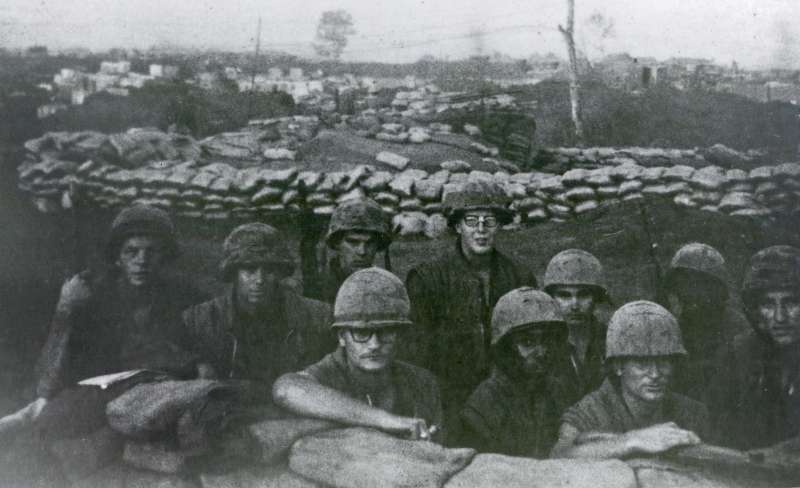
Bravo Company Squad at Khe Sanh Combat Base
Photo courtesy of Mike McCauley

You hear people talk about moments of sublimity, moments when for a short time, they saw into a bigger arena than the day-to-day mishmash of life.

March 30, 1968, was one of those days for me. It was honor and blood and fear and noise and rage and death and brotherhood—maybe even love—that no one who has not been in the fire of combat will understand.

And not just me, but to the men I served with. Here is some of what they told us in the interviews we conducted with them regarding March 30, 1968.

What you will read below is not in any chronological order. The comments from these Marines are in alphabetical order.

Chaotic, of sorts, just as firefights are chaotic.

Cal Bright:

And then, March 30th, we went back out and that was payback time. The Skipper would not allow me to be Point, because he knew I had a score to settle. But he did allow me to be on the left flank. And part of the squad that I was covering for was drawing fire from a couple, three bunkers and somebody told me—I was carrying an M-79  grenade launcher at the time—and they said, “We need some rounds over in this one area.”

And so consequently I used them as a guide, like an aiming stake, and they said I got a hole-in-one because the round went right in the doorway. And it eliminated whatever was in it.

Ken Korkow:

As we went out through our wire, we were getting artillery support in front of us. Boom boom.

I saw the Marine Corps at its best. The Marine Corps is really designed to have peace, but you get peace through strength, you get peace through war.

And I started hauling guys back in. I left my cartridge belt and my .45 behind. I looked like a blooming idiot, you know, and I was a blooming idiot. That’s why old politicians send young kids off to war. Young kids are stupid, they’re invincible. They’re caught up with adrenaline, plus when you don’t care if you’re going to die, you are ready to do crazy things.

All I had in my hand was a K-Bar. Again, that’s really pretty stupid. But the K-Bar was just to rip utilities open, make some tourniquets, stop some bleeding, be able to pull another guy in.

This other guy that I brought in, he’s laying on his back and he’s screaming, “My leg, my leg.”

And when I come up, there’s a hole blown in his flak jacket and a bunch of his guts exposed and I’m thinking his leg must really be screwed up. It was his right leg tucked underneath his back. I pulled his right leg out. Just a piece of shrapnel right on his ankle. I thought, Cowboy, you got no clue, your leg’s not your problem. Got him drug on back to a bomb crater.

Going out after another guy, running ahead, again, you didn’t have to look for wounded people. We had a bunch. And on the lip of a bomb crater there’s Ben Long and Steve Wiese, and, as I’m running by, Ben hollers at me, “Get down.”

I turned to him this way and I said, “Come out and enjoy the war.”

And right then three shells got me. The closest one was about two foot away; the furthest one was about 8 foot away. There was one in between and they were either 60- or 61-millimeter mortar and Ben’s got this ruddy complexion, and I mean it just drained, because he’d just seen one of his good men get blown to bits in front of him and he just got this horrified look on his face. It’s drained.

Ben comes out and he says, “We’ll get you back, you’ll be okay,” and I said, “Don’t worry about me, go get that other guy.”

Well, my helmet’s been blown off, I’ve got shrapnel here under the eye, both arms are totally useless, ah, this leg’s got a big hole in it. I’m telling you, I could not have taken another step.

Ben Long:

When the light started coming, it was foggy. And I thought, whoa, this is good. I really think God is with us. Because that covered us from being seen in our advancing on the enemy position and so, we started to advance; we had .50 caliber machine guns that were firing over our heads. We had to go through a little valley.  It wasn’t very deep, but deep enough that we could have cover from the .50 calibers and then as we approached the trench line, they ceased, and at that point what I remember was the fog lifted. And we could see pretty clearly. And we surprised them.

But, they were still in bunkers and trench lines, and it became hand-to-hand, it became very slow progress because they were a well trained unit. They were North Vietnamese regular army people and had been well trained.

Part of my job was to set up a battalion aid station that went out with us. We took a doctor out with us, and so we had set that up, and immediately people were being wounded and so I was starting to help bring wounded back. Bringing some dead back.

I had a 60-mortar group that was with me. Corporal Korkow was in charge of that and he said, “I’ve shot all my rounds, what do you want me to do?”

And so I started using them to help me to bring dead and wounded back.

Corporal Wiese and I ran into a bomb crater. This bomb crater was over our heads, I mean it was a big bomb crater. And we yelled at Corporal Korkow, “Get down, get down.”

But he didn’t do it. And then about six mortars went off. He was riddled. Because he had a flak vest and diaper on, it didn’t kill him.

I remember one went through his helmet. Blood was just pouring down. So we put on a couple of tourniquets and took him back to the doctor.

I really think Captain Pipes was the one that really made this thing a success. He was cool, he was calm, he knew what he was doing, he was wise in his directing of people.

Even though he was wounded, he was still doing it, still directing, and I remember we were pulling back, and he had given orders to pull back, to come back in. He stood outside the wire until the last man was in. Before he would go in himself. He was just a great leader. And we were very fortunate to have him and for him to be guiding us that day.

Frank McCauley:

March 30th was one of those days where it was just—well, it was the most important day in my life. We got up very early in the morning, probably 4 o’clock in the morning, and were rounded up and we went outside the line.

I can’t believe we made it out through the line, out through the canyon and valleys and came up on that ridge and it was very, very, very foggy.

We broke out of the jungle into a flat, barren, chewed up area of nothing but bomb holes and dirt divots and we saw the end of a trench and a VC come out of the trench and squatted just outside the trench line and took a shit.

Someone said, “Let me get him…shoot him.”

This guy with an M-16 shot him, pow, and he was down.

We had this one guy charging at us. He was probably a hundred feet, maybe a tiny bit farther away, but he was coming right at us, for what reason I don’t know, he didn’t even have a weapon and one of the guys said, “Let me get him, let me get him,” and I’m just there…

I’m a Roman Catholic and I do not wish to take anyone’s life and so I was kind of hoping I could get through this experience without ever using my weapon. I was good with that.

Anyway, this guy took a .45 and he aimed and he shot and he was right beside me and that guy, full bore running at us, folded like a cheap pocketknife, went back maybe a foot in the air and fell to the ground.

This other guy, just beyond that one that came rushing at us knows suddenly, we’re there. So, he is running full bore away from us, and there’s a guy with a LAAW, one of those light armored, ah…like a bazooka. He says, “Let me get him.”

This is so strange because we’re all young idiots and I hadn’t ever killed anyone and I had never fired my weapon except at a range, so I really didn’t wish to play this game, but everyone was really excited about doing this.

The whole weird part was it’s a running human being away from us, and this guy takes this LAAW—It was perfect. That round goes off and you can watch it go through the air and it hit him dead center.  And it just blew up and it was like you could see right through him, schwee, pure light, and he was down.

See, I just wasn’t raised that way, and I didn’t want to participate, and I was really amazed that there were so many people that were greedily trying to kill someone out there. But I guess that’s a good reason because they were actually trying to kill us, too, but I hadn’t come to that realization yet. I just saw us killing them, I hadn’t seen them kill us yet.

I got down behind this tree because I’d already seen a few dead people and I started to get worried that, you know, maybe, gosh, this is not just quite a game, and I peeked up to find out where everyone else was and bark just flew up in my face and I noticed a person beyond and they weren’t fifty feet away and they had dropped down and so I plinked a couple of rounds and I could get down, and we did that two or three times and then I realized this was pop goes the weasel and so I quickly got up there, out of rhythm, and when he came up I just squeezed and shot and the oddest thing, my instructor from the range in Camp Pendleton was there explaining to me about breathing and squeezing.

I took my first shot—right in the head, right in the forehead.

I had just done something I really didn’t wish to do and twenty feet away, is another pop goes the weasel but he’s shooting at my guys over here. He’s only twenty feet away and he keeps popping up and shooting. I didn’t want to think too much about it; for one thing he’s shooting live ammo at my people, so I just took aim and waited and as he did it, I played the game again where I just squeezed and shot. I hit him dead, right through the temple and he was gone.

I’m sitting there going, this ain’t good. I was supposed to be with others so I kind of moved and rolled away and went down into this giant crater that was left by some big B-52 bomb that was about ten feet deep and probably twenty feet across and a little puddle of water at the bottom and I’m sitting there, crouched on the edge of the bowl.

It scared the shit out of me because when I first rolled into there, I could see some green uniforms and then I thought, oh shit, and then I realized that they were American uniforms but they were three  dead Americans laying there sprewed across the sides of the ditch.

Then all of a sudden something catches my eye and this guy comes charging in—one of our guys—and he gets down and his head’s just about ground level and then he goes woooom and whips back, his helmet flies and he falls right at my feet and his brain goes across the dirt and I’m sitting there on the side of this hill looking at this guy and he’s like a gold fish, his eyes are bulging like a Chihuahua.

And then all of a sudden somebody else comes down and it’s a guy who’s been shot and so he’s sitting over there and then another guy comes in that’s a Corpsman and I tell the Corpsman, “You gotta help this guy,” and he comes quickly over and he starts to push the brain back into the skull, and he goes, “I can’t do anything for this guy,” and he quickly goes over to the guy who had his arm shot.

So I’m sitting there in this hole watching a Corpsman work on somebody, and a guy who’s gulping at me, and three dead along the edge, and I go, this ain’t the hole I need to be in. So I quickly crawled out and the incoming was coming like crazy, mortars, and so I saw a small hole, someplace to save my ass, so I haul butt and I jumped with my rifle in my hand, and as I was getting through the air I suddenly realized—and you can’t stop because you’re…you’re in the air heading for this hole–that it’s occupied. It’s got dead people in it, which I didn’t know until after I did a pushup in the air and did not go down on him.

I’m face to face with a guy who’s been dead for quite a while, and he had very little skin on his face. On his skull, it’s just parchment, skin peeled like a creek bottom that’s been dried out, and he’s got maggots coming out of his eye sockets but no eyes, and coming out of his nose and then below him is another guy in the same shape. These are two decayed, bad-news bodies. but they’re not ours, they are Vietnamese.

I finally met up with my machine gun guy—I was supposed to be the A-Gunner to him—and came into a hole, and this other tall Corporal came in and he decides that the reason everyone else around us is dying is because there’s a machine gun nest over there and it’s like a 150 feet away and it’s nothing but more than a big sandbag with a tiny slit in it and they’re ripping on us, and so he says, “Come on, it’s our job, we got to knock it out.”

I’ve seen enough war movies to realize the first wave on a machine gun nest doesn’t make it. He goes, “Come on, let’s go,” and he actually tried to drag me and the machine gunner out of that hole and head for that spot, and I hadn’t even seen it yet.

I go, “Wait, wait, wait, wait.”

Okay, we will do it because that’s kind of what we are supposed to be doing. But I wanted to just see what we were doing, I mean, once I left the bomb hole I really would love to find out where we were going. I don’t want to go out of that hole blind. So I took a peek and I could see the sandbag, and I could see where it was at and I said, “Okay.”

I put a new clip in and I looked at the dirt in front of me and I thought, that’s cool, that’s the last thing I’m going to see because I’m going to fall right face down in that shit when I leave this hole.

So, we charged out of there, all three of us, and I was in the middle, and the machine gunner was here, and the knucklehead was here and a third of the way there, he spun, got hit and left us.

I put every round, all twenty rounds dead center through that little teeny weeny slit and the machine gunner was chewing up those sand bags and we made it, we made it, and jumped over the sandbags and there’s this big pit and two dead gooks and of course the guy with the machine gun, his adrenaline is flowing, but he just blasts them anyway.

I got hit in the leg with shrapnel. A bomb, a mortar, went off right next to my leg and it violently rolled me over. I lost my helmet, lost my rifle.

I laid there in shock because I could feel my leg was burning but I couldn’t feel anything below the burn. All I could feel was cool wet which actually is kind of weird for blood.

I look down and my boot and leg—everything was still there and I’m thinking, well it’s got to be separated, so I wiggled my toes and my toes wiggled back in my boot and I went, ah, shit, it felt like my boot was filling up and overflowing with blood but I still had a leg.

I worked my way down and into a trench and headed toward where we had come in, and lo and behold, the steps that leave the trench where we first shot that guy taking his morning dump, there’s the guy that led the charge against the machine gun nest and he is half passing out and he clutches me. He’s clutching me. He’s going, “Help me, help me.”

And I’m thinking, ah, man, my leg, I can’t.

There’s a Marine crawling next to us, headed towards the rear, and he’s wounded and then suddenly I see this guy coming, and boom, he whips his head, helmet splits, and he’s got no chin. He grabs his chin–all he’s got are upper teeth and a big giant tear in his neck–and he grips it and throws his rifle down and spins and starts running back, but no, in just a matter of two steps he stopped and grabbed the guy on the ground and they both hobbled away toward the rear and I’m thinking shit, if a guy with no chin can help somebody, then with my little dumb leg I can probably do it.

So I say, “Okay,” and I got him in a fireman’s carry and we walked out. I’m gimping and then suddenly automatic machine gun fire opened up on us and he takes a round, I can feel when it hit. He moves on my body and I went holy shit and I went like as fast as—I was flying, I don’t think I even touched ground much, but I hauled ass with him on my back.

I saw a hole and I just chucked him and fell in on top of him. And unfortunately, on that run his arm, which had already been wounded, got hit again and the arm was gone.

It was one of those days. Definitely one of those days.  Anyway, that was my experience with my first kill, and to see people die, and you don’t want your children to experience that.

That’s why I don’t believe in war anymore.

Mike McCauley:

I said, “Ah, oh man, fix bayonets?” At this time, I’m saying this is the real deal and I told the rest of the guys, “Fix bayonets,” and I could see on their faces what it must have looked on me because this is not good. Fix bayonets.

It was almost like popcorn being made, where you heard pop…pop…pop…pop, pop, pop, and then guns started opening  up everywhere, automatic weapons, a lot of small arms, and then we hit the trenches and all hell broke loose, and ah, flames were going off, LAAWS were being shot, rifles,

I jumped into a trench. There was an NVA soldier, he didn’t know what the hell was going on, as much as we did, and I shot him, and I remember his eyes and I remember him going down.

Minutes were hours, hours were seconds, I don’t know how—I don’t even remember how—everything slowed down and speeded up and it was just crazy.

Michael O’Hara:

5 o’clock in the morning always comes too quickly, especially when you are doing something like this. It’s pitch black. Foggy. You couldn’t see.

There were three platoons. Our platoon, Second Platoon, went out of the wire first, ahead of the company and we set up a point where the rest of the company could come and pass through us.

Everything’s cool, nothing’s going on yet, and then the first and the third platoon came out and swept through our position.

First and Third Platoon were the ones that went into the jaws of the tiger first. They went through holy hell. And they paid a terrible price for it.

The order came back to fix bayonets. And that’s when everybody knew this deal was on. It was now.

And we had a ringside seat to it all. And there is really no way to explain what was going on there. I mean, it was flame throwers, it was rockets. Eddie Pendergras, he’s running around with 60 mortars, just sticking it on the ground and dropping into the tube and just pooomp, doing it by ear, you know, Kentucky windage, and they are shooting machine guns at this kid and he’s just dropping them all over the place.

We started setting up in squad rushes and when it was time for my squad to go, Jake says, “Let’s go,” and so we all went forward, and for just a minute we all broke discipline. Once he said, “Go,” we all just took off—and he like to never got us stopped—so we could provide the cover fire we were supposed to.

When I got in those trenches, First and Third Platoon had killed so many of them people that there were just bodies everywhere. I don’t think my foot ever touched the ground. And I was in that trench, I know, for over an hour.

The next moment, the next minute, the next hour it was just—well I will carry it with me the rest of my life.

It was just bodies to your kneecaps in there.

I don’t know if it was Captain Pipes, or who it was said, “Pick that Marine up and take him back.” And I bent down and picked him up and it was Hank Norman.

And everybody just loved him, he was just a great guy. He was just a hell of a nice guy and when I saw who it was, I just—it was just a real ass-kicker, just represented all the heartache of Bravo Company right there, all the names, right there in the bucket, all of them, and I picked him up and put him over my shoulder.

And Kenny Pipes was standing there and I thought to myself, my god, he was blood from one end to the other, I mean he was soaked in it. I thought he’d been hit by machine gun fire, but the guy was standing up, and he had been wounded severely in his armpit and he’d been shot right in the head with a rifle, although it didn’t penetrate his helmet liner, it just hit his helmet. And he had two radios and he was talking to the air on one radio, and he was talking to the artillery on the other radio. And here, all his best friends are laying right here dead at his feet and this guy’s still taking care of business, you know, he’s not losing it, he’s not passing out, he’s taking care of business, and we’ve got bodies laying everywhere.

And then I took Lieutenant Norman and I carried him back. I don’t know how far it was, but I will always remember he weighed so much, he was so heavy my legs ached so bad. And I just kept telling myself, don’t you dare drop him, whatever you do, don’t drop him. And I got back to the APC and there’s just bodies stacked in the damned back, and I laid him down just as gently as I could, and then we began cleaning the mess up.

You just…you just don’t know what it’s like to see a 19 year old kid—I believe it was Rash, but I’m not sure—I think it was Rash, laid out on his belly in the mud, sticking his rifle that direction, gives you the thumbs up and tells you to go that [the opposite] direction, and he knows damned good and well he’s never going to get up out of that mud. He knows he‘s dying for you. And people just cannot understand that.

I have something that most people in the rest of the world will never own, no matter how wealthy they become, or how smart they are, or what they know, but for a little bitty space in time, I was allowed the distinct privilege and the high honor of walking across hallowed ground with the bravest Marines that have ever worn the uniform and it was my privilege. And I will honor their memory until I take my last breath.

Ken Pipes—Company Commander of Bravo:

There was a building anger and a building desire to get outside the wire and to kill as many of them sons-o’-bitches as we could kill.

It was looking the tiger in the eye and riding the elephant.  And I think we carried away from that a lot of things, but the tiger blinked and the elephant knew we could ride him. And we did.

Was it a payback? Was it a payback? I don’t think so. Because the price that we paid then and before, you can’t put a price on. It can’t be bought. I think we proved that retribution was made. And I saw and was part of some of the bravest things I’ve ever seen.

To see the men of Bravo Company moving out with fixed bayonets and going through those trenches, almost fearlessly, was one of the most amazing things I have ever been a part of in my whole life.

And it just signifies and exemplifies what a fine group of Marines that we were fortunate to be a part of.

My God, what men.

Tom Quigley:

Captain Pipes gave me an order to fix bayonets, and at that time it seemed like, all of a sudden, reality sunk into me. I mean, I don’t know what I thought I was doing out there. I mean, this wasn’t a sunny picnic, but it didn’t really hit me that this was going to be a major encounter, a major battle, and my heart just sunk in my throat, you know.

He said, “Call the other platoons and tell them to fix bayonets,” so I got on the radio, and I advised Bravo 1 and Bravo 3, “This is Bravo 6…fix bayonets.”

I had said to the captain when he gave me the order…I said, “Do what?”

And he said, “Be advised to fix bayonets.”

One of the platoon radio operators came back to me and said, “Do what?”

I said, “Be advised to fix bayonets.”

And then I started looking around and I was seeing these Marines taking bayonets out of their backpacks, out of their pants leg, their cartridge belt, wherever they had them, putting them on the end of their rifles and then again, I thought to myself, this is the Real McCoy. It finally hit me, even though I’d been hurt twice earlier, I may not come back from this day.

It seemed like we had just started out, and then a round or two of small arms fire went off and then it just seemed like Charlie all of a sudden realized we were out there. And, once that happened, then all hell broke loose.

Once we started going, there was no walking. All of a sudden, it was an all-out assault. And we started running.

Our command group consisted of the five of us. There was Captain Pipes, his battalion radio operator, Lance Corporal Bragg, I carried the company radio, and then there was Lieutenant Hank Norman who was our artillery forward observer and his radio operator.

The first bomb crater I remember we got in, rounds hit right outside the bomb crater. And the Skipper said, “We got to get the hell out of here, they’ve got us spotted.”

And, then we got into an NVA trench line and at this time the fighting was intense. I mean, there was charging, there was shooting, there was grenade throwing, satchel charges, flame throwers.

Somehow I ended up next to a man with a flame thrower and again, talking like we’re talking here, I asked him, “How long does one of those tanks last of the fire,” and whatever he told me, it wasn’t any time at all—just seconds, and I said to  him, “Well that doesn’t seem very long.”

He said, “If you’re on the other end of it, it’s an eternity.”

As we went further into the NVA trench line, I remember Lieutenant Norman behind me. He had seen our senior Corpsman get hit with shrapnel by a mortar and he had started to stand up and say, “Doc’s been hit,” and when he did, I was crouched in the trench line. I had one hand on my rifle and the other hand on my receiver, and I turned around to hear what he said.

And by that time, several rounds of enemy mortars fell right on top of us, and it took Lieutenant Norman right out. His radio operator was hit, his face kind of busted out bloody, blood running through his fingers. I was hit, Captain Pipes was hit, and his battalion radio operator was also hit.

We were all knocked out, just in a matter of seconds. The rounds came in and knocked every one of us out and then, like I said, unfortunately killed Lieutenant Norman. And I wasn’t more than six feet, seven, eight feet from him. And he took the brunt of the round that I caught shrapnel in my side and my hand had also busted out in blood. I thought I had lost a few fingers but then I found out later it was concussion had forced the blood from out of the pores of my hand.

I could feel the blood start dripping down my back and a Marine from mortars came crawling through the line and I said, “Man, get this radio off my back,” and he unhooked me.

I was able to wiggle out of it. The senior Corpsman, who was also wounded, ended up putting a bandage on me and he probably saved my life because he told me later—we were in the same hospital ward in Japan, Yokosuka—that when I first had asked him how bad it was he said it wasn’t bad at all and then he told me later when I had asked, he said blood was just spurting.

Ken Rodgers:

I’ve got 2 days to go in-country. I really don’t want to be here doing this, fellas, ’cause I’m going home. I’m supposed to go home in two days.

But they didn’t care.

And I had to go because if I didn’t, I couldn’t face my fellow Marines.

Sergeant Alvarado, who was the platoon sergeant, and I ran up through all this mayhem, bodies everywhere, people wounded, and the Skipper, the company commander, was down in a shell hole and there was blood coming out of his ears and his nose and all these guys laying around there dead.

We ran up in front of everybody and Lieutenant Dillon says to me, “Well, mark the spot so they know where you are at.”

I said, “I don’t know what color.”

He said, “It’s a canary!” So I reached and got a yellow smoke grenade and threw it out there and it billowed up, and right then this barrage of artillery—right out in front of us, American  stuff—just flattened everything out there.  And then we just started moving back and picking up the dead Marines.

One of the other platoon commander’s radio man got shot, and by that time we had too many radio men, so they sent me with this guy.

I don’t remember why, but we were going towards the rear and he kept getting out of the North Vietnamese trench and I kept yelling at him to get back in the trench because there were booby traps. I could see these Chinese claymores hanging in the dead trees and he got out of the trench again and was running down the side of the trench and he tripped something and this white phosphorus booby trap came up and hit him and blew off his jaw, if I remember right.

White phosphorus is poison and burns on contact with the air. So his face was burning and I was putting mud on his face. I was really angry at him because I got hit in the face with this stuff. So I was mad at him for not doing what I told him.

I think maybe out of a hundred guys, we had maybe ninety wounded, had quite a few casualties and dead. We killed a bunch of them.

It went on four or five hours like that, up close and personal combat. That was what you joined the Marines for. Be careful what you wish for.  What you join the Marines for is that moment of truth. That was a moment of truth for me and probably for everybody there.

Peter Weiss:

We went on the move and we moved forward fairly smartly, and there was a lot of action going on. At one point I remember I was lying down in a bomb crater, right at the edge, and a grenade came at me, and I mean two feet from me. It’s one of those great stories, there was nobody around to jump on it and be a hero and I just laid there and I started trying to slide away from it, but it never went off and I thought, whoa, now I can move forward. God is with me.

We swept forward, probably went through at least a half dozen bunkers and personally, one guy in front, shooting into the bunkers while a guy went around and dropped grenades into each of these bunkers.

There was corporal whose name was Wayne Moore. His father had been a Marine and he was a tough, tough, kid. And he’s with me and we’re moving forward and he said, “This is the best. When I get out of the Marine Corps, this is what I want to do.” And I thought, are you crazy?

We were right next to each other, he was killed. Boom. He’s dead. Wham.

We moved forward and then we could see NVA soldiers coming from that little village below. We had gone that far, and we knew about where we were supposed to stop. Because Pipes said, “You stop when you see the road.” And we saw the road. So we fired at these guys, and we took a couple of them down.

We retreated and just so happened to find Donald Warren’s body laying about where we had started. And I picked it up and how heavy it is to carry someone who is dead.

Steve Wiese:

Captain Pipes sent the word out on the radio and said, “Fix Bayonets” and that took me totally back. You know, like, fix bayonets? That just brought instant pictures of hand-to-hand combat. I can remember telling the guys in the squad, “Okay, everybody, fix bayonets,” and they were like, “What?

It’s funny now, but it wasn’t then.

We started to sweep in towards that tree line and when that opened, we were kind of pinned down there for a while and there was firing going on back and forth and Wayne Moore jumped up. It was like he’d had enough and he jumped up and charged that machine gun bunker and he was shot several times and didn’t make it, and when he went down, Author Smith jumped up and he charged that bunker and he was shot a couple of times but he made it into the trench line and Author was in the trench line shooting his rifle, going into the machine gun bunker, pulled out his bayonet and the last thing I saw of him was fighting with a bayonet in the bunker.

And he basically took that bunker.

And all of a sudden there was just a big roar, and everybody jumped up and we all started charging the line. And I remember us running toward that line firing. I remember looking over my shoulder and seeing…it was like a ribbon effect. Everybody down that line was just getting up and taking off towards that trench.

These guys, Wayne and Author, were closer than brothers. We had gone through a lot. It was a tough day.

That was a pretty good firefight, that was a pretty good battle going on. It went on for several hours and I got to see some of the most heroic actions anybody could ever witness. To charge a machine gun bunker, that’s a tough thing to swallow.

But I’m glad I’m alive to say it, too, to be a witness to it. So, how I made it out of there, a typical guy, with hard times dealing with the war, is why did I make it out, you know? Why didn’t I get shot that day, when everybody around me was falling, I guess it wasn’t meant to be.

After most of the battle, when we were trying to regroup, Lieutenant Long—he was XO at that time—saw me, and here was a guy that was hit by a mortar, and he was pretty badly wounded, and the lieutenant called me over and needed help. When we picked him up we pulled him back to the rear and I just remember thinking this guy, you know, was almost a waste, I mean why are we trying to drag this guy back?

I just assumed he died and one of my memories of that was this guy, basically a dead man to me, five years ago, I think, I get a phone call. I was coming back from a job and I get a call on my cell phone and he goes, “Do you believe in guys coming back from the dead?”

And I’m like…I say, “What?”

He told me who he was and he goes, “I just remember this blond-haired angel dragging me out.”

That was pretty amazing, to find out this guy had actually survived and was doing well. His name is Ken Korkow, and he ended up getting a Navy Cross that day for his actions.

Sometimes there’s good things that come out, you know. That was one of the good things, to get that phone call.

Somebody actually made it back and survived when you didn’t think he was, you know, alive.

***

Like I said earlier in this blog:

Chaotic

~ By Ken Rodgers

_______________________________

Thank you for reading, and for honoring all Vietnam War veterans by sharing this blog, our films, and stories with friends and other veterans. 

BRAVO! Common Men, Uncommon Valor can be viewed on Amazon Prime. We also have DVDs available, which can be ordered on our website at https://bravotheproject.com.

You can find information about our companion film featuring eleven courageous spouses of combat veterans from various eras at https://imarriedthewar.com. I Married the War can be viewed on Amazon. DVDs are also available via the website.

Documentary Film,Khe Sanh,Khe Sanh Veteran's Reunion,Marines,Other Musings,Veterans,Vietnam War

October 5, 2016

Full Circle

Tags: , , , , , , , , , , , , , , , , , , , , , , , , , ,

Next week Betty and I will be journeying to Texas, to the Khe Sanh Veterans Reunion which will be held at San Antonio’s El Rancho Tropicana Hotel.

Just a little over six years ago, we set out from Montreal, Canada, where we were attending the Montreal Jazz Festival with our friends and relatives, Chuck and Donna Dennis, to head out to San Antonio for the 2010 reunion, and to film nine of the interviewees in the film, BRAVO!.

Back then, when we began the journey to tell the story of Bravo Company, 1/26 at the Siege of Khe Sanh, we had little to no knowledge of how to make a film. But, we knew we needed interviews, so undaunted, we marched on and showed up in San Antonio, made arrangements for a space to conduct interviews, picked up our videographer at the airport and proceeded to film the men.

John “Doc” Cicala, Frank McCauley, Mike McCauley, Michael E O’Hara, Ken Pipes, Ron Rees, the late Lloyd Scudder, Peter Weiss and Steve Wiese sat down and talked to me and the crew about their remembrances of the siege and what it meant to them then, in 1968, and what it meant to them in July 2010.

The late Mark Spear at the Khe Sanh Veterans reunion in San Antonio, Texas, July 2010

The late Mark Spear at the Khe Sanh Veterans reunion in San Antonio, Texas, July 2010

I often think of the intestinal fortitude these men demonstrated as they sat down and let their emotions bleed out for all the world to see. I recall sitting there across from them, hearing their stories, marveling at the way they just let it all spill out, and if it wasn’t all, it was certainly enough to wow the folks who would eventually work on and sit down to watch their powerful testimonies about fear, death, loss and ultimately, their victories over the obstacles that their experiences at Khe Sanh threw in front of them. The men were inspiring.

Now, six years later, we are going back to San Antonio and for me, it feels like we are coming full circle. Two of the men in the film, Dan Horton and the aforementioned Lloyd Scudder, are no longer with us as is also the case with videographer Mark Spear, and it makes me very happy that we got the interviews done—in the case of Dan and Lloyd—before these Marines left us.

I am also very grateful that we got to know Mark Spear before he made a way too early journey from those he loved and those of us who appreciated his sensitive, funny, artistic nature.

Some of the men in the film will not be there in San Antonio to sit around and talk about the war and our memories of it and how the film affected our views of that experience. And I wonder, in the case of those who have not said so, if BRAVO! in any way changed their lives, helped or hindered them in their ongoing drive to live on in spite of the mental and physical affects of the combat we faced during the Vietnam War.

The Late Lloyd Scudder at his Bravo! interview.

The Late Lloyd Scudder at his Bravo! interview.

Personally, what can I say about what BRAVO! has done for me? Well, for starters, I can say that I am now hooked on making films.

And I am now immersed in the world of combat veterans and all the accoutrements both good and bad that come with having let oneself become so immersed. Organizations, acquaintances, events, travel—yes, it’s greatly changed the world I personally inhabit.

And I think, in some ways, it’s helped me come to grips with my own horrors, the ones that lurk just behind me as I try to keep the memories of January, February, March and early April 1968 caged in some form of mental box.

It taught me that the men I knew in the trenches at Khe Sanh survived (as did I) second-by-second high grade fear, wounds, loss, and in most cases came out the other end able to deal with all the bad stuff. It taught me that the soul, however one wishes to describe or define it, can be ripped, stripped, battered and stabbed, but in the end, it can still emerge in triumph.

The keenest knowledge I’ve gained is the realization that instead of being alone, I know that there are a multitude of warriors who have experienced what I did—the constant fear that rides you like you were an underfed jackass, the need to be brave even though it may lead to your death, the loss of your friends’ lives. I have siblings, so to speak, who have trod or are now treading the treacherous ground with me.

The late Dan Horton at his Bravo interview at Ann Arbor, MI

The late Dan Horton at his Bravo interview at Ann Arbor, MI

For years, intellectually, I understood that I endured what millions have endured in war, but emotionally, I felt all alone, out there on a limb so to speak where no one could reach me.

Making BRAVO! taught me that there are others, right now, out there with me.

So I’m looking forward to getting to San Antonio and seeing who I know so we can sit around and talk about it all. Maybe we will laugh and maybe we won’t, but it will not matter, because I will not be alone.

If you or your organization would like to host a screening of BRAVO! in your town please contact us immediately.

DVDs of BRAVO! are available. Please consider gifting copies to a veteran, a teacher, a history buff, a library, a friend or family member. For more information, go to https://bravotheproject.com/store/.

BRAVO! has a page on Facebook. Please “like” us and “share” the page at https://www.facebook.com/Bravotheproject?ref=hl.

Documentary Film,Khe Sanh,Marines,Other Musings,Veterans,Veterans Courts,Vietnam War

June 15, 2016

On Veterans Courts

Tags: , , , , , , , , , , , , , , , , , , , , , , , , , , , , , , , , ,

Several weeks back we wrote a blog entry about how BRAVO! has become a part of the training regimen for new Marine officers at The Basic School at Quantico and we were amazed, as filmmakers, how the movie had grown into something we could not have imagined. What began as an attempt to tell a story about a small group of Marines at the Siege of Khe Sanh has since been used, for example, in college film classes, and high school history classes, and several California prisons, and creative writing classes and as part of a symposium on the humanities and the Vietnam War.

To the list of uses, add BRAVO! COMMON MEN, UNCOMMON VALOR as a tool to help veteran court personnel understand the ravages of war and why some veterans might go off the rails, so to speak, and run afoul of the law.

On June 1, 2016, BRAVO! was screened at the 2016 Justice For Vets Convention in Anaheim, California and an interested group of attendees watched the film and then participated in Q & A with the filmmakers. The questions asked were incisive and spoke to the attendees’ interests in veterans, TBI, PTSD, crime and justice.

The folks who came to see the film were judges, attorneys—both prosecuting and defense—court clerks, mentors, psychologists, police personnel, parole and probation officers, court coordinators, and more.

As I attended the conference, the thought came to me: Why do veterans deserve a different court system than everybody else and over the course of a couple of days, I got some answers.

Veterans courts aren’t the only courts that treat offenders differently. There are drug courts, and mental health courts and tribal courts, to name a few. So veterans aren’t the only folks getting special treatment in the justice system.

I heard more than one presenter at the conference explain it this way: Veterans went to serve the country and it is understood that the service was often hazardous. Now they have returned and have had some troubles transitioning into civilian life. Many of them have physical injuries and injuries to the soul and now it is time for us, American society, to serve them in their time of need. Like they did for us. And one of the ways we can serve them is to allow them to go through the veterans’ court program.

Left to right: Michael Jackson, Anne Jackson, Betty Rodgers, Ken Rodgers. Michael is a retired Air Force Colonel and Anne is a prosecutor. The Jacksons share their expertise on veterans, combat and family issues all around the nation. Photo courtesy of Brian L. Meyer.

Left to right: Michael Jackson, Anne Jackson, Betty Rodgers, Ken Rodgers. Michael is a retired Air Force Colonel and Anne is a prosecutor. The Jacksons share their expertise on veterans, combat and family issues all around the nation. Photo courtesy of Brian L. Meyer.

Apparently, the first veteran’s court was established in Buffalo, NY. There are over two hundred veteran court systems in the country now and the trend is growing in local jurisdictions nationwide.

And why? They seem to work. One of the founders of the Buffalo veterans court is Patrick Welch, PhD, a Marine who served as an enlisted man in Vietnam and was awarded a Purple Heart for the wounds he received there. Dr. Welch told a group of us why veterans courts are important, “Because incarceration doesn’t work.”

So, to avoid institutionalizing veterans in the prison system, it is thought to be cheaper and more effective to run offenders through a special court system.

These courts are fairly new and the experience society has had with them has yet to stand the test of passing years, but time after time Betty and I heard that the recidivism—the rate of veterans coming back into the court system after having successfully completed veterans courts—is significantly lower than the old established court system. This is a major win.

We initially became interested in veterans courts here in Idaho where we have six veteran court systems and it appears they are doing a good job of helping veterans who run afoul of the legal system for one reason or another.

Left to right: Dr. Brian L. Meyer, Interim Associate Chief of Mental Health Clinical Services, Supervisory Psychologist, and Substance Abuse/Post-Traumatic Stress Disorder Specialist at the H.H. McGuire Veterans Administration Medical Center and an Assistant Professor in the Department of Psychiatry at Virginia Commonwealth University, Ken Rodgers and Betty Rodgers. Photo courtesy of Anne Jackson.

Left to right: Dr. Brian L. Meyer, Interim Associate Chief of Mental Health Clinical Services, Supervisory Psychologist, and Substance Abuse/Post-Traumatic Stress Disorder Specialist at the H.H. McGuire Veterans Administration Medical Center and an Assistant Professor in the Department of Psychiatry at Virginia Commonwealth University, Ken Rodgers and Betty Rodgers. Photo courtesy of Anne Jackson.

We couldn’t be more pleased to know that BRAVO! has now become a tool to help veterans court professionals and volunteers understand the underlying trauma generated by combat.

And thanks you very much to the National Association of Drug Court Professionals, Justice for Vets, Terrence Walton and his entire staff at the NADCP for inviting us to screen BRAVO!

So, to the men of BRAVO!: Cal Bright, John Cicala, the late Dan Horton, Ken Korkow, Ben Long, Frank McCauley, Mike McCauley, Michael O’Hara, Ken Pipes, Tom Quigley, Ron Rees, the late Lloyd Scudder, Peter Weiss and Steve Wiese, a big oorah! Because in overcoming your reluctance (and fears) that created a barrier to you telling your stories about the Siege of Khe Sanh and all its horrors, you have, besides recording an important piece of history, become educators to the folks who administer our veterans courts.

If you or your organization would like to host a screening of BRAVO! in your town this coming summer, fall, winter or next spring please contact us immediately.

DVDs of BRAVO! are available. Please consider gifting copies to a veteran, a history buff, a library, a friend or family member. For more information, go to https://bravotheproject.com/buy-the-dvd/.

BRAVO! has a page on Facebook. Please “like” us and “share” the page at https://www.facebook.com/Bravotheproject?ref=hl.

Documentary Film,Film Screenings,Khe Sanh,Marines,Veterans,Vietnam War

April 17, 2015

A Hearty Welcome Home In Idaho

Tags: , , , , , , , , , , , , , , , , , , , , , , , , , , , , , , , , , , , , , , , , , , , , , , , , , , , , , , , , , , , , , , , , , , , , , , , , , , , , , , , , , , , , , ,

As nearly everyone knows now, when the Marines of BRAVO! and nearly every other veteran returned from the war in Vietnam, our reception was not what we expected. So it’s with great pleasure that today we can say a big thanks to the state of Idaho for an outstanding reception.

BRAVO! was celebrated throughout the state in late March and early April with screenings in Lewiston, Boise, Twin Falls, Caldwell and at Mountain Home Air Force Base. Capacity crowds amounting to well over a thousand folks came out to generously support the fundraisers and see the film, and as always, we feel we touched a lot of lives.

In concert with the screenings, we worked with a wide array of veterans’ service agencies to support veterans’ courts, the Idaho Veterans’ Network, and the Lighthouse Rescue Mission veterans’ programs. The screenings were fundraisers for these organizations as well as educational events to alert community members to the extensive variety of veteran’s organizations available here in Idaho that help veterans in need.

The people who came together to help us get the film screened were amazing: The Idaho court system, police and sheriffs’ departments, military units, veterans groups, humanities organizations, libraries, private organizations that help veterans, artists, colleges and
other passionate individuals.

Prior to the screening at the Egyptian Theater. Left to right,  Ken Rodgers, Alan Heathcock, Norma Jaeger, Betty Rodgers, Ken Korkow © Mike Shipman 2015

Prior to the screening at the Egyptian Theater. Left to right, Ken Rodgers, Alan Heathcock, Norma Jaeger, Betty Rodgers, Ken Korkow
© Mike Shipman 2015

We were honored that the screenings in Boise and Caldwell were included as the culminating events for the annual Read Me Treasure Valley series, which had a Vietnam veteran focus this year. Nationally known authors who have written books about war and Vietnam came and shared their work. Historians from Boise State University gave lectures on the Vietnam War. In addition, the award-winning author of VOLT, Alan Heathcock, led book discussions. There was a presentation about orphanages in Vietnam, a discussion about PTSD, and a program about music of the Vietnam era.

Joining in the screenings with this wonderful bunch of supporters and participants were BRAVO! Marines Ken Korkow, Steve Wiese and Ron Rees. All three of these Khe Sanh survivors participated in panel discussions following one or more of our events. Ken Korkow also was the guest of honor at a faith-based event at Boise’s Gowen Field, home of Idaho’s Air and Army National Guards. Joining in on the various panels were Dan Ashley, Mischa Brady, Julia N, Mary Kelly and Brian Taylor.

Color Guard entering the Egyptian Theatre on 3-30-2015. © Mike Shipman 3-30-2015

Color Guard entering the Egyptian Theatre on 3-30-2015.
© Mike Shipman 3-30-2015

Also on hand was BRAVO!’s editor John Nutt. John is a veteran of decades of film work and the Vietnam War. As part of the Boise event, John was presented with an award by the director of Idaho Veterans Services, Colonel David M. Brasuell, United States Marine Corps Retired, for John’s exceptional work on BRAVO!

BRAVO! supporter and friend Terry Hubert, also a Marine, came up from Nevada and participated in workshops about disturbed and incarcerated veterans.

Also attending was BRAVO! friend and Marine Dave Beyerlein who originally helped set up our website for the film. Dave served in Vietnam and even though we’d talked to him a bunch, we’d never met him in person.

Noted Boise author, Al Heathcock, once again emceed our Boise and Caldwell screenings and was impressive with his passion, insight and aplomb. Among other duties at the Egyptian Theatre event, Al introduced Boise city council member T J Thompson who read a proclamation from Boise Mayor Dave Bieter declaring March 30, 2015, as Welcome Home Vietnam Veterans Day. At the Caldwell event, Caldwell Mayor Garret Nancolas greeted the audience prior to the screening and talked about Caldwell’s Welcome Home Vietnam Veterans proclamation. A color guard from Charlie Company, 4th Tanks, 4th Marine Division posted the colors at both the Boise and Caldwell screenings.

Chamber music quartet playing prior to the start of the Caldwell screening. © Mike Shipman 4-1-2015

Chamber music quartet playing prior to the start of the Caldwell screening.
© Mike Shipman 4-1-2015

We would be remiss if we didn’t thank all the individuals and organizations that made the screenings of BRAVO! a smashing success: The indefatigable leaders of this massive effort, Norma Jaeger and Mike Moser aided by Christina Iverson of the Idaho Supreme Court, Reverend Bill Roscoe of the Boise Rescue Mission, Jamie Shropshire, Steve Orr, Linda Wright, Rich Neu, Steve Conger, Dan Ashley of the Boise Vets Center, Bill Bankhead, Travis Dryden, Mike and Monique Shipman, Pam and Lance and Kearney Thompson, John and Heather Taylor who are cousins of BRAVO! Marine Ken Korkow, Heather Paredes of the Eagle Field of Honor. Thanks too, to Mark Heilman, Lori Sprague and R K Williams of Boise State University; Mitzi Cheldelin and the rest of the folks at the Boise Police Department; the Ada and Canyon County sheriff’s departments, BRAVO!’s longtime supporters Leland and Trisha Nelson; Dona Butler of the Canyon County Veterans’ Court; the Idaho Division of Veterans’ Services; Cloverdale Cemetery and Funeral Home; Blue Planet Photography; Rick Ardinger and the Idaho Humanities Council, Mary DeWalt and Ada Community Library, Business Psychology Associates, Idaho Army National Guard, Joining Forces for Treasure Valley Veterans, Idaho Veteran’s Network, Office Depot, Destiny McGinley and the staff of the Egyptian Theater; Diane Raptosh and the folks at College of Idaho; Lewis and Clark College in Lewiston, Idaho, College of Southern Idaho in Twin Falls, Idaho, Terry Hubert, Ken Korkow, Steve Wiese, Ron Rees, John and Ann Nutt and all the other individuals and organizations who helped out with this event.

Back in 1968, thousands of Vietnam Veterans came back home to, at best, a tepid reception, but in Idaho during March and April 2015, they received a hearty Welcome Home.

Documentary Film,Film Screenings,Khe Sanh,Marines,Veterans,Vietnam War

February 18, 2015

On Arizona and Veterans

Tags: , , , , , , , , , , , , , , , , , , , , , , , , , , , , , , , ,

A light drizzle washed the dust off the day last Sunday and set the stage for a great screening of BRAVO! at Casa Grande, Arizona’s historic Paramount Theatre. A hundred folks showed up and listened to music, looked at art and saw the film.

The interesting thing to me about the art was that it was all performed and mostly created by veterans. I think the creation of art is a potent tool in helping veterans who suffer from PTSD and TBI to analyze and handle these war-caused maladies.

The screening of BRAVO! was a benefit for the Pinal County non-profit, HOHP (Honoring/Hiring/Helping Our Heroes of Pinal County) that works to assist veterans with all types of issues: homelessness, veteran health benefits, education, housing. You can find out more about HOHP at https://hohp4heroes.org/site/home.

Two enthusiastic ladies selling tickets to the Casa Grande screening on 2-15-2015. Photo courtesy of Betty Rodgers

Two enthusiastic ladies selling tickets to the Casa Grande screening on 2-15-2015.
Photo courtesy of Betty Rodgers

The event, besides featuring music, art and film, also had silent and live auctions to raise funds for HOHP, and a lunch was served. All of the efforts spent on putting this event together and all of the items auctioned and eaten came about as a result of the fine volunteer folk of Pinal County.

Joining us in Casa Grande was BRAVO! Marine, Ken Korkow, recipient of the Navy Cross for his actions on the Payback Patrol of March 30, 1968, at Khe Sanh. Ken was joined by his wife Liz and friends and members of the extended Korkow family. Ken talked to the folks at the screening about his efforts to help veterans with PTSD and TBI.

Thanks Ken and Liz for all you do for veterans and for BRAVO!

A big Oooorah! goes out to Debby Martin of the Paramount Theatre and all of her wonderful volunteers for their work in making the venue an accepting place to hold such an event. Kudos, too, to Palmer Miller, veteran’s case-worker for Arizona Congressional District One. Besides emceeing this event, Palmer, a 23-year veteran of the United States Army, was responsible for creating a lot of the art on display.

We have been invited back and have worked with Debby and Palmer now on four different screenings at the Paramount and all have been a unique and big success. We saw a lot of old friends and made some new ones and we wish HOHP all the best in their efforts to help the veterans of Pinal County, Arizona.

BRAVO! Marine Ken Korkow addressing the crowd at the 2-15-2015 screening of BRAVO! in Casa Grande, AZ. Photo courtesy of Sharon Miller

BRAVO! Marine Ken Korkow addressing the crowd at the 2-15-2015 screening of BRAVO! in Casa Grande, AZ.
Photo courtesy of Sharon Miller

On the screening front:

On March 30, 2015, BRAVO! will be shown at the Egyptian Theater in Boise, Idaho. Doors open at 6:00 PM. Program begins at 6:45 PM. Following the screening there will be a panel discussion moderated by Boise author extraordinaire, Alan Heathcock. The panel discussion will include veterans, some of whom are in the film. Proceeds will benefit the Idaho Veterans’ Network and Veterans’ Treatment Courts. Tickets are available online from the Egyptian Theater here at http://www.egyptiantheatre.net/event/2886/?instance_id=28.

Additional Idaho screenings to support the Veterans’ Courts and the Idaho Veterans’ Network will be held at the Williams Conference Center at Lewis-Clark State College in Lewiston, Idaho, on March 27, 2015 from 6:00 PM to 9:00 PM, suggested donation of $5.00 and there will be beverages and snacks provided; Twin Falls, Idaho, on March 31, 2015; at the College of Southern Idaho’s Fine Arts Building, time yet to be determined; Caldwell, Idaho, on April 1, 2015, at College of Idaho’s Langroise Recital Hall, 6:45 PM; and in Pocatello, Idaho, at a time yet to be determined.

If you or your organization would like to host a screening of BRAVO! in your town this coming spring or summer, please contact us immediately.

DVDs of BRAVO! are available. Please consider gifting copies to a veteran, a history buff, a library, a friend or family member. For more information, go to https://bravotheproject.com/buy-the-dvd/.

BRAVO! has a page on Facebook. Please “like” us and “share” the page at https://www.facebook.com/Bravotheproject/. It’s another way to stay up on our news and help raise more public awareness of this film.

Documentary Film,Film Screenings

February 11, 2015

On Warriors’ Hearts and Body Burning Details

Tags: , , , , , , , , , , , , , , , , , , , , , , , , , , , , , , , , , , , , , , ,

On today’s date in 1968 at Khe Sanh, four men were killed as a result of enemy incoming. None of the men were in Bravo Company, 1/26, but as I read the names of the KIAs I am once again saddened by all those lives lost at that conflict.

That sadness leads me to think about what remains now, some forty-seven years after. Memories remain, and the names on The Wall, and for us who still live, the remnants of death and mayhem haunt us.

For example, at the end of January, Betty and I journeyed to the National Cowboy Poetry Gathering in Elko, Nevada, where I ran into Vietnam veteran Bill Jones. Bill is well known at the Elko gathering for his cowboy poems, but he is also well known for his poems about his experiences as a United States Marine in Vietnam.

Bill, along with the late rancher and cowboy Rod McQueary, also a Vietnam vet, wrote a book of poems titled Blood Trails. The poetry in some of Bill’s titles, such as “The Body Burning Detail” and “Heathen Killer,” will sing a haunting memory to veterans. I am going to take the liberty of quoting a few of Bill’s lines here:

From “The Body Burning Detail:”

Twenty-five years later
They burn still.
Across sense and time
The faint unwelcome odor
Rises in odd places.
With a load of leaves
At the city dump
A floating wisp of smoke
From the burning soldiers
Mingles with the stench
Of household garbage.

And From “Heathen Killer:”

Sky Hawks and Phantoms
Climb almost straight up,
Dive and circle,
Drop tumbling silver
Cannisters of jellied fire
That flash in the sun.
We cheer the more spectacular
Rolling orange mushrooms;
The Greatest Show on Earth.
“This,” says Chief,
“Is one crazy white man’s war.”

Bill Jones is a neat and quiet man, polite and unassuming, yet in my visits with him about our mutual combat experiences, I can see in his eyes and hear in his voice the remains of battle. It resides there, PTSD I suppose, and something more, a sadness, a regret, and a hint of the bonds of brotherhood that tied so many of us together during our stints manning the lines, humping the bush, battling the North Vietnamese. The ties that still bind us. You can find Bill and Rod McQueary’s Blood Trails at http://www.abebooks.com/book-search/author/bill-jones-and-rod-mcqueary/.

Those of us who have fought in combat recognize these maladies that have haunted mankind since the beginning of war in our ancient mankind iterations; Soldier’s Heart and Shell Shock, Battle Fatigue and PTSD and Moral Injury.

Also while Betty and I were in Elko, we had the privilege of viewing a documentary film about Native American warriors and how they deal with the wounds of war, the kind that cannot be seen, the kind that are only manifest in the state of the spirit, the depths of the soul.

The title of the film is Healing the Warrior’s Heart and it was created by Taki Telonidis of the Western Folklife Center. Taki knows a number of Native American warriors and has produced a very informative documentary about how some of our native people help with (and they have dealt with these issues for centuries) the wounded warriors in their societies.

The film focuses on men and women warriors from the Blackfeet and Ute tribes, offering a close look at how the tribes deal with issues such as PTSD. Their methods differ quite radically from what the VA and associated organizations typically prescribe for this malady. I will not go into details of the film’s revelations; you can view the entire movie here, on YouTube, at https://www.youtube.com/watch?v=uIuPPSz6gL0. Take the time to check it out; it’s informative and well made.

Ken Rodgers. co-producer of BRAVO! Photo courtesy of Kevin Martini-Fuller

Ken Rodgers. co-producer of BRAVO! Photo courtesy of Kevin Martini-Fuller

What I will say about this film is how I like the notion put forth that a tribe, a clan, a society has a warrior class that is called upon to defend the population of that tribe, clan, society. Furthermore, this notion postulates that the society owns an ongoing responsibility to those who serve in this way, to heal the warriors’ negative reactions to combat and to afford them an ever-present deep respect after they choose to make the journey into war. This idea is endemic with Native American tribes and their methods of dealing with returning warriors seems to be catching the attention of the VA and other warrior related organizations. Again, check it out.

On the screening front:

Mark your calendars for a fundraising screening in Casa Grande, Arizona, on February 15, 2015, at the historic Paramount Theatre. We are delighted to announce that Bravo Company’s Ken Korkow, a Navy Cross recipient and resident of Nebraska, will attend the event with his wife, Liz. Doors open at Noon, lunch served at 1:00 PM, screening of BRAVO! to follow at 2:00 PM. Ticket cost: $15.00 advance purchase or at the door. Proceeds will benefit the Mobile Veterans Outreach Center and Emergency Veterans Services in Pinal County.

On March 30, 2015, BRAVO! will be screened at the Egyptian Theater in Boise Idaho. Doors open at 6:00 PM. Program begins at 6:45 PM. Following the screening there will be a panel discussion moderated by Boise author extraordinaire, Alan Heathcock. The panel discussion will include veterans, some of whom are in the film. Proceeds will benefit the Idaho Veterans’ Network and Veterans’ Treatment Courts. Tickets are available online from the Egyptian Theater here.

Additional Idaho screenings to support the Veterans’ Courts and the Idaho Veterans’ Network will be held in Lewiston, Idaho, on March 27, 2015, time and location to be determined; Twin Falls, Idaho, on March 31, 2015, at the College of Southern Idaho’s Fine Arts Building, time yet to be determined; Caldwell, Idaho, on April 1, 2015, at College of Idaho’s Langroise Recital Hall, 6:45 PM; and in Pocatello, Idaho, at a time yet to be determined.

If you or your organization would like to host a screening of BRAVO! in your town this coming spring or summer, please contact us immediately.

DVDs of BRAVO! are available. Please consider gifting copies to a veteran, a history buff, a library, a friend or family member. For more information, go to https://bravotheproject.com/buy-the-dvd/.

BRAVO! has a page on Facebook. Please “like” us and “share” the page at https://www.facebook.com/Bravotheproject/. It’s another way to stay up on our news and help raise more public awareness of this film.

Documentary Film,Film Screenings,Khe Sanh,Marines,Vietnam War

December 17, 2014

News on Big Screening at Boise’s Egyptian Theater

Tags: , , , , , , , , , , , , , , , , , , , , , , , , , , , , , , , , , , , , , , , , , , , , ,

Betty and I have been involved in a lot of screenings of BRAVO! and one of the salient things I have noticed is how each event is unique. It could be location, audience, weather, technical equipment…whether in the cozy confines of a friend’s home or the superb facilities at George Lucas’ Skywalker Sound.

A week ago last Wednesday evening we screened the film in a different venue at the Ada County Sheriff’s Department in Boise in what has been called a “sneak preview” for folks interested in helping with the screening of BRAVO! at Boise’s Egyptian Theatre on March 30, 2015. The Egyptian is an institution in Boise and a beloved community treasure that screens films, hosts concerts and visiting authors among other events. This March 30 event is a benefit for the Ada County Veterans’ Treatment Court and the Idaho Veterans’ Network.

In excess of fifty folks showed up for the sneak preview of BRAVO! last Wednesday and to engage in a discussion with organizers Norma Jaeger, Christina Iverson and BRAVO! co-producer Betty Rodgers about how they can help promote the screening which will occur on Welcome Home Vietnam Veterans Day. We heard many worthwhile ideas and received big-hearted offers of support.

Inside the Ada County Sheriff's Department prior to the screening of BRAVO! © Betty Rodgers 2014

Inside the Ada County Sheriff’s Department prior to the screening of BRAVO!
© Betty Rodgers 2014

We were joined by Mike Shipman, our graphic designer and a stout supporter of BRAVO!. Boise’s chief of police, Mike Masterson, was there and Heather Paredes who, along with her sister, founded the Eagle, Idaho, Field of Honor. Rick Ardinger, executive director of the Idaho Humanities Council, and Mary DeWalt, director of the Ada Community Library, also came and offered their ideas. In addition to helping with the screening, the Idaho Humanities Council and the Ada Community Library plan to bring author Richard Currey to Idaho as part of Boise’s 2015 Read Me Treasure Valley program. Currey penned the novel Fatal Light about the Vietnam War.

Terry Shotkoski of the Cloverdale Cemetery also attended the sneak preview. Terry is partly responsible for the Living Wall coming to Boise last September. He and his organization are BIG supporters of veterans. We were also joined by folks from the sheriff’s department, the Idaho Retired Law Enforcement Association, two retired generals, and John and Heather Taylor (John is BRAVO! Marine Ken Korkow’s cousin). Folks from the Boise Rescue Mission and from the Vet Center came to see how they can help, along with other great friends of BRAVO!.

Besides the screening in Boise, BRAVO! will also be featured at related benefit events in Twin Falls, Caldwell, Pocatello and Lewiston, Idaho.

We are very pleased to announce that the notable Idaho author and fan of BRAVO!, Mr. Alan Heathcock, will preside as the event’s master of ceremonies. Also coming to Boise for the March 30 screening will be some of the BRAVO! team, as well as several other Idaho authors who have written books about the Vietnam War. Come meet them all!

Inside Boise's Egyptian Theater at a technical check. © Betty Rodgers 2014

Inside Boise’s Egyptian Theater at a technical check.
© Betty Rodgers 2014

We are excited about this big event and how we can help folks learn more about the Vietnam War, the personal stories of the people who served, and its long-term costs in human terms. We are also excited to be able to work with all these great Idaho folks and organizations to be able to benefit the Ada County Veteran’s Treatment Court and the Idaho Veterans’ Network.

Also on the screening front, mark your calendars for a fundraising screening in Casa Grande, Arizona, on February 15, 2015, at the historic Paramount Theatre. Doors open at Noon, lunch served at 1:00 PM, screening of BRAVO! to follow. We will give you more details about this screening as they become available.

If you or your organization would like to host a screening of BRAVO! in your town next spring or summer, please contact us immediately.

DVDs of BRAVO! are available. Please consider gifting copies to a veteran, a history buff, a library, a friend or family member. For more information, go to https://bravotheproject.com/buy-the-dvd/.

BRAVO! has a page on Facebook. Please “like” us and “share” the page at https://www.facebook.com/Bravotheproject/. It’s another way to stay up on our news and help raise more public awareness of this film.

Documentary Film,Film Screenings,Khe Sanh,Khe Sanh Veteran's Reunion,Marines,Vietnam War

November 19, 2014

On Sweet Pacific Breezes and Film Screenings, Reunions and Survival

Tags: , , , , , , , , , , , , , , , , , , , , , , , , , , , , , , , , , , , , , , , , , ,

This past week the BRAVO! team spent the week at the Khe Sanh Veterans annual reunion at the Town and Country Resort in San Diego, California.

We met again with men who served with Bravo Company, First Battalion, 26th Marine Regiment before, during and after the Siege of Khe Sanh. We also met new friends and old friends from other outfits and shared stories, memories, tears and laughs.

Every year these events get more intimate and emotional for us. The ties that bind the survivors of any crisis are strong and can only be severed by death. This is very true for the men who served during the Siege. For those of us who endured the horror of that prolonged battle, the bonds of comradeship are stout. As one looks across a room full of veterans of that action, he knows that the people sitting out there, even if he does not personally know them, all understand the lifelong tensions and anxiety that simmer down inside.

One of the most exciting things that happened to us at the 2014 reunion was being joined by our family. Son Jim and his wife Norma, along with their daughters Justyce and Jayden drove over from Casa Grande, Arizona. Daughter Sarah and husband Baruch along with their daughter Isadora came in from Seattle, Washington. We were all present at the reunion banquet when Justyce, who received a scholarship from the Khe Sanh Veterans Association, was recognized by the scholarship committee chair, Dan Fisher.

BRAVO! Corpsmen and Marines: Back (L to R): Jim Beall, Charles McIntire, Tom Quigley, John Cicala, Tom Kupcho, Ken Pipes, Front (L to R): Ken Korkow, Ken Rodgers, Mike McCauley, Ben Long © Betty Rodgers 2014

BRAVO! Corpsmen and Marines: Back (L to R): Jim Beall, Charles McIntire, Tom Quigley, John Cicala, Tom Kupcho, Ken Pipes, Front (L to R): Ken Korkow, Ken Rodgers, Mike McCauley, Ben Long
© Betty Rodgers 2014

Thanks to Tom Eichler, John Pessoni and the rest of the leaders of the Khe Sanh Veterans for all their hard work in putting the event together. Now, next year, on to Savannah, Georgia.

While we were at the reunion, we slipped away to screen BRAVO! COMMON MEN, UNCOMMON VALOR at American Legion Post 291, Newport Beach, California. While the calming Pacific breezes wafted over the sailboats berthed at the pier outside the post, an earnest audience of seventy-plus people saw the film. Among the attendees were BRAVO! Marines Skipper Ken Pipes, Ben Long, Ken Korkow, Mike McCauley, John Cicala and Tom Quigley. Also there were other men who served with Bravo Company, Jim Beall and Charles McIntire. Area residents Ray and Barbara Doyle and Robin Zimmermann who contributed both music and expertise to the film came and visited with us and watched BRAVO!

A big shout-out to Tony Arrigo, Jim Kaylor and Roger Henry who worked hard to make sure the event came off without a hitch.

Something about the contrast between balmy southern California weather outside and the intense representation of the violence, agony and redemption depicted inside during the screening of the film seemed to make the day more poignant.

At the Newport Beach Screening, left to right: Barbara Doyle, Ray Doyle and Robin Zimmermann. © Betty Rodgers 2014

At the Newport Beach Screening, left to right: Barbara Doyle, Ray Doyle and Robin Zimmermann.
© Betty Rodgers 2014

Aside from the Khe Sanh Veterans reunion and the Newport Beach screening, BRAVO! was featured in an outstanding news feature by reporter Matt Burke in The Stars and Stripes which serves the United States’ military community worldwide. You can read the article here.
http://www.stripes.com/news/special-reports/vietnam-at-50/the-bloody-battle-of-khe-sanh-77-days-under-siege-1.314627

Up next for the BRAVO! team, back to Idaho for a battery recharge and plans for screenings in March 2015 to coincide with the first year of the 50th anniversary of the Vietnam War and for Welcome Home Vietnam Veterans Day.

If you or your organization would like to host a screening of BRAVO! in your town this winter or spring, please contact us immediately.

DVDs of BRAVO! are available. For more information, go to https://bravotheproject.com/buy-the-dvd/.

BRAVO! has a page on Facebook. Please “like” us and “share” the page at https://www.facebook.com/Bravotheproject/. It’s another way to stay up on our news and help raise more public awareness of this film.

Documentary Film,Guest Blogs,Khe Sanh,Marines,Vietnam War

January 19, 2013

BRAVO!: An Appreciation

Tags: , , , , , , , , , , , , , , , , , , , , , , , , , , , , , , , , , , , , , ,

BRAVO! supporter Jean Hegland muses about the film, history and the Vietnam War

Although I grew up with the Viet Nam war, it was never very real to me. I was born in 1956, and in the 1960s when my parents began to watch the nightly news on our family’s first television, reports of Viet Nam conflict were nightly fare when I wandered into the living room to check on dinnertime. After Walter Cronkite had finally announced, “And that’s the way it is,” and the television was turned off, discussions about the wrongness of the war and the inadequacies of the politicians who were promoting it were often a topic of my parents’ conversation as we ate.

But despite its frequent appearance in my family’s living and dining rooms, in many ways the Viet Nam war was an abstraction. I knew my parents were against the war—I couldn’t fathom how anyone could actually be for the crumpled bodies and destroyed landscapes I glimpsed on our TV screen—but no one I knew was directly affected by the conflict. My parents’ affiliation with the military had ended when they were discharged at the end of World War II (my father from the Army and my mother from the WAVES); and the draft was cancelled and the conflict in Viet Nam was officially over before any of my brothers or boyfriends were impacted. Later, when I went to college, there were few vets in the circles I ran in, and those I did meet—and occasionally even dated—seemed very reluctant to discuss their experiences in what they called “Nam.”

I suppose I was used to veterans staying silent about their war experiences. Although my mother privately told me that my father had been decorated for his service when he was a medic in the South Pacific, he himself never spoke of his experiences to anyone. I never heard my uncle or my aunt speak about their experiences in WWII, either, nor my other uncle who had been a fighter pilot in Korea, nor my great uncle who fought in France in WWI. And of course my ancestors who’d fought for the Union and Confederate armies during the Civil War and those who fought for America during the Revolutionary War were also silent.

Novels such as Johnny Got His Gun, and The Red Badge of Courage, and later, Snow Falling on Cedars, The Things They Carried, and Matterhorn taught me a little about what war might be like for a soldier, but I have Ken and Betty Rodger’s remarkable documentary film Bravo! Common Men, Uncommon Valor to thank for bringing the experience of soldiers at the Siege of Khe Sanh excruciatingly close.

I understand that no one who wasn’t there can ever really appreciate what those men endured during the 77 days of siege, and I also have some inkling of what a truly remarkable group that particular battalion of soldiers were, but after having watched Bravo! I feel I know much more than I did before about a soldier’s experience of the horror, pity—and glory—of war.

I wonder if anyone can listen to Cal, John, Daniel, Ken Korkow, Ben, Frank, Mike, Ken Pipes, Tom, Ron, Ken Rodgers, Lloyd, Peter, Steve, and Michael share their stories without experiencing both shudders and tears, if anyone can watch that film and not be haunted by it afterwards. Each time I watch Bravo!, I am appalled by the situation those men—then kids the age of my lovely son and his dear friends—were literally thrust into as they leapt out of moving planes and had to scurry to safety. I am heartbroken by the suffering they endured and the appalling waste that occurred. But I am also struck by the fierce, bright spirit of each of those men, by their commitment to each other in the face of such horrible odds. I am stirred not only by their courage in 1968 when they sacrificed so much to defend what turned out to be “a worthless patch of ground,” but also by their courage now, as veterans willing to risk further tears and nightmares in order to share their memories with the rest of us. Thanks to them, I feel I understand much more than I did before—not enough, to be sure, but a great deal more.

Bravo! has not changed the opinion I grew up with that the Viet Nam War was a horrible mistake, but it has deepened my sympathy for everything that those who fought in it endured, increased my appreciation for everything that they achieved, and my gratitude for the huge sacrifices that they made. It has given me fresh insight into all the silent warriors in my own family, too, and has encouraged me to reflect on the strange and compelling machine that war is, and why it is that we humans seem to have such a hard time getting beyond it. For all that, I am very grateful.

In addition to expressing my gratitude to the brave men who allowed their intimate stories to be captured on film, I also want to applaud Ken and Betty Rodgers, whose hard work and commitment brought Bravo! into being, and whose skill as interviewers (along with Mark Spear) and vision and craft as story-shapers helped to make Bravo! Common Men, Uncommon Valor the compelling—and transformational—film that it is.

Jean Hegland is the author of the novels Into the Forest and Windfalls.

Documentary Film,Khe Sanh,Meet the Men,Vietnam War

March 1, 2012

Meet the Men of Bravo!–Ken Korkow

Tags: , , , , , , , , , , , ,

In today’s post, we introduce former Marine, Ken Korkow.

Ken Korkow, United States Marine

I was 20 when I arrived at Khe Sanh and 120 when I left – but had not celebrated another ‘birthday’ while in country.

I enlisted from Blunt, South Dakota – where I was in the top 10 of my high school class (because there were only 8 in my class).

At Khe Sanh, I volunteered for nighttime ambush duty, was temporarily in charge of the Bravo 1/26 3.5 rocket section, was 60 Mortar Section Leader (my MOS), was designated as ‘protestant lay leader’ by Ben Long, stole firearms and ammo from Graves & Registration, stole socks and food from the supply tent. I killed, hated, cried – until I vowed to never have friends or feelings again.

Now – I understand God doesn’t waste pain – and my wife and I share the life-changing message of new life in Jesus Christ with business and military men and women. What we have learned gives us insight into some of what others have experienced – plus gives us the credibility to have some degree of access into their private lives. To accomplish this – I personally must stay very close to my Lord – otherwise I can easily revert to my old ways.

Ken Korkow

Ken Korkow was wounded in combat at Khe Sanh and received the Navy Cross, the nation’s second highest award for combat valor. The Governor of South Dakota named a special day in his honor – as South Dakota’s most highly decorated Viet Nam veteran.

With degrees in Agri-Economics and Business Administration, Ken’s career path led him to where he is today, the Regional Director of Christian Business Men’s Committee USA Heartland, serving Nebraska, Iowa and South Dakota.

He is a former member of the Professional Rodeo Cowboys Association; former president, Central South Dakota Board of Realtors; and former president, North and South Dakota Farm and Land Institute.