Bravo! The Project - A Documentary Film

Posts Tagged ‘Payback Patrol’

Other Musings

October 10, 2025

On David Aldrich, The Wall, and Khe Sanh
Tags: , , , , , , , , , , , , ,

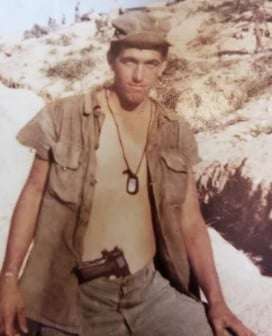
David A. Aldrich

By Ken Rodgers

In our previous blog, we posted a memory of a Marine killed in action at the Siege of Khe Sanh. It’s been almost fifty-eight years since the siege, and the men who manned the trenches there are still on my mind a lot of the time.

Here’s another story I wrote a few years ago about a Marine KIA whom I knew fairly well: David A. Aldrich.
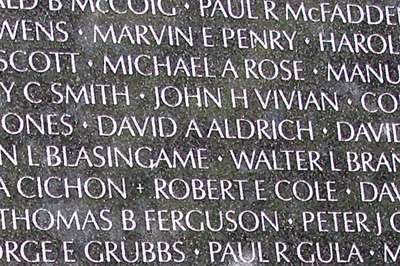
David Aldrich, The Wall, Panel 47E, Row 007

I’ve been having an ongoing e-mail conversation over the last several years with a Marine named Dave Evans who was in Marine Corps Training in the States with David A. Aldrich. Both of these Daves arrived together in Danang, South Vietnam, in March of 1967, and one of them went to Hill 55 with the First Battalion, 26th Marine Regiment. That was Dave Aldrich. I arrived on Hill 55 a day later. So Aldrich (that’s what we called him…we didn’t normally call anyone by first names in Vietnam) and I got to know each other fairly well, even though we were technically assigned to different platoons after our initial orientation while in the main battalion position on Hill 55.

Aldrich, I believe, had an MOS of 0351 (the Virtual Wall states that he was an 0311) which meant he shot what we called “rockets,” but which might be more simply understood as bazookas. I was an 0311, an infantryman, a grunt. I was assigned to Second Platoon and he went to Weapons Platoon, Bravo Company.

Aldrich was a quiet guy with a big smile and a mellow sense of humor. He stomped through mud and jungle grass with 1st and 3rd Platoons on patrol, too, but it seems like he was with us, 2nd Platoon, most of the time through the spring and summer of 1967 as the 26th Marines moved north from Hill 55 to the Khe Sanh Combat Base. He was with us through the monsoon season and up on Hill 881 South in the fall of the year. He was there, sharing chow with us, and jokes, playing cards, listening to the newest music on Corporal Mitchell’s portable record player…Sergeant Pepper’s Lonely Hearts Club Band and Aretha and Otis Redding and The Jefferson Airplane.

Those days through the fall of ’67 were hard, wet and dreary and Aldrich was along all the time, shooting his rockets when necessary. Dealing with the wet rounds that failed to go off. That was tough for him, getting those dud rounds, those wet rounds, out of those tubes without them cooking off and blowing his arms and face off. I recall how cool he was about it. If he was sweating, he remained unflappable, only the barest hint of tension in the grit of his teeth. But even if he was scared (and of course he was) he certainly didn’t want it to show…we were Marines.

When the siege began, Aldrich came around my bunker a lot and stood watch with us and he and I talked about going home…home…like heaven. I remember one terrible day, February 25, 1968, our Third Platoon got ambushed and First Platoon went out to relieve them and they got ambushed, too. We, Second Platoon, were left to man the company’s lines. The NVA was pounding the trench line with sneaky 82-millimeter mortar, rockets and train-wreck 152 mm artillery, keeping us down, keeping us locked in the perimeter so we couldn’t go get our friends, our mates, who were dying out there within ear shot.

It was one of the worst days of my life. My whole body shook. I imagined the red fire and searing teeth of death and conflagration. The end was here and I didn’t want to face it. I wanted my life.

As this was going on, Aldrich came up and engaged me in conversation. He must have seen my shaking. I can only imagine how white my face must have been. How shrunken down into my utilities and flak jacket I must have been, as if that could have made any difference. But he didn’t act like he was seeing anything out of the ordinary. He soothed me with his words. He steadied me.

Aldrich and I survived a lot of mayhem and death during the siege. We both made it all the way to the end of our tours. Then came March 30, 1968, what has been called the Payback Patrol. Aldrich had one day to go…he was scheduled to leave the field on March 31. I was scheduled to go on April 1. The evening before the patrol, the word got passed to me that Aldrich was looking for me so I went to his bunker, stuck my head in, saw he was slouched on a cot. I went in and sat down. He abruptly handed me an envelope.

I said, “What’s that for?”

“Make sure my parents get this?”

“What is it?”

“My dog tags.”

I began to yell at him. I refused to accept the envelope.

He said, “If I go out tomorrow, I won’t come back alive.”

I yelled. I yelled. I yelled. “If you believe that now, that’s what will happen.”

He nodded.

I said, “You’ve got to believe they can’t get you. If you believe they can’t get you, they won’t.”

He shook his head. We went back and forth, him resigned, me enraged, angry, and screaming. He wasn’t buying what I was saying. I didn’t accept the envelope.

The next day was four or five hours of speeded-up, slowed-down hell. It was like Dante says in his poem, Inferno, “Abandon all hope, ye who enter here.” I survived it and a lot of Marines didn’t. I remember walking down the red dirt road after we were ordered back into the perimeter. Men staggered along the lane. Some wore bandages on their heads, their arms and legs; some wore looks on their dirty faces that reminded me of dead people. Two men dragged a body down the middle of the road. I passed them and looked down. Even though his face was turned toward the red clay, I knew it was David A. Aldrich, Corporal, USMC.

I’ve been haunted by these images for over forty-five years. What could I have done to prevent Aldrich’s death? What could he have done? Did my failure to accept the envelope with the dog tags dishonor him? Maybe when I get done writing this, the images will stop coming.

Later that day, the word came down the trench line asking if anyone had seen Aldrich. He was missing in action, they said. I went up to the Platoon Command Post and told them I had seen his corpse. “You’re sure?” they asked me. “Yeah,” I said. The platoon sergeant went up with me to Battalion Headquarters and I signed affidavits of some sort saying I’d seen him dead. I signed the papers. He was dead. Killed in action.

For years I’ve had a sneaking fear that somehow I was wrong, and David Aldrich is locked away in some prison cell in Hanoi. Seeing his name on the wall soothes that fear. Somewhat.

Dave Evans asks that if anyone knew David Aldrich, please contact him at usmcdevans@yahoo.com.

_________

Thank you for reading, and for honoring all Vietnam War veterans by sharing our films and stories with friends and other veterans. 

BRAVO! Common Men, Uncommon Valor can be viewed on Amazon Prime. We also have DVDs available, which can be ordered on our website at https://bravotheproject.com.

You can find information about our companion film featuring eleven amazing spouses of combat veterans from various eras at https://imarriedthewar.com. I Married the War can be viewed on Amazon. DVDs are also available via the website.

Other Musings

March 30, 2025

Payback

Tags: , , , , , , , , , , , , , , , , , , , , , , ,

What’s Left at the End, is the title of this image taken after the Payback Patrol during the Siege of Khe Sanh. Photo courtesy of Mac McNeely.

Yesterday was National Vietnam War Veterans Day and this morning, March 30, 2025, is the fifty-seventh year since Bravo Company, 1st Battalion, 26th Marines went out on an action, finally taking our fight into the trenches of the North Vietnamese Army.

I suspect all of us who took part in that action and are still living remember this day. Like big red flags and big bangs and big winds inside the memory.

One of my comrades who fought that morning calls it the “most significant day in my life” and although it may not be the most important, for me it’s pretty damned big.

For forty-one years I didn’t know this day had earned a name. I found out about it in 2008 when someone asked me if I’d been on the Payback Patrol.

At the time, I didn’t know what he was talking about. Then I figured it out.

Payback. Was it payback?

I don’t know, but it was hell and war and glory and death and fright and elation, all rolled into one.

We lined the trench in the dark morning and smoked our cigarettes and mumbled. The spirit of fear flew through and circled back. Voices whispered about what we would encounter. Our artillery batteries fired what seemed like thousands of rounds as we waited to depart. We heard jets dropping bombs and somewhere a chopper. All in support of our assault.

In the platoon briefing, it was my understanding that the patrol was routine, that we were departing the wire to find and return the bodies of our fallen comrades still out there from the ambush of February 25. Based on our patrol of March 21, in which we found no live enemy, I anticipated this action to be similar. Go outside the wire, climb the ridge, find the fallen, put them in body bags, bring them back.

I think I may have been a victim of my overwhelming desire not to go into the kind of combat we would find that morning.

The skipper and his command post came down the trench, the skipper patting shoulders and nodding and smiling. I couldn’t smile.

The word came down, “Move out.”

I dropped my Winston on the muddy deck of the trench.

We charged up the ridge, the world around rocking and rolling, the roars and swooshes and thumps and thunder like the last days of the universe.

Staff Sergeant Gus Alvarado and I brought up the rear, our platoon, Second Platoon, coming up behind the two other platoons that assaulted the ridge on line.

Suddenly we were both on the deck, the world whistling a wild tune, the ripples of pain like a pool of water when a stone is thrown.

Like scoping in and out with a set of binoculars, in and out, consciousness en garde, consciousness intermittent.

I shook my head and got up. Staff Sergeant Alvarado put out his hand and I pulled him to his feet. He’d been hit in the ankle by a mortar tail fin. I had shrapnel in my head but didn’t know it. If the shrapnel had been a little higher on the left side of my head, it would have penetrated the temple and then who knows how I might have reacted.

We inspected where the mortar hit. Close. Too close. But sometimes you are lucky. We went on up the hill.

At the top, the corpsman stopped us and looked at the side of my head. “Shrapnel,” he said.

I looked to our front. What every Marine dreams of when enlisting was going on. Smoke and fire, explosions, Marines in the enemy trench. Stabbing, shooting, ducking, dying.

At that moment I was so overwhelmed I couldn’t articulate what I witnessed and sometimes still can’t.

Gunny Morris came up and said, “Son, are you ok?”

I didn’t want the fuss of any of that and said, “Yes, Gunny.”

His hands were shaking. That frightened me. Him, a man, a veteran of long years, a real Marine, shaking.  

What was obvious to me, out there to our front, was an urgent, vicious, desperate battle where men faced one of the ultimate moments of truth.

How long I stood and watched, I don’t know, the memories like a fractured flicker, click and blank and bam and dark and fear all piled together like kids playing King of the Mountain.

Second Platoon soon moved out and into the melee.

Us, advancing through the enemy trenches, and they were extensive and intricate. Each bunker had a tunnel that led to another bunker so when assaulting them, one Marine needed to be in front of each of the bunkers.

Grenades, rifle fire, satchel charges blowing bunkers to smithereens, our flame-thrower Marines moving through, torching bunker openings, cooking anyone who remained inside.

Bodies littered the trenches. I stopped to look at one, his face the color of saffron. Young, so young.

The word came down from the platoon commander, Lieutenant Dillon, for Staff Sergeant Alvarado and me to move forward to the front of the action and call in some artillery.

We passed a Marine machine gun team where the gunner was pounding the head of another Marine. I knew that Jarhead on the ground and my experience with him was he couldn’t control his fear. As I pressed on, I suspected he’d failed in his duty to his fellow Marines.

We passed another gun team manned by men I knew well. One of them, a cocky Puerto Rican kid from New York City—I don’t remember his name, but I see his face as if he was standing here talking to me now—yelled, “Rodgers, what are you doing out here? You’re too short!”

He was right, I was a short timer, five or six days left in the field, but right then, none of that mattered. Men were dying, the NVA were counterattacking.

As the staff sergeant and I hurried through the trench I noticed the company command group down in a bomb crater which included what looked like an NVA prisoner. As I looked at them a second time, a barrage of mortars fell and dust and smoke erupted.

We ran on, I looked a third time and the smoke cleared. Marines lay dead and wounded on the deck, the NVA prisoner on his knees. The one Marine still standing shot the prisoner in the head with a .45 caliber pistol.

For years I forgot I’d seen this event.

In 2010, while we were in San Antonio, Texas, at the Khe Sanh Veterans Reunion filming BRAVO! COMMON MEN, UNCOMMON VALOR, I met with Skipper Ken Pipes early one morning out on a patio overlooking the San Antonio River. I asked the skipper about that event and my memory of the NVA prisoner’s execution.

He said, “No, that didn’t happen.”

A boat went down the river.

I took a sip of coffee.

The skipper looked me in the eye. “I’m not telling you who shot that prisoner.”

Anyway, when the staff sergeant and I arrived out in front of where all the action had occurred, we called in artillery rounds that landed close and shook the ground and threw dust and chunks of red clay into the air.

Then Bravo began to pull back. Second Platoon formed a line and backed away from the outer edge of our penetration as some of us gathered wounded and dead Marines while men in the front line fired into oncoming NVA soldiers counterattacking.

Smoke and explosions and the roar of war resounded in the air, the ground, and still rattles the inside of my head.

The platoon commander of Third Platoon lost his radio operator and I was assigned to work with him. We headed for the rear of the battle. We had been warned in the night-before’s briefing that Chinese Claymores were hung all around the ground over which we fought and that we should, if possible, stay in the enemy trench.

As we headed back towards the combat base, the lieutenant got out of the trench and started running. I saw Claymores hanging in the branches of naked limbs nearby.

I yelled, “Lieutenant, get back in the trench.” But he didn’t.

So I climbed out and ran after him.

As he hustled along, he tripped a booby trap. Like a rocket it shot out of the ground and hit him. Smoke and debris and fire shot around him like a cloud and some of it hit me in the face. That pissed me off.

He stood bent low and I wondered if he’d fall over dead. I felt something on my face, sizzling the skin.

I yelled and cussed him as I came up and lifted his head. His cheeks and chin were smoking, on fire, so to speak, from white phosphorus, which is pyrophoric or in Marine language, burns on contact with air.

I leaned and grabbed a handful of mud and smeared it on my face to smother the fire as I muttered expletives at him, at the NVA, at war. I grabbed more mud and tried to extinguish the fire on his face. He never fell, never talked, just stared, I guess in shock, until a corpsman arrived and took over his care.

So much of that four- or five- or six-hour fight remains obscured. Too horrible to recall? I wonder if the sequence of events even matters now after all this time. So many images tumble through the back side of my eyes. Who died when and where. What we did and what we saw. What we didn’t do but thought we did. What we did and don’t think we did, don’t remember, don’t want to remember.

One of the striking images I have that doesn’t alter over decades, is our withdrawal.

I walked down the road by myself, radio on my back pressing me down, my emotions like ghosts haunting me.

The faces of our men like skeleton heads, gaunt, and spare, faces like people wanting to burst into tears, but too, elation. For two-and-one-half months we’d been hammered and pounded and scared a thousand times, thousands of moments, our fright like flights of bats invading our bodies, but now, this day, too, we’d gotten even, so to speak. We’d shot some people, and fought our way all through their entrenchments, we’d succeeded, we were someone again, Marines.

I saw two Marines dragging a body down the middle of the road. As I came parallel to them, I looked down and noticed the writing on the back of the dead Marine’s flak jacket. I sagged.

The night before, that Marine, a corporal who I’d known and served with for almost thirteen months, came to see me and handed me an envelope with his dog tags and asked me to send them to his parents.

He was supposed to rotate out of the field on his way home a day or two after the battle.

I asked him why he was giving the dog tags to me to send home, he said, “I’m not going to make it home. I’m going to die tomorrow.”

Anger swelled in my head, and I gave the envelope back and yelled at him that you could not think that the enemy would kill you. You could not give in. “They will not kill you,” I hissed.

To this day, that exchange and what followed, his death, my thoughts on it, have eaten at me. Was I wrong, was I right, does it matter? Obviously, it matters because, well, here I am speaking about it after fifty-seven years.

After the smoke and fire and thunder settled, someone told me that another Marine who I’d served with for months and months and who was a short-timer, too, had cut off one of his toes with an entrenching tool to avoid going out on the patrol.

My rage boiled and I charged down through our bunkers and fighting holes with the intent of challenging him, calling him “Coward.”

As I approached, he sat outside his bunker on the edge of a cot, his foot wrapped in fresh, white bandages.

I yelled, “I’m short and I went out. A lot of us went…” But he shook his head and said, “Don’t be judging me.”

I stopped, turned and walked off. I’m still judging him. Judging me.

_______________________________________________

Thank you for reading and for honoring all Vietnam War veterans by sharing this story with friends and other veterans. BRAVO! can be viewed on Amazon Prime. We also have DVDs available, which can be ordered on our website at https://bravotheproject.com.

You can find information about our companion film featuring eleven spouses of combat veterans at https://imarriedthewar.com.

Khe Sanh,Marines,Veterans,Vietnam War

March 30, 2020

The Need to See Them Dead

Tags: , , , , , , , , ,

Fifty-two years ago this morning on the battlefield of Khe Sanh, Vietnam, Bravo Company, 1/26 burst out of the confines of siege and siege mentality and went on the attack.

The details of what is now known as Payback are documented in a number of places. But what’s difficult to document is the fury and desperation that occurred when men from separate sides met face-to-face in a morning’s worth of savagery. For two and one-half months they’d blasted and murdered and maimed us and scared the living hell out of us. And we hungered for revenge.

Khe Sanh, 1968. Photo courtesy of Mac McNeely.

We caught them sleeping and we jumped in their trenches and we caught them in their bunkers and we dropped grenades on top of them and shot them when they crawled out and we dropped satchel charges on them and we shot them while looking in their eyes and we burned them alive with flame throwers and lobbed 60 millimeter mortars on top of them and we killed and killed.

The faces of the dead turned sallow and as I ran through the NVA’s trenches, I talked to myself about how the sallow nature of death made them all look the same, whether our side or theirs. They all looked the same and maybe that was appropriate given that the hands of death had choked all life out of them no matter their rank or race.

Blogger Ken Rodgers before the Siege of Khe Sanh began. Photo courtesy of Michael E. O’Hara.

Most of us were young. Our skipper called us kids. We were kids with lethal weapons and a bitter taste in our mouths and a load of hate in our hearts. Not a hate you reserve for the man you know who stabbed you in the back, but the hate you know against an idea, against an enemy—not individuals—that killed people that you love, and even though . . . even at the time you know . . . even though you’ve been taught thou shall not kill, and love your brother, and turn the other cheek, and do unto others as you would have them do unto you, you’re filled with hate and you are going to kill. You need to kill.

Fifty-two years ago this morning.

Enraged, we coveted revenge. Enraged, we needed to salve our pride. Indifference to them as human beings was the hallmark of the morning of 30Mar1968. We felt nothing towards those people over there except the need to see them dead. Payback.

***

DVDs of BRAVO! are available @https://bravotheproject.com/store/

A digital version of BRAVO! is available in the US on Amazon Prime Video @ https://amzn.to/2Hzf6In.

In the United Kingdom, BRAVO! is available on Amazon Prime Video UK @ https://www.amazon.co.uk/dp/B07BZKJXBM.

BRAVO! has a page on Facebook. Please “like” us and “share” the page at https://www.facebook.com/Bravotheproject?ref=hl.

Eulogies,Khe Sanh,Marines,Veterans,Vietnam War

March 25, 2020

Requiem

Tags: , , , , , , , , , ,

Steve Wiese was an American Hero. I think he would dispute that statement and would have said something like, “The real heroes are the dead, the ones who didn’t come home.”

But he was a hero.

Unlike so many of us who fought with Bravo Company, 1/26 at Khe Sanh, who did 12-month-and-twenty-day tours, Steve extended his time in country and served 18 Months. He joined up with his Bravo Marines when 1/26 was headquartered at Hill 55 southwest of Danang, and could have rotated home in late autumn of 1967, but chose to come back from his leave just in time to endure the Siege of Khe Sanh.

Marines of Bravo Company, 1/26, in Vietnam. Steve Wiese is the second man on the left, and in the front row. Photo courtesy of Steve Wiese.

In many regards, I think, he was the Marine’s Marine, a leader and a warrior who loved his Bravo Company mates.

A lot of Khe Sanh vets knew Steve better than I did, but what we shared was special: intense and intimate in the ways combat veterans share. We’d been to war and we’d made it home and after decades of keeping our traps shut about our experiences, we opened up and told our stories, separately and together.

And boy, did Steve’s stories impact the message that, after thirty-plus years, went out to America and the world.

Steve Wiese at a reunion of the Khe Sanh Veterans. Photo courtesy of Ken Rodgers

The things Steve said in BRAVO! COMMON MEN, UNCOMMON VALOR illuminated the service of all Vietnam Veterans. He said it like it needed to be said, blunt and bold and no-holds-barred. He bared his soul and revealed his vulnerabilities while edifying the men with whom he served.

There were a lot of tragedies in Steve’s life. In Vietnam, with Bravo, he was involved in every battle or firefight of any consequence that happened during his tour.

While I managed to not be in a number of the fights that Steve was in, I lived through enough to get an inkling what it was like for him.

On June 7, 1967, in what has lately been termed by historians to be the last clash in the Hill Fights segment of the Battle of Khe Sanh, Bravo went on a two-platoon patrol off the north end of Hill 881-S. Back then, we patrolled in soft covers and no flak jackets, and we generally ran patrols on the same routes every few days.

Photo of Steve Wiese, second from left along with, on the left, Marcia Franklin of Idaho Public Television’s Dialogue, Betty Rodgers, second from the right, and Ken Rodgers. Photo courtesy of Idaho Public Television.

So, when the NVA ambushed Bravo out there that day, the casualties were devastating. I wasn’t out there. Our squad stayed on the lines but I heard it and I saw it, and how it felt to me then, sticks with me now: emptiness, like some part of me hightailed it and can’t come back. So with that in mind I can only imagine how those men who fought that day—like Steve Wiese—felt.

He gained some notoriety that day when, upon coming in the gate after the patrol returned to the combat base, he barked at a colonel, maybe, or a lieutenant colonel, or a major who tried to soothe the returning warriors with platitiudes. (A load of officers came up on the hill at the end of that fight.)

After returning to his squad area, he expected to be standing tall in front of The Man because of what he said, but instead he was approached by a general, whose name I don’t think he ever enlightened me with, who told Steve to not pay attention to anything that officer had said.

On July 21, 1967, First Platoon of Bravo went out on a patrol on Route 9, east of Khe Sanh, which was ambushed. Steve was out there that day, too, and men with whom he served and bonded, died.

And then there was the Siege and all that came with it.

Including the Ghost Patrol. Steve was a squad leader on that debacle and even though he survived, a lot of the men in his squad didn’t. He carried a ton of grief and guilt over that. His narrative about how he managed to escape and evade the NVA to return to the base is one hell of a story.

Steve Wiese during his interview for BRAVO! COMMON MEN, UNCOMMON VALOR. Photo courtesy of Betty Rodgers.

And then there was the savage Payback Patrol where he was a squad leader in First Platoon and again, lost a lot of good Marines.

After he came home, he put up with all the guff and lack of respect that came with being a Vietnam Vet, and he suffered tragedies that would break folks with less steel in their spine.

He loved his Marines and he cherished and honored them whether dead or alive.

IF you were one of his Marine Brothers, he supported you. He showed up when the manure hit the fan.

One of the strongest moments in BRAVO! Is when Steve says this, “I’ve had people say, ‘Well, that was 30, 40 years ago. Why don’t you get over it?’ You know, I wish I could. I wish I could get over it. But on the other hand, it’s like I don’t ever want to forget these guys. I don’t want to forget what I’ve seen, what I was witness to. And I don’t want to forget them and their memories.” And he never did.

Steve wouldn’t have called himself a hero, but I will.

_______________

Steve Wiese left this world on March 20, 2020. He was an exemplary Marine who spoke eloquently and from the heart during both interviews and eulogies. To quote Steve’s own words, “Be sad that he is gone, but happy that he was here.” Semper Fidelis, Steve.

***

Documentary Film,Khe Sanh,Marines,Veterans,Vietnam War

March 30, 2019

Intuition–The Payback Patrol

Tags: , , , , , , , , , , , , , , , , , , , , , ,

Fifty-one years ago the morning roared at us much too soon, the briefings and the saddling up and the waiting to barge outside the wire and into the NVA trenchline.

Fog crouched over the base and added to the gloom that nested in my middle.

The lieutenant and staff sergeant soothed me, “We are just going out to get the remains of the men left out there on February 25th.”


Their words jangled. Deep inside my intuition, I sensed the day would turn to chaos and death and maiming.

The mist smothers Khe Sanh. Photo by David Douglas Duncan

Besides the staff sergeant’s words and the outgoing artillery prepping the NVA trenches, the only other sounds were the scrape of boots in the red mud, the creak of gear and the occasional hack from throats of Marines and Corpsmen.

Before departing the perimeter, the company staged in the trench. The staff sergeant and I went down the line, me behind with the PRC 25 radio, him in front checking web gear, whispering orders, whispering support, whispering motivational phrases.

I saw Corporal A sucking on a cigarette. His eyebrows arched up and I nodded. There was Corporal M inspecting a flak jacket on one of the men in his squad. Every night M and I listened to Armed Forces Radio. We told everybody we wanted to hear the news but we really wanted the music; the Mamas and the Papas, Otis Redding, The Turtles. And then, from time to time, we wanted to laugh and be frightened in a different sense at the same time, so we tuned the radio to Hanoi Hannah who usually had something personal, a warning, to say to us, the men of Khe Sanh.

When the order to move out rolled down the line, the clink and grunts and swish and stomp of Marines in motion rose up and hit the low lying fog and then came down over us like a parachute.

Outside the wire, our platoon—Second Platoon—set up, and that’s when it must have happened, Skipper Pipes giving the order, “Fix bayonets.” You would think that something so primal that hinted at the coming savagery would stick in one’s mind, but I don’t remember those words. I think every man who survives now who embarked with us that fatal day recalls that moment. Everyone but me.

The other two platoons, First and Third, passed through our lines and charged up the ridge and jumped in the NVA trench and started shooting and bayoneting the enemy. Our platoon followed. First and Third Platoons cleared bunkers with grenades and satchel charges and flamethrowers. Dead littered the ground. Theirs and ours, and one thing that stays bolted into my memory like it was part of my flesh and bone is how the dead all looked the same: sallow and surprised and once or twice, peaceful.

It was brutal, what happened that day, March 30, 1968. We lost 12 good men and as I recall, close to 100 wounded. According to what the records say, we killed 115 of the enemy, although I’m not sure how that number came to be.

Blogger Ken Rodgers. While at Khe Sanh. Photo courtesy of the estate of Dan Horton.

Back inside the perimeter wire, after the battle, the staff sergeant and I stood in the trench by the gate and watched our men come back, faces drained to the color of ivory, their eyes suddenly gone from what earlier had been excitement to a look that’s come to be known as the “thousand yard stare.” Here and there a bandage over a bloody spot on an arm, or the side of the head; occasionally a man with an AK-47 he’d salvaged out of the mayhem.

It’s odd what my mind recalls about that morning. I draw a blank when trying to recollect the moment that the word went out to “fix bayonets.” But I do remember much of the blood and mud and mayhem; me getting hit in the side of the head by shrapnel from a mortar round; that exact moment and how it felt like a stone thrown in a calm pool of water and what I thought about sitting on my butt in the mud, aware that I’d been hit, not knowing the injury’s extent.

And I also remember, standing there with the staff sergeant, thinking about the difference between what the lieutenant and he told me about simply going out to get the dead and what really happened . . . what intuition told me would happen.

Last night we screened BRAVO! in La Grande, Oregon. More about that event next week.

***

BRAVO! is now available in digital form on Amazon Prime.

This link will take you directly to BRAVO!’s Amazon Prime site where you can take a look at the options for streaming: In the US you can stream at https://amzn.to/2Hzf6In.

In the United Kingdom, you can stream at https://www.amazon.co.uk/dp/B07BZKJXBM.

***

If you or your organization would like to host a screening of BRAVO! in your town, please contact us immediately.

***

BRAVO! has a page on Facebook. Please “like” us and “share” the page at https://www.facebook.com/Bravotheproject?ref=hl.

Documentary Film,Khe Sanh,Marines,Other Musings,Veterans,Vietnam War

July 30, 2018

Wayne Moore

Tags: , , , , , , , , , , , , , , ,

Sometimes the work we do with the story of Bravo Company, 1/26, resonates in unexpected places.

Recently, I received the text below from someone who lost a friend, a Marine named Wayne Moore, who served with Bravo at Khe Sanh. Wayne was killed in action—for which he was posthumously awarded a Silver Star for valor—on what has become known as the Payback Patrol of March 30, 1968.

Wayne Moore’s photo on the Vietnam Veterans Wall of Faces

Betty and I thought it worth sharing the message we received.

Hi,

I recently watched your documentary on the Battle of Khe Sanh and was amazed at what I had learned.

I knew one of the Marines mentioned several times that was KIA on 3/30/1968; his name was Wayne Moore. After 50 years I finally found out what had happened to the man that meant so much to myself and my family.

My Mom and Dad worked with Wayne in a furniture shop and were very impressed by him. So impressed we asked him to dinner a few times and then asked him to live with us in our home in Plymouth MA.

He dated my sister Linda and they were later married.

He was an extremely talented musician (played a Burns of London guitar) and played in a band as lead guitarist and vocalist. He was amazing.

Wayne Moore, center, playing his guitar,before joining the Marine Corps. His brother-in-law, John Hammer, is the drummer on the left. Photo courtesy of John Hammer.

I was a few years younger than him and he was like a big brother. He changed my life in ways that are still with me today, over 60 years later.

When he was KIA, my sister was devastated along with myself and parents. He was a figure larger than life and his death shocked us to our core.

I am the only remaining person of the people I mentioned and am now the only one that knows what happened on the day of his death in 1968.

I will be forever grateful to you and the fellow Marines that helped to make this project, especially Steve Wiese who seemed to know him the best.

If you could forward this to Steve so he can add these things to Wayne’s memory, I would truly appreciate it.

Steve Wiese. Photo courtesy of Betty Rodgers.

Again, thank you for your efforts to bring the enormity of the Battle of Khe Sanh to life. Hearing his name and how he was killed was something that means a great deal to me.

John Hammer

Sometimes I wish that we could move beyond the seemingly eternal nature of the story of Bravo Company at Khe Sanh, and put those long ago events behind me, but getting messages like Mr. Hammer’s makes the ongoing efforts worthwhile.

Here is a link to Wayne Moore’s page on the Wall of Faces: http://www.vvmf.org/Wall-of-Faces/34976/WAYNE-P-MOORE.

***

On a separate subject, we wish to announce that Bravo Company’s Skipper, the late Lieutenant Colonel Ken Pipes, will be interred at Fort Rosecrans National Cemetery in San Diego, California, on August 24, 2018 at 10:00 AM.

***

BRAVO! is now available in digital form on Amazon Prime.

This link will take you directly to BRAVO!’s Amazon Prime site where you can take a look at the options for streaming: In the US you can stream at https://amzn.to/2Hzf6In.

In the United Kingdom, you can stream at https://www.amazon.co.uk/dp/B07BZKJXBM.

***

If you or your organization would like to host a screening of BRAVO! in your town, please contact us immediately.

***

DVDs of BRAVO! are available. Please consider gifting copies to a veteran, a teacher, a history buff, a library, a friend or family member. For more information, go to https://bravotheproject.com/store/.

BRAVO! has a page on Facebook. Please “like” us and “share” the page at https://www.facebook.com/Bravotheproject?ref=hl.

Documentary Film,Guest Blogs,Khe Sanh,Marines,Veterans,Vietnam War,War Poetry

April 6, 2018

Juxtaposition

Tags: , , , , , , , , , , , , , , , , , , , , , ,

We have posted poems here friends as well Marines who fought at Khe Sanh and elsewhere during the Vietnam War, including poetry from friend and supporter Betty Plevney, Vietnam veteran and Marine Barry Hart and most recently Bravo Company’s Skipper, Ken Pipes. Poems are a good way to capture the imagery and action related to combat.

Recently I wrote a blog about the Payback Patrol of 3/30/1968. One of our friends, Susan Parker, who is an ardent supporter of BRAVO! COMMON MEN, UNCOMMON VALOR, read that blog and was moved to compose a poem.

Susan Parker. Photo courtesy of Susan Parker

She captured, in my opinion, both the agony of combat and the disconnect between the world at home and the world of war. Check it out!

Juxtaposition—March 30, 1968

By Susan Parker

Dressed in jungle green,
you ran through the hell fires of war,
blood trickling down your face,
the stench of phosphorus and death
pungent on the tropical air, dragging
dead and dying men through a muddy trench,
grenades and bombs exploding,
sounds of gunshot ringing in your ears.

Fearless in facing the enemy,
you were “cutting the mustard.”

Dressed in virginal white,
I strolled the length of a red-carpeted aisle,
sheer tulle veil covering cheeks ablush with excitement,
high-heeled satin pumps pinching manicured toes,
gardenias glistening with morning dew
softening the early spring air,
organ music of “Here Comes the Bride”
echoing through the church.

Ignorant of your courage and sacrifice,
I was cutting the wedding cake.

Writer and poet Susan Parker was born in a small town in Northern California but never enjoyed the cold, gray and damp weather. One who embraces change, she traveled south throughout the years finally moving to Tucson, Arizona where she found warmth and inspiration for her writing. Susan is the author of Angel on My Doorstep—An Ordinary Woman’s Journey with Those from the Other Side, an autobiography of her lifelong paranormal adventures, with emphasis on those that took place before, during and after her husband’s passing. She has also published a book of poetry, Lady by the Bay, and recorded a CD, She Rode a Wild Horse, which includes her original Western poetry along with poems written by others.

Susan Parker on the left with Vietnam veteran Eric Hollenbeck of Blue Ox Millworks, Eureka, California. Photo courtesy of Betty Rodgers

About her inspiration for her latest poem, “Juxtaposition—March 30, 1968,” Susan says that during one of her conversations with Ken several years ago he mentioned the importance of the date to him. Susan realized that this was the same date that she married her first husband, and how different their lives were on that day. With a twinge of guilt, she thought to herself, Ken lived in a nightmare world while I lived in a fairy tale world, oblivious to the horrors of war.

Reading Ken’s blog post this March 30th, she was moved to tears. Her muse shook her by the shoulders and shouted, “You have to write this, this juxtaposition of your lives on that day!”

And so she did.

***

On the screening front: On April 7, at 1:00 PM Bravo will be screened at the Warhawk Air Museum in Nampa, Idaho. following the screening, there will be a panel of Khe Sanh survivors who will talk about the experience. You can find out more about the event and the Warhawk Air Museum here.

At 3:00 PM on May 27, 2018, BRAVO! will be screened in Paris, TN at the Krider Performing Arts Center. You can find out more about this event and the Krider Performance Art Center here.

***

If you or your organization would like to host a screening of BRAVO! in your town, please contact us immediately.

DVDs of BRAVO! are available. Please consider gifting copies to a veteran, a teacher, a history buff, a library, a friend or family member. For more information, go to https://bravotheproject.com/store/.

BRAVO! has a page on Facebook. Please “like” us and “share” the page at https://www.facebook.com/Bravotheproject?ref=hl.

Documentary Film,Film Screenings,Khe Sanh,Marines,Veterans,Vietnam War

August 29, 2017

A Bridge In Pocahontas

Tags: , , , , , , , , , , , , , , , , , , , , , , , , , , , ,

On September 15 of this year the folks who live in Pocahontas, Virginia, are going to rename and dedicate the Center Street Bridge, Route 1103, as the “Donald R. Rash Bridge.”

Donald Rash was a Marine in Bravo Company, 1/26 who was killed in action on March 30, 1968 in what has become known as the Payback Patrol where the Marines of Bravo Company went outside the wire at Khe Sanh to kick some butt, get even and find their fallen comrades still out on the battlefield since the Ghost Patrol of February 25, 1968.

Photo of Donald Ray Rash in Marine Corps blues. Photo credit: Virtual Wall

I didn’t know Don Rash, or if I did it was by sight and not by name. He was in the third platoon and I was a radio operator with the CP for Second Platoon. I didn’t know a lot of the men I served with outside of those whose lives were tangled up with my routine—standing radio watch, mail call, patrolling, noshing on C rations, sitting around “shooting the moose.”

Don Rash was posthumously awarded a Navy Cross for his action on the Payback Patrol. A Navy Cross isn’t a medal handed out for anything less than life threatening actions performed without regard for one’s own safety to help save fellow warriors, and/or for extraordinary combat action.

Navy Cross Medal

An excerpt from his Navy Cross citation gives an idea of what Don Rash did to deserve his award:

“Company B suddenly came under a heavy volume of small-arms fire from a numerically superior North Vietnamese Army force occupying fortified positions. Although the majority of the hostile fire was directed at his squad, pinning down his companions, Private Rash disregarded his own safety as he unhesitatingly left a covered position and launched a determined assault against the enemy emplacements. Ignoring the hostile rounds impacting near him, he fearlessly advanced across the fire-swept terrain, boldly throwing hand grenades and delivering a heavy volume of rifle fire upon the enemy force. Although continuously exposed to the intense hostile fire, he resolutely continued his vicious attack until he had destroyed five enemy positions and killed numerous North Vietnamese soldiers. When his company was subsequently ordered to withdraw while under accurate enemy mortar fire, he steadfastly remained behind, and as he delivered suppressive fire to cover the evacuation of casualties he was mortally wounded.”

You can read Don’s entire Navy Cross citation here.

Pocahontas, Virginia

Sometimes it seems to me that these citations for actions above and beyond the call of duty read a little like a stiff collar. On page 274 of Ray Stubbe’s book about Khe Sanh titled Battalion of Kings the entry about Don’s actions reads more like someone telling us a story about Don’s heroism on March 30, 1968:

“PFC Donald Ray Rash, a Marine with the point squad of B-3, overcame 3 NVA positions with grenades and small arms fire. When the company was ordered to break contact, PFC Rash remained behind to provide effective suppressive fire for the evacuation of KIA and WIA, and was killed when he was struck with shrapnel from one of the NVA mortars.”

But I think the most gut-wrenching words that move me more than anything when I think about Donald Rash’s award come from his fellow warrior, Michael E. O’Hara, who states in the documentary film Bravo! Common Men, Uncommon Valor:

“You just don’t know what it’s like to see a nineteen year old kid—I believe it was Rash, but I’m not sure, I think it was Rash—laid out on his belly in the mud, sticking his rifle in that direction and give you the thumbs up and tell you to go that (O’Hara points the opposite way) direction and he knows damned well he’s never going to get up out of that mud. He knows he’s dying for you.”

Pocahontas, Virginia, is an old coalmining town hard by the Virginia/West Virginia border in Tazewell County, and according to Wikipedia had a population of 389 folks in 2010.

So many of the men I served with in Vietnam were from towns the approximate size of Pocahontas. Maybe it was the Selective Service draft that was in place nationally back then that hastened young men to join the Marine Corps and/or maybe it was their patriotism that threw them in the trenches with me. Maybe it was something else.

Whatever the reason, we spent some intensely intimate moments together and not the romantic kind, but moments of fear and rage and revenge and redemption; moments of dark humor. I only met one or two Marines who set out to earn medals. Most of my comrades were just trying to survive, to do their jobs and to take care of their buddies.

I suspect that’s what Donald Rash was doing out there on March 30, 1968, just trying to survive, just trying to do his job, just trying to take care of his Marines. I bet he didn’t have any notion of being selfless when we first went outside the wire on that foggy morning.

Michael O’Hara. Photo credit: Betty Rodgers.

And thanks to men like Don Rash, I get to sit here and think about those days at Khe Sanh nearly fifty years ago when the Marines of Bravo Company, 1/26 stood knee deep in killing and misery.

So, here’s a salute to the memory of Donald R. Rash and what he did for us—all of us—on March 30, 1968. Semper Fidelis.

And may Don Rash’s bridge in Pocahontas be a suitable memorial to the price he paid in 1968.

If you are anywhere near Pocahontas on September 15, 2017, consider attending the dedication.

You can take a look at Don Rash’s Virtual Wall page here:

******

On the screening front, BRAVO! will be screened on Idaho Public Television at 9:30 PM, September 21, 2017 in conjunction with Ken Burn’s documentary PBS series on the Vietnam War.

On November 1, 2017, BRAVO! will be screened at the Nampa Public Library, Nampa, Idaho. Doors open at 6:30 PM and the screening will begin at 7:00 PM.

On November 17 and 18th, 2017, BRAVO! will be screened in Santa Fe, NM. On the 17th, there will be an afternoon screening and an evening screening. On the 18th, there will be an afternoon screening. More details to follow.

***********

If you or your organization would like to host a screening of BRAVO! in your town, please contact us immediately.

DVDs of BRAVO! are available. Please consider gifting copies to a veteran, a teacher, a history buff, a library, a friend or family member. For more information, go to https://bravotheproject.com/store/.

BRAVO! has a page on Facebook. Please “like” us and “share” the page at https://www.facebook.com/Bravotheproject?ref=hl.

Documentary Film,Khe Sanh,Marines,Other Musings,Veterans,Vietnam War

March 29, 2017

On Payback and Recapture

Tags: , , , , , , , , , , , , , , , ,

One of the things that I’ve discovered during the process of making BRAVO! is how the memories of various men who went through the same events are different. What I remember, someone else doesn’t remember at all, or remembers in a very different way, or maybe the only difference is in a detail or two.

And a follow-up to that notion is the question: Because we don’t remember events the same, are all, one, or none of the memories not the the truth? And that begs another question: Does it matter?

Tomorrow, March 30, will be the 49th anniversary—if that is the correct word—of what has come to be called the Payback Patrol.

On that day, March 30, 1968, I had just a few more days to make it through my thirteen month tour of duty without getting hurt or killed.

Bayonet and Scabbard for an M-16

We had been told, as I recall, that the patrol out the southeast gate of the Khe Sanh Combat Base was to be a standard patrol to bring back the twenty-seven Marines and Corpsmen we hadn’t saved or salvaged from the nasty events related to the Ghost Patrol of February 25, 1968.

I also recall that when I was told that the patrol would be “standard” some little message kept sneaking into my consciousness whispering something like, “Don’t believe them. It will be hell out there.”

And as it turned out, it was. Twelve Marines lost their lives and most of the other ninety or so participants on our side were wounded. I think, collectively, we killed a lot of our adversaries. But to make matters worse, we didn’t have the opportunity to retrieve our fellow Ghost Patrol Marines because we were locked in mortal combat with the entrenched NVA for hours.

While I was interviewing the men of the film, BRAVO!, it surprised me that some of them recalled the events of March 30 differently than I did. Some remembered that they were told we were going out to assault an entrenched battalion of the NVA’s best troops. Not something I heard or if I did, I chose not to believe it, and if I did that, why? Because I wanted to put the best face on it? I suspect that could be the answer. Optimism is something I have a healthy load of.

Tom Quigley at Khe Sanh

Tom Quigley at Khe Sanh.

One of the other things I don’t recall is the order that Skipper Ken Pipes gave to his radio operator, Tom Quigley, to, “Be advised, fix bayonets.”

Tom Quigley passed that order along to the rest of us via our radio network and as a radio operator, I must have heard that order.

No less than five of the interviewees of the film remember that moment very well—the fixing of bayonets and the inference they took away from the order: that they would be involved in up-close and personal combat, in some cases hand-to-hand battle, and all the images of death in close proximity that one’s mind could dredge up to scare the hell out of you.

With that many of the men spontaneously recalling the event at the interviews some forty-two years later, individually with no prompting from me, I have come to the conclusion that I must have blanked that memory out.

I wonder why. Was it because the thought was too horrible for me to deal with?

I wasn’t personally part of the combat where Marines and NVA soldiers were locked in fights that required the use of bayonets. And since I wasn’t, maybe my memory and my mind settled on the things that did happen to me: getting hit in the side of the head by mortar shrapnel, watching Marines satchel charge and flame throw bunkers with the enemy in them, running out front to call in artillery fire so we could begin to retire and collect our dead and wounded, watching Second Lieutenant Moscato trip a booby trap and get hit in the chin with a Willie Peter round that caused his face to smoke, to find my buddy David Aldrich’s body being carried back to the base after we retired from the battlefield.

It was a horrible day. One of those times, if you are thinking about the Marine ethos, that you associate with what happens when Marines go to war. Although not as long-lived, but over its four or five hour duration probably as savage, the Payback Patrol was akin to Belleau Wood, or Peleliu or Chosin Reservoir. On March 30, 1968, there were enough monstrous memories for every one of us who survived to store away a whole bevy of them and still not recall everything.

Ken Pipes

It’s curious what you do recall, sometimes, from those moments. One would think that the only thing that mattered was those ultimate instances where your survival was challenged in a terrifyingly personal way in a grippingly personal moment. But one of my clearest memories is of the faces of the dead. How the NVA all looked to me like they were fifteen years old and how the faces of the dead Marines began to change color, becoming sallow, and after a while they seemed to me to be no different in that regard—the tint of the skin—than the enemy. And of course, in the most important way—all of them being dead—they were no different.

I have been thinking a lot, over the past few months, of memory and how important it is for our mental health, that we have the ability to extract these mementos of horror and retell them so we can somehow better deal with the effects they have had on who we have become.

And if one man’s truth isn’t the same as mine in terms of what we recall, I don’t think it really matters. What matters in this regard, it seems to me, is that we learn to confront the reservoirs of monstrance that our un-dealt-with memories harbor.

I know that tomorrow a lot of men who were on the Payback Patrol will join me in recalling their own individual memories of those particular instances—fixed bayonets, charging the NVA trench, killing other men up close—and thinking about them.

____________________________________________

If you or your organization would like to host a screening of BRAVO! in your town please contact us immediately.

DVDs of BRAVO! are available. Please consider gifting copies to a veteran, a teacher, a history buff, a library, a friend or family member. For more information, go to https://bravotheproject.com/store/.

BRAVO! has a page on Facebook. Please “like” us and “share” the page at https://www.facebook.com/Bravotheproject?ref=hl.

Documentary Film,Khe Sanh,Marines,Other Musings,Vietnam War

June 29, 2016

In the Blink of an Eye

Tags: , , , , , , , , , , , , , , , , ,

In Khe Sanh Marine Mike Archer’s latest book, THE LONG GOODBYE, he describes a scene from his memory of incoming artillery rounds:

“Then it struck. It was not quite a direct hit because the roof did not collapse, but it could have not been closer. There was absolutely no sound. We were inside the explosion. A vacuum instantly sucked dust, loose paper and other light objects out the bunker’s hatchway. A painful pressure pushed on my eardrums. Then, as swiftly as it happened, it was over…”

One thing that interests me about Mike Archer’s passage from this exemplary book is how it intimates the moments where close calls remind us how mortal we all are.

Call it luck or divine intervention or karma, but those moments where you don’t die because you happened to be in the right place at the right time leave a lasting impression on you.

On March 30, 1968, Bravo Company, 1/26, went out the wire at Khe Sanh on an assault that has come to be known as the Payback Patrol. I was radioman for Second Platoon’s platoon sergeant, Staff Sergeant Gustavo Alvarado. As the company charged through a valley and up a ridge into a trenchline full of North Vietnamese troopers, SSgt Alvarado and I brought up the rear of the line of march.

As the Marines of Bravo dove bayonet-first into the NVA positions, SSgt Alvarado and I worked our way towards the apex of the ridge. Somewhere near the top, amid a small stand of shell-splintered trees, a mortar round landed between the staff sergeant and me. We couldn’t have been more than four or five feet apart when the round hit and exploded.

The first thing I knew was that I was alive, or at least I thought I was. I was sitting on my butt in the red mud. I had the strangest sensation that I was the center of a ripple of energy, or sound, that was emanating from me as if I was a stone tossed into a pond. I had the same sensation on the left side of my head, where shrapnel had entered the side of my face near my temple. That metal’s still lodged there like a memory that won’t go away, as if I needed to be reminded in one more way of my time at Khe Sanh.

SSgt Alvarado was hit in the leg by the mortar’s tail fin assembly and he was on the ground, too. But after a cursory inspection of each other, we moved into the melee over the top of the ridge and lived to tell about that ecstatically stimulating and horrible day where death flew perilously close like a flock of angry hawks.

I often return to that scene and think about how lucky we were that we didn’t die, or lose a limb or an eye, or have hot shrapnel penetrate a temple and hack out half of our intellects.

Another incident that often comes to mind happened several weeks before the Payback Patrol. Again, close calls were the name of the game during the Siege of Khe Sanh and any survivor can deliver a litany of the times they managed to beat death or maiming because they happened to be in the right place.

Cover of Mike Archer's book, THE LONG GOODBYE.

Cover of Mike Archer’s book, THE LONG GOODBYE.

The other member of Second Platoon’s radio team was a man named Curtis Horn. I think Horn hailed from West Virginia. We spent a lot of time trading off on radio watch along with the platoon’s right guide. I don’t recall many specifics about Horn other than he was a damned good Marine and he didn’t talk much.

On this particular day we’d just spent quite a bit of time upgrading the platoon command post so that it could take (we hoped) a direct hit from a 152 mm shell, even one with a delayed fuse. Horn and I made the mistake of thinking that since we’d done the lion’s share of the work on the new bunker we would be allowed to bunk there. But we were sorely disabused of that notion and ordered by the platoon commander and SSgt Alvarado to bunk next door in the platoon ammo bunker.

The ammo bunker was a paltry excuse for a well-built facility. It had one layer of sandbags on top of a framework of pallets. The bunker was stuffed with machine gun ammo, rifle ammo, smoke grenades, willy peter grenades, hand grenades, mortar rounds, rocket rounds, claymore mines, pop up flares. Lots of things that burned, killed, smoked and exploded.

I didn’t like having to spend my rack time in that death trap, but it was late and we were tired and there were two cots inside, one on the floor and the other suspended off the walls above the one below.

As night settled in and the regular blanket of mist and fog descended on the combat base, Horn and I hit the rack. Always alert to the possibility of incoming, I lay in the cot and listened to NVA rounds hitting at the other end of the base.

I listened and listened until sleep wormed its way into my body, and I had just dropped off, I think, when I was jolted out of the bottom bunk with Horn soon crashing down on me from above. I didn’t have to think about it because escape is one of the original and fundamental human responses to imminent danger.

We scrabbled out of that death trap and into the command post. One of the higher ups, maybe the right guide, or maybe SSgt Alvarado, or maybe even the platoon commander, ordered us out of the bunker but I was scared and I was hearing none of it and I don’t think I threatened to shoot any of them but Horn and I spent the rest of that night inside the command post.

The next morning I crawled around the back of the command post and up to the top of the ammo bunker and saw where a round had hit near the southwest corner. There was an impact crater less than two inches from the roof. It looked like it must have been an 82 mm mortar round that, had it hit, would have probably spread little chunks of Horn’s and my bone and meat and gristle and red blood all over Second Platoon’s area of operation.

Blog author Ken Rodgers.

Blog author Ken Rodgers.

But it didn’t. It just scared the hell out of me and left an indelible set of images etched into my memory. And it also left me with an enduring wonder at how often we avoid death due to nothing more than blind luck.

One of the Marines, Ron Rees, in our film, BRAVO!, talks about how he lives his life a second at a time because that’s all it takes for you to be gone, snuffed, history, dead. Folks who have survived combat often tell me they exist from one second to the next. Living like that makes it hard to plan ahead, hard to think about how one might choose to live in years ahead because one second from now, you may not be alive; in the blink of an eye.

You can find out more about Michael Archer and his books about Khe Sanh and other subjects at http://www.michaelarcher.net/.

If you or your organization would like to host a screening of BRAVO! in your town this coming summer, fall, winter or next spring please contact us immediately.

DVDs of BRAVO! are available. Please consider gifting copies to a veteran, a history buff, a library, a friend or family member. For more information, go to https://bravotheproject.com/store/.

BRAVO! has a page on Facebook. Please “like” us and “share” the page at https://www.facebook.com/Bravotheproject?ref=hl.