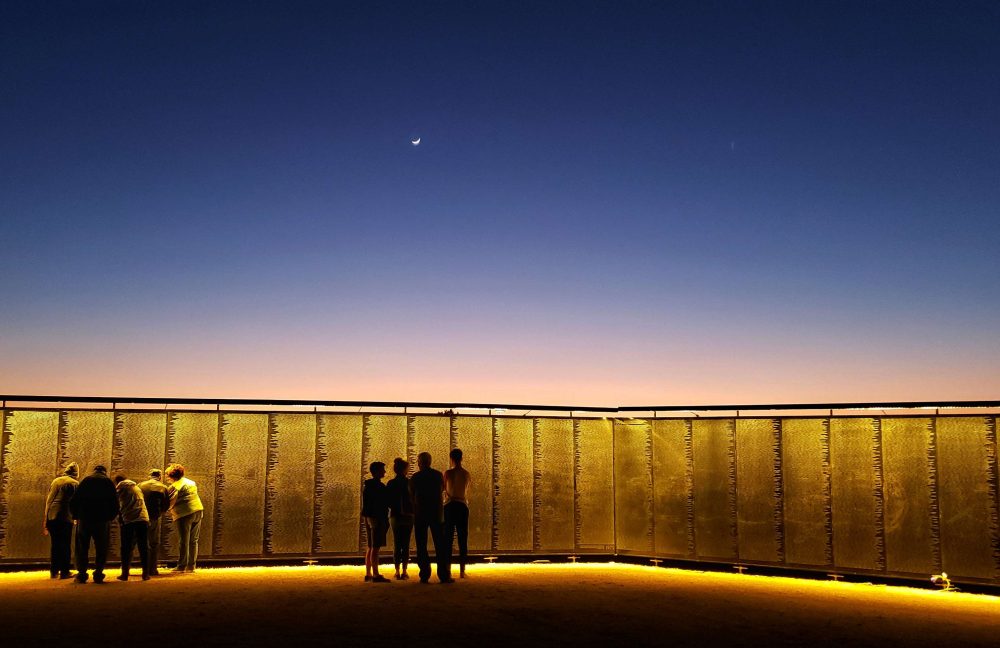
On David Aldrich, The Wall, and Khe Sanh
By Ken Rodgers
In our previous blog, we posted a memory of a Marine killed in action at the Siege of Khe Sanh. It’s been almost fifty-eight years since the siege, and the men who manned the trenches there are still on my mind a lot of the time.
Here’s another story I wrote a few years ago about a Marine KIA whom I knew fairly well: David A. Aldrich.
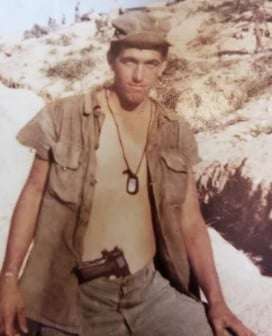
I’ve been having an ongoing e-mail conversation over the last several years with a Marine named Dave Evans who was in Marine Corps Training in the States with David A. Aldrich. Both of these Daves arrived together in Danang, South Vietnam, in March of 1967, and one of them went to Hill 55 with the First Battalion, 26th Marine Regiment. That was Dave Aldrich. I arrived on Hill 55 a day later. So Aldrich (that’s what we called him…we didn’t normally call anyone by first names in Vietnam) and I got to know each other fairly well, even though we were technically assigned to different platoons after our initial orientation while in the main battalion position on Hill 55.
Aldrich, I believe, had an MOS of 0351 (the Virtual Wall states that he was an 0311) which meant he shot what we called “rockets,” but which might be more simply understood as bazookas. I was an 0311, an infantryman, a grunt. I was assigned to Second Platoon and he went to Weapons Platoon, Bravo Company.
Aldrich was a quiet guy with a big smile and a mellow sense of humor. He stomped through mud and jungle grass with 1st and 3rd Platoons on patrol, too, but it seems like he was with us, 2nd Platoon, most of the time through the spring and summer of 1967 as the 26th Marines moved north from Hill 55 to the Khe Sanh Combat Base. He was with us through the monsoon season and up on Hill 881 South in the fall of the year. He was there, sharing chow with us, and jokes, playing cards, listening to the newest music on Corporal Mitchell’s portable record player…Sergeant Pepper’s Lonely Hearts Club Band and Aretha and Otis Redding and The Jefferson Airplane.
Those days through the fall of ’67 were hard, wet and dreary and Aldrich was along all the time, shooting his rockets when necessary. Dealing with the wet rounds that failed to go off. That was tough for him, getting those dud rounds, those wet rounds, out of those tubes without them cooking off and blowing his arms and face off. I recall how cool he was about it. If he was sweating, he remained unflappable, only the barest hint of tension in the grit of his teeth. But even if he was scared (and of course he was) he certainly didn’t want it to show…we were Marines.
When the siege began, Aldrich came around my bunker a lot and stood watch with us and he and I talked about going home…home…like heaven. I remember one terrible day, February 25, 1968, our Third Platoon got ambushed and First Platoon went out to relieve them and they got ambushed, too. We, Second Platoon, were left to man the company’s lines. The NVA was pounding the trench line with sneaky 82-millimeter mortar, rockets and train-wreck 152 mm artillery, keeping us down, keeping us locked in the perimeter so we couldn’t go get our friends, our mates, who were dying out there within ear shot.
It was one of the worst days of my life. My whole body shook. I imagined the red fire and searing teeth of death and conflagration. The end was here and I didn’t want to face it. I wanted my life.
As this was going on, Aldrich came up and engaged me in conversation. He must have seen my shaking. I can only imagine how white my face must have been. How shrunken down into my utilities and flak jacket I must have been, as if that could have made any difference. But he didn’t act like he was seeing anything out of the ordinary. He soothed me with his words. He steadied me.
Aldrich and I survived a lot of mayhem and death during the siege. We both made it all the way to the end of our tours. Then came March 30, 1968, what has been called the Payback Patrol. Aldrich had one day to go…he was scheduled to leave the field on March 31. I was scheduled to go on April 1. The evening before the patrol, the word got passed to me that Aldrich was looking for me so I went to his bunker, stuck my head in, saw he was slouched on a cot. I went in and sat down. He abruptly handed me an envelope.
I said, “What’s that for?”
“Make sure my parents get this?”
“What is it?”
“My dog tags.”
I began to yell at him. I refused to accept the envelope.
He said, “If I go out tomorrow, I won’t come back alive.”
I yelled. I yelled. I yelled. “If you believe that now, that’s what will happen.”
He nodded.
I said, “You’ve got to believe they can’t get you. If you believe they can’t get you, they won’t.”
He shook his head. We went back and forth, him resigned, me enraged, angry, and screaming. He wasn’t buying what I was saying. I didn’t accept the envelope.
The next day was four or five hours of speeded-up, slowed-down hell. It was like Dante says in his poem, Inferno, “Abandon all hope, ye who enter here.” I survived it and a lot of Marines didn’t. I remember walking down the red dirt road after we were ordered back into the perimeter. Men staggered along the lane. Some wore bandages on their heads, their arms and legs; some wore looks on their dirty faces that reminded me of dead people. Two men dragged a body down the middle of the road. I passed them and looked down. Even though his face was turned toward the red clay, I knew it was David A. Aldrich, Corporal, USMC.
I’ve been haunted by these images for over forty-five years. What could I have done to prevent Aldrich’s death? What could he have done? Did my failure to accept the envelope with the dog tags dishonor him? Maybe when I get done writing this, the images will stop coming.
Later that day, the word came down the trench line asking if anyone had seen Aldrich. He was missing in action, they said. I went up to the Platoon Command Post and told them I had seen his corpse. “You’re sure?” they asked me. “Yeah,” I said. The platoon sergeant went up with me to Battalion Headquarters and I signed affidavits of some sort saying I’d seen him dead. I signed the papers. He was dead. Killed in action.
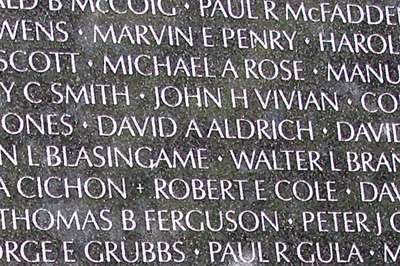
For years I’ve had a sneaking fear that somehow I was wrong, and David Aldrich is locked away in some prison cell in Hanoi. Seeing his name on the wall soothes that fear. Somewhat.
Dave Evans asks that if anyone knew David Aldrich, please contact him at usmcdevans@yahoo.com.
_________
Thank you for reading, and for honoring all Vietnam War veterans by sharing our films and stories with friends and other veterans.
BRAVO! Common Men, Uncommon Valor can be viewed on Amazon Prime. We also have DVDs available, which can be ordered on our website at https://bravotheproject.com.
You can find information about our companion film featuring eleven amazing spouses of combat veterans from various eras at https://imarriedthewar.com. I Married the War can be viewed on Amazon. DVDs are also available via the website.