Payback: The Most Important Day of My Life
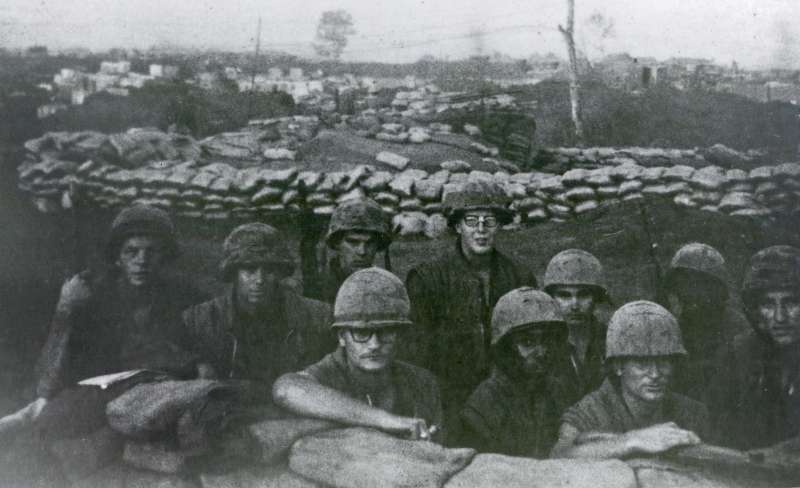
Photo courtesy of Mike McCauley
You hear people talk about moments of sublimity, moments when for a short time, they saw into a bigger arena than the day-to-day mishmash of life.
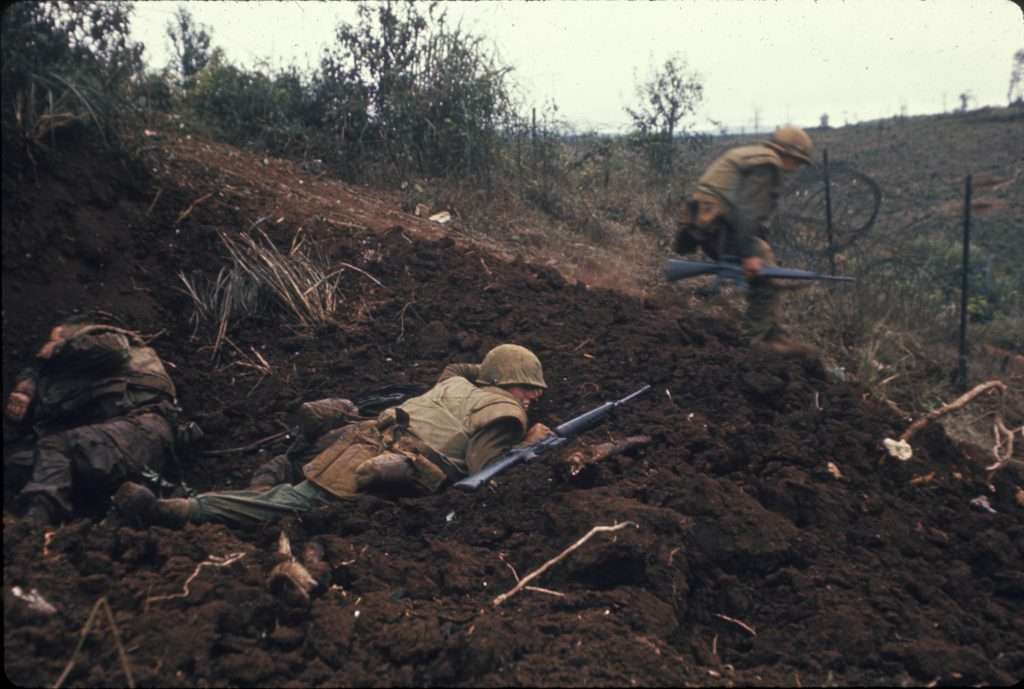
March 30, 1968, was one of those days for me. It was honor and blood and fear and noise and rage and death and brotherhood—maybe even love—that no one who has not been in the fire of combat will understand.
And not just me, but to the men I served with. Here is some of what they told us in the interviews we conducted with them regarding March 30, 1968.
What you will read below is not in any chronological order. The comments from these Marines are in alphabetical order.
Chaotic, of sorts, just as firefights are chaotic.
Cal Bright:
And then, March 30th, we went back out and that was payback time. The Skipper would not allow me to be Point, because he knew I had a score to settle. But he did allow me to be on the left flank. And part of the squad that I was covering for was drawing fire from a couple, three bunkers and somebody told me—I was carrying an M-79 grenade launcher at the time—and they said, “We need some rounds over in this one area.”
And so consequently I used them as a guide, like an aiming stake, and they said I got a hole-in-one because the round went right in the doorway. And it eliminated whatever was in it.
Ken Korkow:
As we went out through our wire, we were getting artillery support in front of us. Boom boom.
I saw the Marine Corps at its best. The Marine Corps is really designed to have peace, but you get peace through strength, you get peace through war.
And I started hauling guys back in. I left my cartridge belt and my .45 behind. I looked like a blooming idiot, you know, and I was a blooming idiot. That’s why old politicians send young kids off to war. Young kids are stupid, they’re invincible. They’re caught up with adrenaline, plus when you don’t care if you’re going to die, you are ready to do crazy things.
All I had in my hand was a K-Bar. Again, that’s really pretty stupid. But the K-Bar was just to rip utilities open, make some tourniquets, stop some bleeding, be able to pull another guy in.
This other guy that I brought in, he’s laying on his back and he’s screaming, “My leg, my leg.”
And when I come up, there’s a hole blown in his flak jacket and a bunch of his guts exposed and I’m thinking his leg must really be screwed up. It was his right leg tucked underneath his back. I pulled his right leg out. Just a piece of shrapnel right on his ankle. I thought, Cowboy, you got no clue, your leg’s not your problem. Got him drug on back to a bomb crater.
Going out after another guy, running ahead, again, you didn’t have to look for wounded people. We had a bunch. And on the lip of a bomb crater there’s Ben Long and Steve Wiese, and, as I’m running by, Ben hollers at me, “Get down.”
I turned to him this way and I said, “Come out and enjoy the war.”
And right then three shells got me. The closest one was about two foot away; the furthest one was about 8 foot away. There was one in between and they were either 60- or 61-millimeter mortar and Ben’s got this ruddy complexion, and I mean it just drained, because he’d just seen one of his good men get blown to bits in front of him and he just got this horrified look on his face. It’s drained.
Ben comes out and he says, “We’ll get you back, you’ll be okay,” and I said, “Don’t worry about me, go get that other guy.”
Well, my helmet’s been blown off, I’ve got shrapnel here under the eye, both arms are totally useless, ah, this leg’s got a big hole in it. I’m telling you, I could not have taken another step.
Ben Long:
When the light started coming, it was foggy. And I thought, whoa, this is good. I really think God is with us. Because that covered us from being seen in our advancing on the enemy position and so, we started to advance; we had .50 caliber machine guns that were firing over our heads. We had to go through a little valley. It wasn’t very deep, but deep enough that we could have cover from the .50 calibers and then as we approached the trench line, they ceased, and at that point what I remember was the fog lifted. And we could see pretty clearly. And we surprised them.
But, they were still in bunkers and trench lines, and it became hand-to-hand, it became very slow progress because they were a well trained unit. They were North Vietnamese regular army people and had been well trained.
Part of my job was to set up a battalion aid station that went out with us. We took a doctor out with us, and so we had set that up, and immediately people were being wounded and so I was starting to help bring wounded back. Bringing some dead back.
I had a 60-mortar group that was with me. Corporal Korkow was in charge of that and he said, “I’ve shot all my rounds, what do you want me to do?”
And so I started using them to help me to bring dead and wounded back.
Corporal Wiese and I ran into a bomb crater. This bomb crater was over our heads, I mean it was a big bomb crater. And we yelled at Corporal Korkow, “Get down, get down.”
But he didn’t do it. And then about six mortars went off. He was riddled. Because he had a flak vest and diaper on, it didn’t kill him.
I remember one went through his helmet. Blood was just pouring down. So we put on a couple of tourniquets and took him back to the doctor.
I really think Captain Pipes was the one that really made this thing a success. He was cool, he was calm, he knew what he was doing, he was wise in his directing of people.
Even though he was wounded, he was still doing it, still directing, and I remember we were pulling back, and he had given orders to pull back, to come back in. He stood outside the wire until the last man was in. Before he would go in himself. He was just a great leader. And we were very fortunate to have him and for him to be guiding us that day.
Frank McCauley:
March 30th was one of those days where it was just—well, it was the most important day in my life. We got up very early in the morning, probably 4 o’clock in the morning, and were rounded up and we went outside the line.
I can’t believe we made it out through the line, out through the canyon and valleys and came up on that ridge and it was very, very, very foggy.
We broke out of the jungle into a flat, barren, chewed up area of nothing but bomb holes and dirt divots and we saw the end of a trench and a VC come out of the trench and squatted just outside the trench line and took a shit.
Someone said, “Let me get him…shoot him.”
This guy with an M-16 shot him, pow, and he was down.
We had this one guy charging at us. He was probably a hundred feet, maybe a tiny bit farther away, but he was coming right at us, for what reason I don’t know, he didn’t even have a weapon and one of the guys said, “Let me get him, let me get him,” and I’m just there…
I’m a Roman Catholic and I do not wish to take anyone’s life and so I was kind of hoping I could get through this experience without ever using my weapon. I was good with that.
Anyway, this guy took a .45 and he aimed and he shot and he was right beside me and that guy, full bore running at us, folded like a cheap pocketknife, went back maybe a foot in the air and fell to the ground.
This other guy, just beyond that one that came rushing at us knows suddenly, we’re there. So, he is running full bore away from us, and there’s a guy with a LAAW, one of those light armored, ah…like a bazooka. He says, “Let me get him.”
This is so strange because we’re all young idiots and I hadn’t ever killed anyone and I had never fired my weapon except at a range, so I really didn’t wish to play this game, but everyone was really excited about doing this.
The whole weird part was it’s a running human being away from us, and this guy takes this LAAW—It was perfect. That round goes off and you can watch it go through the air and it hit him dead center. And it just blew up and it was like you could see right through him, schwee, pure light, and he was down.
See, I just wasn’t raised that way, and I didn’t want to participate, and I was really amazed that there were so many people that were greedily trying to kill someone out there. But I guess that’s a good reason because they were actually trying to kill us, too, but I hadn’t come to that realization yet. I just saw us killing them, I hadn’t seen them kill us yet.
I got down behind this tree because I’d already seen a few dead people and I started to get worried that, you know, maybe, gosh, this is not just quite a game, and I peeked up to find out where everyone else was and bark just flew up in my face and I noticed a person beyond and they weren’t fifty feet away and they had dropped down and so I plinked a couple of rounds and I could get down, and we did that two or three times and then I realized this was pop goes the weasel and so I quickly got up there, out of rhythm, and when he came up I just squeezed and shot and the oddest thing, my instructor from the range in Camp Pendleton was there explaining to me about breathing and squeezing.
I took my first shot—right in the head, right in the forehead.
I had just done something I really didn’t wish to do and twenty feet away, is another pop goes the weasel but he’s shooting at my guys over here. He’s only twenty feet away and he keeps popping up and shooting. I didn’t want to think too much about it; for one thing he’s shooting live ammo at my people, so I just took aim and waited and as he did it, I played the game again where I just squeezed and shot. I hit him dead, right through the temple and he was gone.
I’m sitting there going, this ain’t good. I was supposed to be with others so I kind of moved and rolled away and went down into this giant crater that was left by some big B-52 bomb that was about ten feet deep and probably twenty feet across and a little puddle of water at the bottom and I’m sitting there, crouched on the edge of the bowl.
It scared the shit out of me because when I first rolled into there, I could see some green uniforms and then I thought, oh shit, and then I realized that they were American uniforms but they were three dead Americans laying there sprewed across the sides of the ditch.
Then all of a sudden something catches my eye and this guy comes charging in—one of our guys—and he gets down and his head’s just about ground level and then he goes woooom and whips back, his helmet flies and he falls right at my feet and his brain goes across the dirt and I’m sitting there on the side of this hill looking at this guy and he’s like a gold fish, his eyes are bulging like a Chihuahua.
And then all of a sudden somebody else comes down and it’s a guy who’s been shot and so he’s sitting over there and then another guy comes in that’s a Corpsman and I tell the Corpsman, “You gotta help this guy,” and he comes quickly over and he starts to push the brain back into the skull, and he goes, “I can’t do anything for this guy,” and he quickly goes over to the guy who had his arm shot.
So I’m sitting there in this hole watching a Corpsman work on somebody, and a guy who’s gulping at me, and three dead along the edge, and I go, this ain’t the hole I need to be in. So I quickly crawled out and the incoming was coming like crazy, mortars, and so I saw a small hole, someplace to save my ass, so I haul butt and I jumped with my rifle in my hand, and as I was getting through the air I suddenly realized—and you can’t stop because you’re…you’re in the air heading for this hole–that it’s occupied. It’s got dead people in it, which I didn’t know until after I did a pushup in the air and did not go down on him.
I’m face to face with a guy who’s been dead for quite a while, and he had very little skin on his face. On his skull, it’s just parchment, skin peeled like a creek bottom that’s been dried out, and he’s got maggots coming out of his eye sockets but no eyes, and coming out of his nose and then below him is another guy in the same shape. These are two decayed, bad-news bodies. but they’re not ours, they are Vietnamese.
I finally met up with my machine gun guy—I was supposed to be the A-Gunner to him—and came into a hole, and this other tall Corporal came in and he decides that the reason everyone else around us is dying is because there’s a machine gun nest over there and it’s like a 150 feet away and it’s nothing but more than a big sandbag with a tiny slit in it and they’re ripping on us, and so he says, “Come on, it’s our job, we got to knock it out.”
I’ve seen enough war movies to realize the first wave on a machine gun nest doesn’t make it. He goes, “Come on, let’s go,” and he actually tried to drag me and the machine gunner out of that hole and head for that spot, and I hadn’t even seen it yet.
I go, “Wait, wait, wait, wait.”
Okay, we will do it because that’s kind of what we are supposed to be doing. But I wanted to just see what we were doing, I mean, once I left the bomb hole I really would love to find out where we were going. I don’t want to go out of that hole blind. So I took a peek and I could see the sandbag, and I could see where it was at and I said, “Okay.”
I put a new clip in and I looked at the dirt in front of me and I thought, that’s cool, that’s the last thing I’m going to see because I’m going to fall right face down in that shit when I leave this hole.
So, we charged out of there, all three of us, and I was in the middle, and the machine gunner was here, and the knucklehead was here and a third of the way there, he spun, got hit and left us.
I put every round, all twenty rounds dead center through that little teeny weeny slit and the machine gunner was chewing up those sand bags and we made it, we made it, and jumped over the sandbags and there’s this big pit and two dead gooks and of course the guy with the machine gun, his adrenaline is flowing, but he just blasts them anyway.
I got hit in the leg with shrapnel. A bomb, a mortar, went off right next to my leg and it violently rolled me over. I lost my helmet, lost my rifle.
I laid there in shock because I could feel my leg was burning but I couldn’t feel anything below the burn. All I could feel was cool wet which actually is kind of weird for blood.
I look down and my boot and leg—everything was still there and I’m thinking, well it’s got to be separated, so I wiggled my toes and my toes wiggled back in my boot and I went, ah, shit, it felt like my boot was filling up and overflowing with blood but I still had a leg.
I worked my way down and into a trench and headed toward where we had come in, and lo and behold, the steps that leave the trench where we first shot that guy taking his morning dump, there’s the guy that led the charge against the machine gun nest and he is half passing out and he clutches me. He’s clutching me. He’s going, “Help me, help me.”
And I’m thinking, ah, man, my leg, I can’t.
There’s a Marine crawling next to us, headed towards the rear, and he’s wounded and then suddenly I see this guy coming, and boom, he whips his head, helmet splits, and he’s got no chin. He grabs his chin–all he’s got are upper teeth and a big giant tear in his neck–and he grips it and throws his rifle down and spins and starts running back, but no, in just a matter of two steps he stopped and grabbed the guy on the ground and they both hobbled away toward the rear and I’m thinking shit, if a guy with no chin can help somebody, then with my little dumb leg I can probably do it.
So I say, “Okay,” and I got him in a fireman’s carry and we walked out. I’m gimping and then suddenly automatic machine gun fire opened up on us and he takes a round, I can feel when it hit. He moves on my body and I went holy shit and I went like as fast as—I was flying, I don’t think I even touched ground much, but I hauled ass with him on my back.
I saw a hole and I just chucked him and fell in on top of him. And unfortunately, on that run his arm, which had already been wounded, got hit again and the arm was gone.
It was one of those days. Definitely one of those days. Anyway, that was my experience with my first kill, and to see people die, and you don’t want your children to experience that.
That’s why I don’t believe in war anymore.
Mike McCauley:
I said, “Ah, oh man, fix bayonets?” At this time, I’m saying this is the real deal and I told the rest of the guys, “Fix bayonets,” and I could see on their faces what it must have looked on me because this is not good. Fix bayonets.
It was almost like popcorn being made, where you heard pop…pop…pop…pop, pop, pop, and then guns started opening up everywhere, automatic weapons, a lot of small arms, and then we hit the trenches and all hell broke loose, and ah, flames were going off, LAAWS were being shot, rifles,
I jumped into a trench. There was an NVA soldier, he didn’t know what the hell was going on, as much as we did, and I shot him, and I remember his eyes and I remember him going down.
Minutes were hours, hours were seconds, I don’t know how—I don’t even remember how—everything slowed down and speeded up and it was just crazy.
Michael O’Hara:
5 o’clock in the morning always comes too quickly, especially when you are doing something like this. It’s pitch black. Foggy. You couldn’t see.
There were three platoons. Our platoon, Second Platoon, went out of the wire first, ahead of the company and we set up a point where the rest of the company could come and pass through us.
Everything’s cool, nothing’s going on yet, and then the first and the third platoon came out and swept through our position.
First and Third Platoon were the ones that went into the jaws of the tiger first. They went through holy hell. And they paid a terrible price for it.
The order came back to fix bayonets. And that’s when everybody knew this deal was on. It was now.
And we had a ringside seat to it all. And there is really no way to explain what was going on there. I mean, it was flame throwers, it was rockets. Eddie Pendergras, he’s running around with 60 mortars, just sticking it on the ground and dropping into the tube and just pooomp, doing it by ear, you know, Kentucky windage, and they are shooting machine guns at this kid and he’s just dropping them all over the place.
We started setting up in squad rushes and when it was time for my squad to go, Jake says, “Let’s go,” and so we all went forward, and for just a minute we all broke discipline. Once he said, “Go,” we all just took off—and he like to never got us stopped—so we could provide the cover fire we were supposed to.
When I got in those trenches, First and Third Platoon had killed so many of them people that there were just bodies everywhere. I don’t think my foot ever touched the ground. And I was in that trench, I know, for over an hour.
The next moment, the next minute, the next hour it was just—well I will carry it with me the rest of my life.
It was just bodies to your kneecaps in there.
I don’t know if it was Captain Pipes, or who it was said, “Pick that Marine up and take him back.” And I bent down and picked him up and it was Hank Norman.
And everybody just loved him, he was just a great guy. He was just a hell of a nice guy and when I saw who it was, I just—it was just a real ass-kicker, just represented all the heartache of Bravo Company right there, all the names, right there in the bucket, all of them, and I picked him up and put him over my shoulder.
And Kenny Pipes was standing there and I thought to myself, my god, he was blood from one end to the other, I mean he was soaked in it. I thought he’d been hit by machine gun fire, but the guy was standing up, and he had been wounded severely in his armpit and he’d been shot right in the head with a rifle, although it didn’t penetrate his helmet liner, it just hit his helmet. And he had two radios and he was talking to the air on one radio, and he was talking to the artillery on the other radio. And here, all his best friends are laying right here dead at his feet and this guy’s still taking care of business, you know, he’s not losing it, he’s not passing out, he’s taking care of business, and we’ve got bodies laying everywhere.
And then I took Lieutenant Norman and I carried him back. I don’t know how far it was, but I will always remember he weighed so much, he was so heavy my legs ached so bad. And I just kept telling myself, don’t you dare drop him, whatever you do, don’t drop him. And I got back to the APC and there’s just bodies stacked in the damned back, and I laid him down just as gently as I could, and then we began cleaning the mess up.
You just…you just don’t know what it’s like to see a 19 year old kid—I believe it was Rash, but I’m not sure—I think it was Rash, laid out on his belly in the mud, sticking his rifle that direction, gives you the thumbs up and tells you to go that [the opposite] direction, and he knows damned good and well he’s never going to get up out of that mud. He knows he‘s dying for you. And people just cannot understand that.
I have something that most people in the rest of the world will never own, no matter how wealthy they become, or how smart they are, or what they know, but for a little bitty space in time, I was allowed the distinct privilege and the high honor of walking across hallowed ground with the bravest Marines that have ever worn the uniform and it was my privilege. And I will honor their memory until I take my last breath.
Ken Pipes—Company Commander of Bravo:
There was a building anger and a building desire to get outside the wire and to kill as many of them sons-o’-bitches as we could kill.
It was looking the tiger in the eye and riding the elephant. And I think we carried away from that a lot of things, but the tiger blinked and the elephant knew we could ride him. And we did.
Was it a payback? Was it a payback? I don’t think so. Because the price that we paid then and before, you can’t put a price on. It can’t be bought. I think we proved that retribution was made. And I saw and was part of some of the bravest things I’ve ever seen.
To see the men of Bravo Company moving out with fixed bayonets and going through those trenches, almost fearlessly, was one of the most amazing things I have ever been a part of in my whole life.
And it just signifies and exemplifies what a fine group of Marines that we were fortunate to be a part of.
My God, what men.
Tom Quigley:
Captain Pipes gave me an order to fix bayonets, and at that time it seemed like, all of a sudden, reality sunk into me. I mean, I don’t know what I thought I was doing out there. I mean, this wasn’t a sunny picnic, but it didn’t really hit me that this was going to be a major encounter, a major battle, and my heart just sunk in my throat, you know.
He said, “Call the other platoons and tell them to fix bayonets,” so I got on the radio, and I advised Bravo 1 and Bravo 3, “This is Bravo 6…fix bayonets.”
I had said to the captain when he gave me the order…I said, “Do what?”
And he said, “Be advised to fix bayonets.”
One of the platoon radio operators came back to me and said, “Do what?”
I said, “Be advised to fix bayonets.”
And then I started looking around and I was seeing these Marines taking bayonets out of their backpacks, out of their pants leg, their cartridge belt, wherever they had them, putting them on the end of their rifles and then again, I thought to myself, this is the Real McCoy. It finally hit me, even though I’d been hurt twice earlier, I may not come back from this day.
It seemed like we had just started out, and then a round or two of small arms fire went off and then it just seemed like Charlie all of a sudden realized we were out there. And, once that happened, then all hell broke loose.
Once we started going, there was no walking. All of a sudden, it was an all-out assault. And we started running.
Our command group consisted of the five of us. There was Captain Pipes, his battalion radio operator, Lance Corporal Bragg, I carried the company radio, and then there was Lieutenant Hank Norman who was our artillery forward observer and his radio operator.
The first bomb crater I remember we got in, rounds hit right outside the bomb crater. And the Skipper said, “We got to get the hell out of here, they’ve got us spotted.”
And, then we got into an NVA trench line and at this time the fighting was intense. I mean, there was charging, there was shooting, there was grenade throwing, satchel charges, flame throwers.
Somehow I ended up next to a man with a flame thrower and again, talking like we’re talking here, I asked him, “How long does one of those tanks last of the fire,” and whatever he told me, it wasn’t any time at all—just seconds, and I said to him, “Well that doesn’t seem very long.”
He said, “If you’re on the other end of it, it’s an eternity.”
As we went further into the NVA trench line, I remember Lieutenant Norman behind me. He had seen our senior Corpsman get hit with shrapnel by a mortar and he had started to stand up and say, “Doc’s been hit,” and when he did, I was crouched in the trench line. I had one hand on my rifle and the other hand on my receiver, and I turned around to hear what he said.
And by that time, several rounds of enemy mortars fell right on top of us, and it took Lieutenant Norman right out. His radio operator was hit, his face kind of busted out bloody, blood running through his fingers. I was hit, Captain Pipes was hit, and his battalion radio operator was also hit.
We were all knocked out, just in a matter of seconds. The rounds came in and knocked every one of us out and then, like I said, unfortunately killed Lieutenant Norman. And I wasn’t more than six feet, seven, eight feet from him. And he took the brunt of the round that I caught shrapnel in my side and my hand had also busted out in blood. I thought I had lost a few fingers but then I found out later it was concussion had forced the blood from out of the pores of my hand.
I could feel the blood start dripping down my back and a Marine from mortars came crawling through the line and I said, “Man, get this radio off my back,” and he unhooked me.
I was able to wiggle out of it. The senior Corpsman, who was also wounded, ended up putting a bandage on me and he probably saved my life because he told me later—we were in the same hospital ward in Japan, Yokosuka—that when I first had asked him how bad it was he said it wasn’t bad at all and then he told me later when I had asked, he said blood was just spurting.
Ken Rodgers:
I’ve got 2 days to go in-country. I really don’t want to be here doing this, fellas, ’cause I’m going home. I’m supposed to go home in two days.
But they didn’t care.
And I had to go because if I didn’t, I couldn’t face my fellow Marines.
Sergeant Alvarado, who was the platoon sergeant, and I ran up through all this mayhem, bodies everywhere, people wounded, and the Skipper, the company commander, was down in a shell hole and there was blood coming out of his ears and his nose and all these guys laying around there dead.
We ran up in front of everybody and Lieutenant Dillon says to me, “Well, mark the spot so they know where you are at.”
I said, “I don’t know what color.”
He said, “It’s a canary!” So I reached and got a yellow smoke grenade and threw it out there and it billowed up, and right then this barrage of artillery—right out in front of us, American stuff—just flattened everything out there. And then we just started moving back and picking up the dead Marines.
One of the other platoon commander’s radio man got shot, and by that time we had too many radio men, so they sent me with this guy.
I don’t remember why, but we were going towards the rear and he kept getting out of the North Vietnamese trench and I kept yelling at him to get back in the trench because there were booby traps. I could see these Chinese claymores hanging in the dead trees and he got out of the trench again and was running down the side of the trench and he tripped something and this white phosphorus booby trap came up and hit him and blew off his jaw, if I remember right.
White phosphorus is poison and burns on contact with the air. So his face was burning and I was putting mud on his face. I was really angry at him because I got hit in the face with this stuff. So I was mad at him for not doing what I told him.
I think maybe out of a hundred guys, we had maybe ninety wounded, had quite a few casualties and dead. We killed a bunch of them.
It went on four or five hours like that, up close and personal combat. That was what you joined the Marines for. Be careful what you wish for. What you join the Marines for is that moment of truth. That was a moment of truth for me and probably for everybody there.
Peter Weiss:
We went on the move and we moved forward fairly smartly, and there was a lot of action going on. At one point I remember I was lying down in a bomb crater, right at the edge, and a grenade came at me, and I mean two feet from me. It’s one of those great stories, there was nobody around to jump on it and be a hero and I just laid there and I started trying to slide away from it, but it never went off and I thought, whoa, now I can move forward. God is with me.
We swept forward, probably went through at least a half dozen bunkers and personally, one guy in front, shooting into the bunkers while a guy went around and dropped grenades into each of these bunkers.
There was corporal whose name was Wayne Moore. His father had been a Marine and he was a tough, tough, kid. And he’s with me and we’re moving forward and he said, “This is the best. When I get out of the Marine Corps, this is what I want to do.” And I thought, are you crazy?
We were right next to each other, he was killed. Boom. He’s dead. Wham.
We moved forward and then we could see NVA soldiers coming from that little village below. We had gone that far, and we knew about where we were supposed to stop. Because Pipes said, “You stop when you see the road.” And we saw the road. So we fired at these guys, and we took a couple of them down.
We retreated and just so happened to find Donald Warren’s body laying about where we had started. And I picked it up and how heavy it is to carry someone who is dead.
Steve Wiese:
Captain Pipes sent the word out on the radio and said, “Fix Bayonets” and that took me totally back. You know, like, fix bayonets? That just brought instant pictures of hand-to-hand combat. I can remember telling the guys in the squad, “Okay, everybody, fix bayonets,” and they were like, “What?
It’s funny now, but it wasn’t then.
We started to sweep in towards that tree line and when that opened, we were kind of pinned down there for a while and there was firing going on back and forth and Wayne Moore jumped up. It was like he’d had enough and he jumped up and charged that machine gun bunker and he was shot several times and didn’t make it, and when he went down, Author Smith jumped up and he charged that bunker and he was shot a couple of times but he made it into the trench line and Author was in the trench line shooting his rifle, going into the machine gun bunker, pulled out his bayonet and the last thing I saw of him was fighting with a bayonet in the bunker.
And he basically took that bunker.
And all of a sudden there was just a big roar, and everybody jumped up and we all started charging the line. And I remember us running toward that line firing. I remember looking over my shoulder and seeing…it was like a ribbon effect. Everybody down that line was just getting up and taking off towards that trench.
These guys, Wayne and Author, were closer than brothers. We had gone through a lot. It was a tough day.
That was a pretty good firefight, that was a pretty good battle going on. It went on for several hours and I got to see some of the most heroic actions anybody could ever witness. To charge a machine gun bunker, that’s a tough thing to swallow.
But I’m glad I’m alive to say it, too, to be a witness to it. So, how I made it out of there, a typical guy, with hard times dealing with the war, is why did I make it out, you know? Why didn’t I get shot that day, when everybody around me was falling, I guess it wasn’t meant to be.
After most of the battle, when we were trying to regroup, Lieutenant Long—he was XO at that time—saw me, and here was a guy that was hit by a mortar, and he was pretty badly wounded, and the lieutenant called me over and needed help. When we picked him up we pulled him back to the rear and I just remember thinking this guy, you know, was almost a waste, I mean why are we trying to drag this guy back?
I just assumed he died and one of my memories of that was this guy, basically a dead man to me, five years ago, I think, I get a phone call. I was coming back from a job and I get a call on my cell phone and he goes, “Do you believe in guys coming back from the dead?”
And I’m like…I say, “What?”
He told me who he was and he goes, “I just remember this blond-haired angel dragging me out.”
That was pretty amazing, to find out this guy had actually survived and was doing well. His name is Ken Korkow, and he ended up getting a Navy Cross that day for his actions.
Sometimes there’s good things that come out, you know. That was one of the good things, to get that phone call.
Somebody actually made it back and survived when you didn’t think he was, you know, alive.
***
Like I said earlier in this blog:
Chaotic
~ By Ken Rodgers
_______________________________
Thank you for reading, and for honoring all Vietnam War veterans by sharing this blog, our films, and stories with friends and other veterans.
BRAVO! Common Men, Uncommon Valor can be viewed on Amazon Prime. We also have DVDs available, which can be ordered on our website at https://bravotheproject.com.
You can find information about our companion film featuring eleven courageous spouses of combat veterans from various eras at https://imarriedthewar.com. I Married the War can be viewed on Amazon. DVDs are also available via the website.